Are you planning your trip to Lisbon or a tour in Portugal but you still don’t know what to visit in Lisbon in the few days you’ve got?
Well, you’re in the right place! In this post, I’ll suggest a simple two-day tour, telling you what to visit in Lisbon to make the most of Portugal’s capital without turning it into a marathon! 🙂
This Lisbon tour is exactly the one I took during my visit: so it’s already tested! 😉 .
The right ticket to start this tour
An essential tool first: the transportation ticket. You have two options, based on what you want to visit:
- the public transportation daily ticket at 7€: valid for all the trams, metro lines, and the unmissable elevadores, which I’ll tell you more about later. You can load it on a “navegante” electronic card (0,50€ to get the card) and you can buy it from the machines in any metro station. It’s valid for 24 full hours from the first use and allows you unlimited journeys!
At the Metro Lisboa official page you can always check updated prices and details. Here you’ll find the Lisbon public transport map. - if you feel like visiting many museums, it’s best to get a “Lisboa Card” instead: it allows both public transportation and entry to all museums at a fixed price for 24, 48, or 72 hours; otherwise, since each museum costs at least 7€, you could end up spending a lot. This is the list of 50 museum included.
What to visit in Lisbon on the first day
On this first day you’ll see quite a lot of things, don’t be scared if it seems like a lot; Lisbon’s transport convenience is such that you’ll see all with little effort. I was surprised, even though I started the tour late in the morning!
My starting point was on Rua da Madalena, in a very convenient area for catching transport and also for walking around in the evening (don’t forget to check where it’s best to stay in Lisbon), but if you’re staying elsewhere, the tour is easily adaptable!
Take tram number 28 and check out the districts
After getting your daily ticket, at the nearest metro station (in my case, it was Terreiro do Paço), head to the tram number 28 track, for example, at the Igreja de Santa Maria Madalena intersection.
Hop on this historic tram dating back to the early 1900s and let yourself be charmed by its wooden interiors, open windows, and the sound of the bell! 🙂

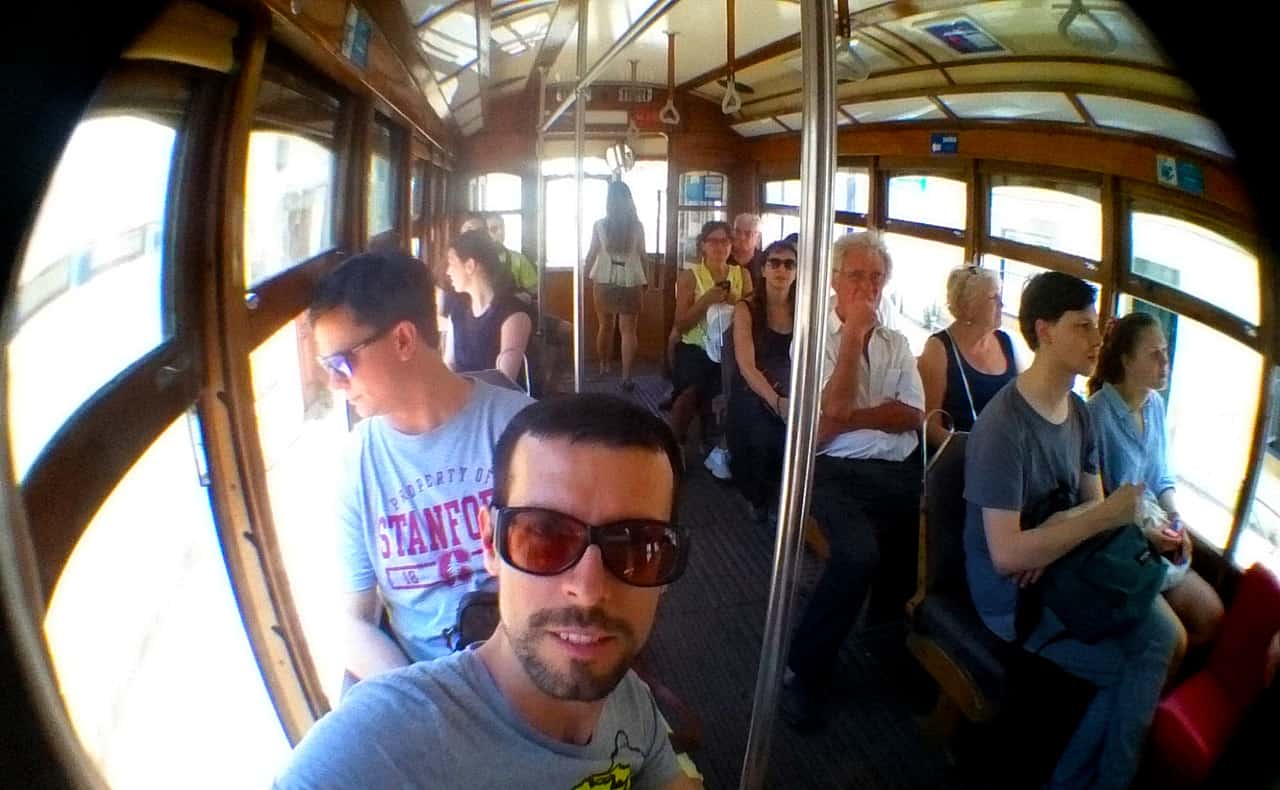
Don’t worry about the timetable; they’re coming every 10-15 minutes depending on the time of day. If one passes by too full just wait for the next one and in the meantime, enjoy the Lisbon streets and the azulejos on the walls!
Get off at the first stop that inspires you
This tram, given the characteristics of Lisbon’s streets, hills, traffic, and districts, travels at a very moderate speed and, as you’ll soon realize, it’s the best way to comfortably see Lisbon’s districts without suffering the capital’s steep uphills and downhills!
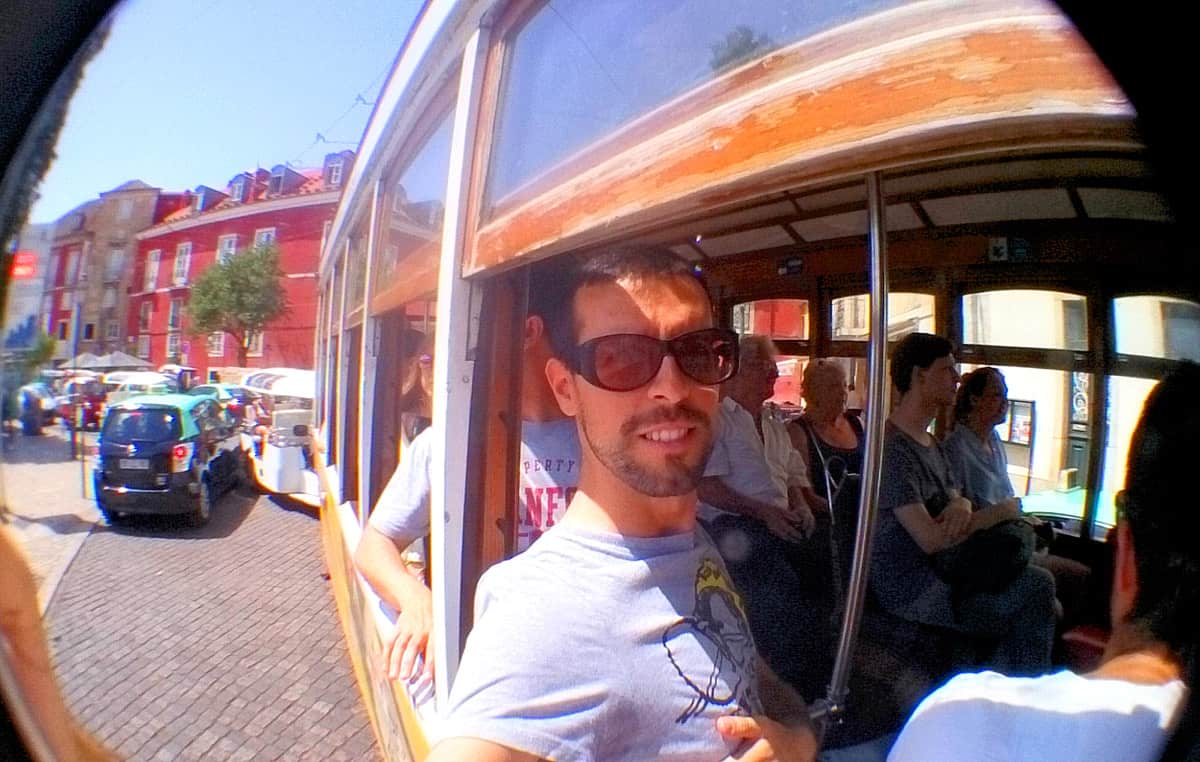
If you caught the tram at the Santa Maria Madalena stop, you’ll now be going up through the Alfama district; after seeing some great moving landscapes, get off at the first stop you like without fear, as your ticket allows unlimited rides!
Look for the buttons to request a stop, they may not be easy to find but they’re there 😆 Then get off using the back door, where it’s best to get ready in advance if the tram is quite full, so you don’t get stuck among the people.
Some activities you may like, before going on with the article:
A good stop could be the Miradouro di Santa Luzia; from here you can admire a beautiful view over Lisbon city down to the Tagus River or spot some bar/little restaurant to try later, if you fancy.
Or a visit inside the Sè, Lisbon’s most majestic cathedral, located at the beginning of the Alfama district:
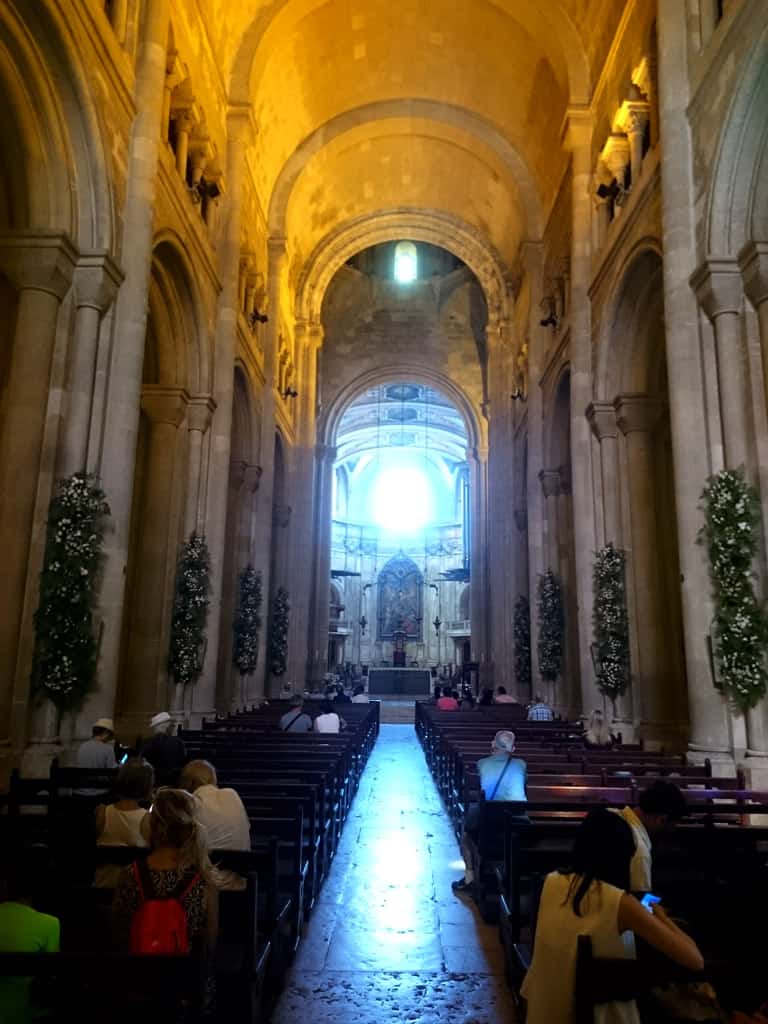
Get back on tram 28 and continue the panoramic tour to the last stop
Continue this Lisbon tour to the last stop, where the tram will stop and the driver will also get off.
Once there, you’ll find yourself in a square with a central park, and the stop to catch the return tram is about 50 meters ahead of where you got off. But it may happen, as it did to me, that there’s a huge queue waiting for the tram: then better off switching transport: head towards the park, to the entrance to the Martim Moniz metro station.
From here, take the green line towards Cais do Sodrè, and get off at the second stop, Baixa-Chiado.
This way, you’ll be back near your starting point, and you can reach the Elevador da Santa Justa.
Go up the Elevador da Santa Justa
Among the things to see in Lisbon, the Elevador da Santa Justa is a must. A real outdoor elevator, with two cabins, that takes you up so you can reach a walkway leading to Lisbon’s highest district.

With your daily ticket, going up is included; without that, it would more than 5€!
Here too, you might find a bit of a queue; about twenty people are allowed up at a time. Watch out where the queue starts, as it might snake all the way behind the elevador 😀
Once at the top, you can exit along the walkway or you can go up to the elevator’s terrace by paying extra ticket on place to see the viewpoint. The view from the terrace is nice but not unmissable, you’ll see better ones later; plus, the tar roofing will make it hard to stay there for more than a few minutes if the sun is beating down, in my opinion, you can skip it.
Admire the Convento do Carmo
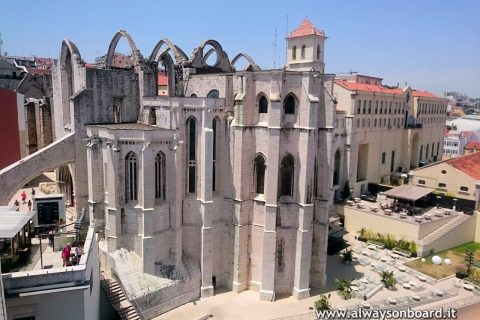
Another thing to visit in Lisbon is the Convento do Carmo, you can’t miss it when you come off the elevador’s walkway: it’s a cathedral whose arches were destroyed by the 1755 Lisbon earthquake, so the roof now looks like a kind of skeleton.
It was left in that state as a national monument and the difference with everything around it, built in the following two centuries, really stands out, since the earthquake had wiped everything away.
You can also get into it for a fee but inside it’s pretty much a wild meadow.
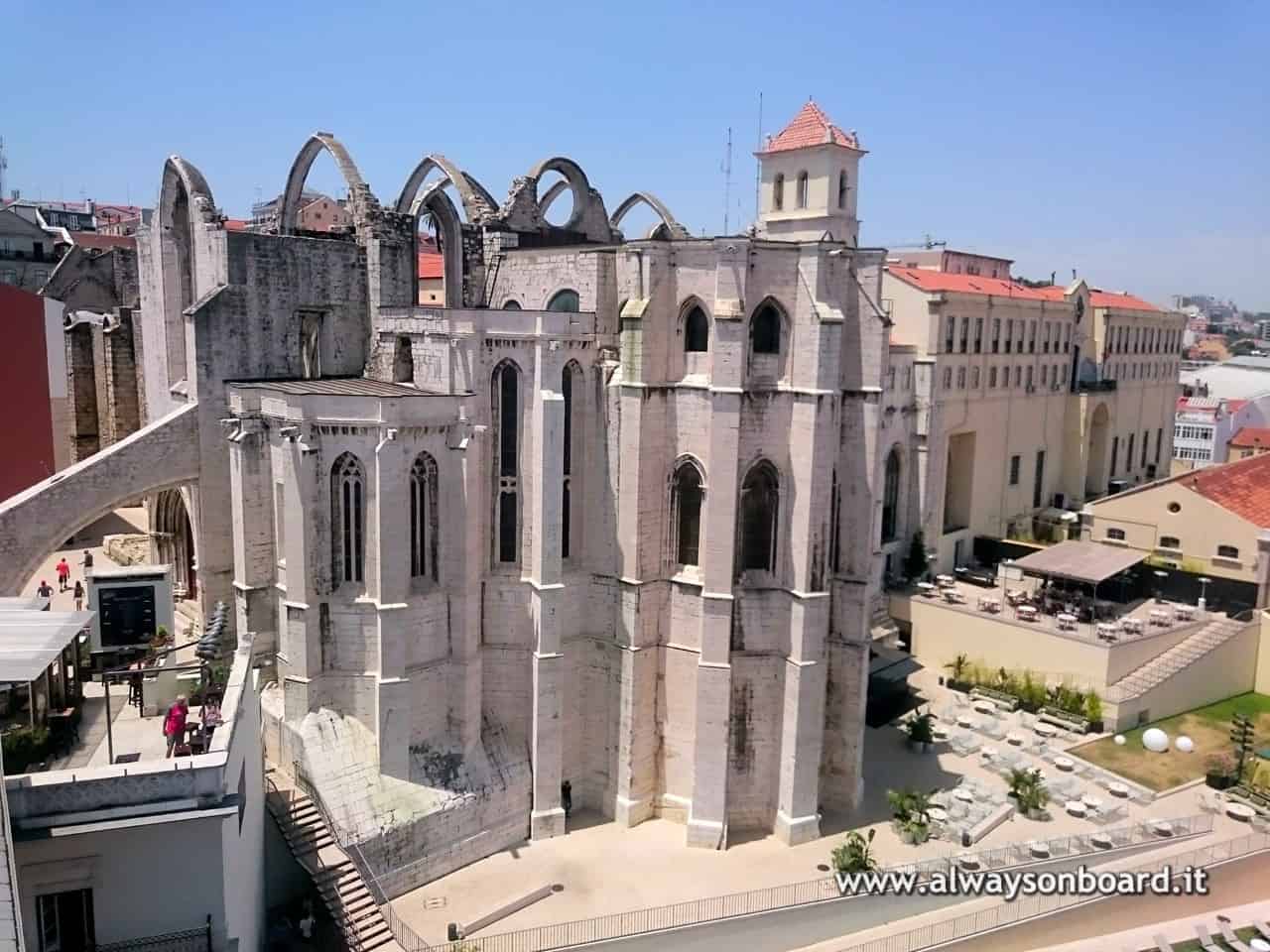
Avoid the little kiosk in front of the convent, it’s quite expensive compared to the average. The fountain water, on the other hand, is drinkable if you’re thirsty: word of a local policeman and my own testimony that I didn’t die 😆
After a break or lunch if it’s time, with your back to the convent, turn left and go all the way downhill until you get back to the Baixa-Chiado metro station.
Be careful, on maps the stop may be shown as a point along Rua do Crucifixo, but the stairways to access it are actually on the two streets parallel to it!
Avenida da Liberdade and 2 other elevadores
Once you’re at the metro, this time take the blue line towards Reboleira and go two stops, getting off at Avenida.
As soon as you exit, you’ll find yourself on Avenida da Liberdade, Lisbon’s central avenue, where there’s no shortage of greenery, as well as shops, in case you’re interested.
Walk a bit to the southeast and you’ll find, one on one side of the avenida and one on the other, two more Elevadores:
- Elevador Da Gloria
- Elevador Do Lavra
In the list of what to visit in Lisbon, these two elevadores can’t be missed either; unlike the previous one, they’re made like trams, but with a very inclined shape, due to the slope they front: both highly recommended!
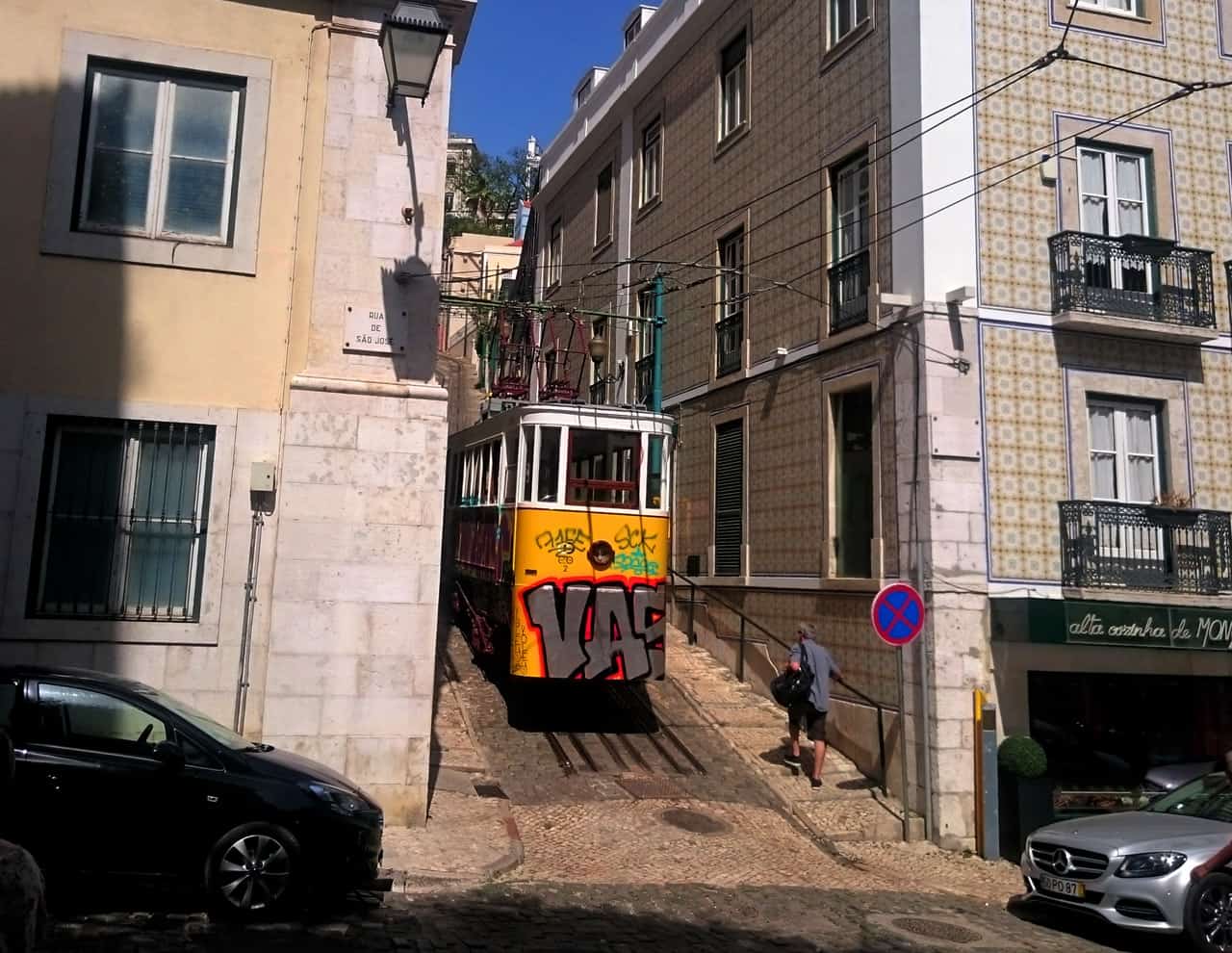
Hop on without hesitation, they leave every ten minutes and you won’t pay anything since you have the daily ticket (otherwise a ride would cost about 4€).
Enjoy this steep climb looking around, noticing in some spots how it passes just centimeters from the houses, watching people outside climbing with effort, those taking photos of the tram/elevador, and don’t miss the moment it crosses paths with the other tram coming down!
Be careful if you’re making videos leaning out of the window because in some places it gets very close to the houses!
During my visit, I often saw couples dressed as bride and groom having their photos taken in front of the stationary trams or other similar scenes 🙂
Once you’ve ridden these elevadores, you’ll find a park near the exit of both. Take a break here, especially if it’s summer and hot, because if it was hot down below, up here you’ll find a breeze you’d never have imagined!
Take a break at Parco Eduardo VII
Go back down towards the metro stop (if not Avenida, the Restauradores stop might be closer) and get on the blue line again towards Reboleira, getting off at the Parque stop.
At the exit, you’ll find yourself on the side of Lisbon’s largest park, Parco Eduardo VII, where you can take a walk, have a picnic, or take a break!
Evening stroll along the river
What to visit in Lisbon after a shower and dinner? Simple! In the evening, head towards the river, in the Praça do Comercio area, and stroll along the bank, where you’ll find plenty of people (especially on Sunday evenings but also on other days), some kiosks, stalls, and a couple of bars with deckchairs by the water, to enjoy the view with a drink in hand.
If you haven’t had dinner yet, continue along the waterfront until you reach the Time Out Market / Mercado de Ribeira, which is located opposite a train station.
It’s a large structure with various different stalls where you can order your favorite food/drinks/desserts and then sit at a random table in the center.
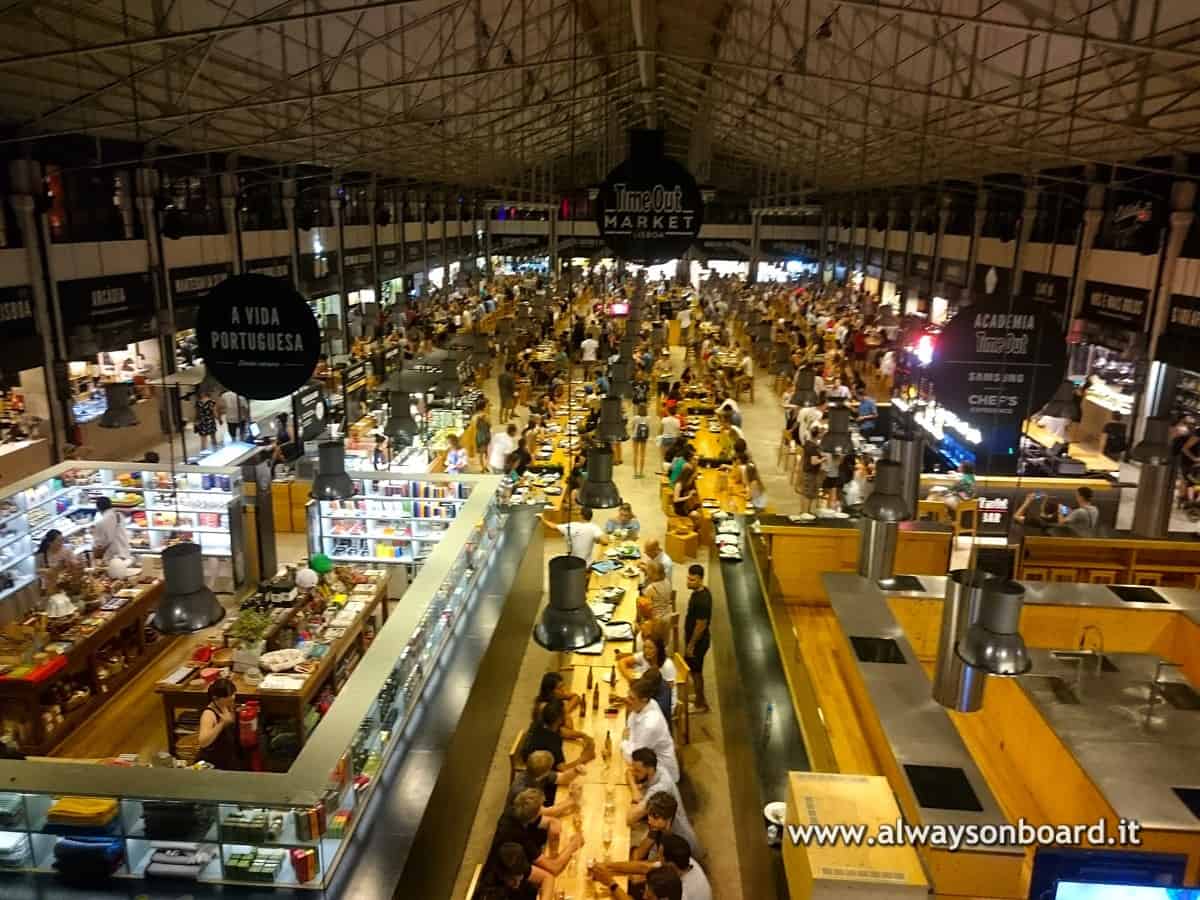
Definitely a great way to socialize after this intense day!
In the morning, however, the structure opens additional stalls selling fresh and artisanal products, just like in a real market.
What to see in Lisbon on the second day
After a first day full of discoveries in Lisbon’s historic center, you need to decide what to see in Lisbon on your second day there.
If you’re only spending 2 days in Lisbon, you’ll have to make a choice based on your preferences; if you also have a third day available in Portugal’s capital, then you can consider both visits I’m suggesting.
A – Take tram number 15 to reach the Belèm district and visit the museums and monuments
If you’re a museum enthusiast, this could be your drug. In the Belèm district, just a few km from Lisbon’s center, there are so many museums you could spend days there!
Go to Praça do Comercio (“Praça do Comercio“) and wait at the stop right in front of the main arch. Soon, tram 15 will arrive to pick you up; get off at the Monastero or Belèm stops.
During the journey, enjoy the moment you pass under the ponte 25 de Abril, one of Lisbon’s two bridges that cross the Tagus River. This two-level bridge looks like the one in San Francisco because it was built by the same company!
Despite being so majestic, it’s not the longer of Lisbon’s two bridges: the longest is the Vasco da Gama bridge, located further inland, which exceeds 17 km in length, making it the longest bridge in Europe. Going over it is sensational!
Once in Belèm, you’ll have majestic parks where you can walk or relax, the monastery (Mosteiro dos Jeronimos), the Navy Museum, the Planetarium, the Igreja de Santa Maria de Belèm, the Berardo Museum (private collection of contemporary art) at the cultural center, and finally, by crossing the railway line through the underpass, the monument to the discoveries (Padrão dos Descobrimentos) with an imposing compass rose on the square in front, a gift to Portugal from the South African state, and a little further west, walking along the riverbank, the Torre di Belèm.
A few photos will be more helpful than other descriptions.
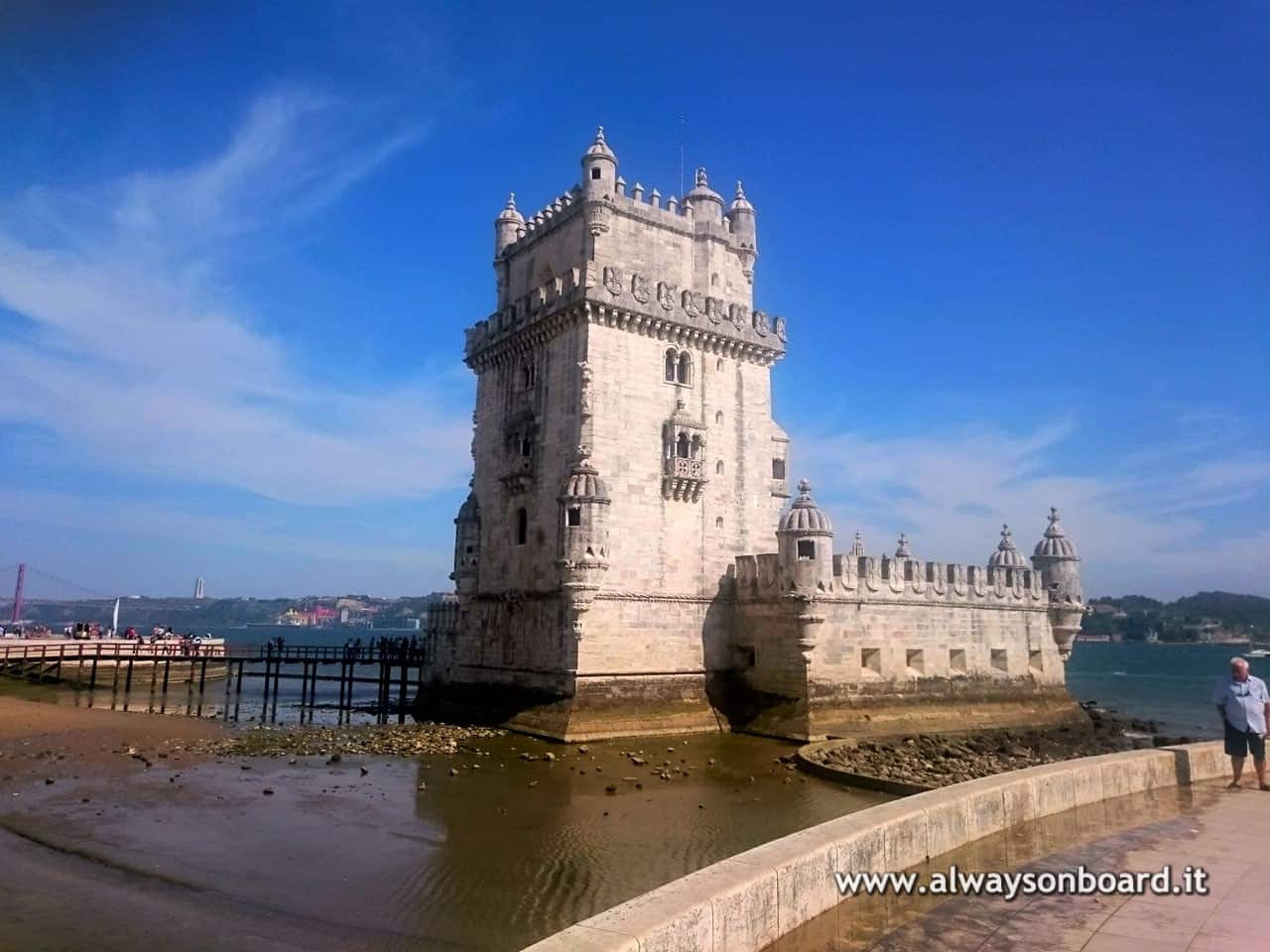
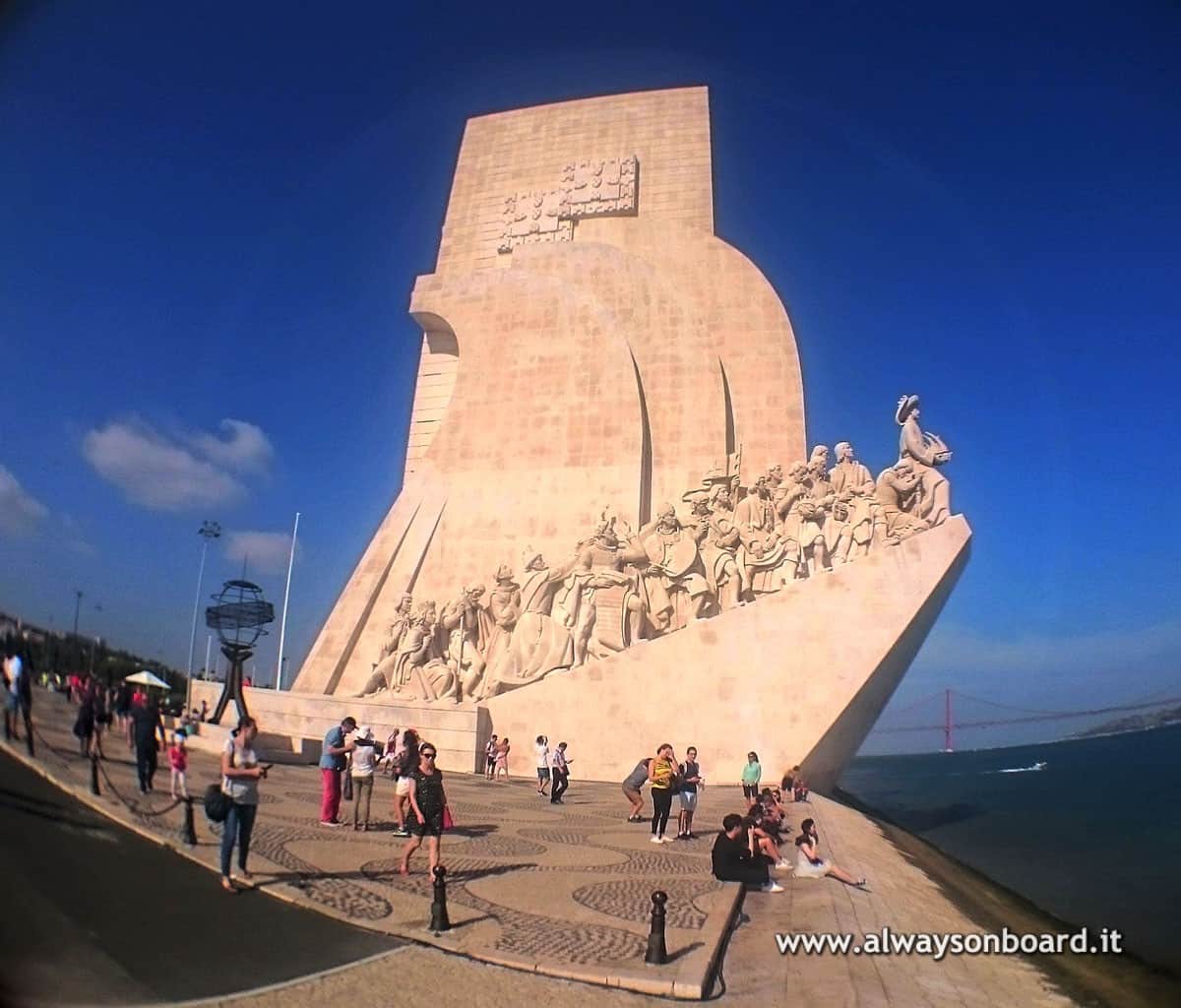
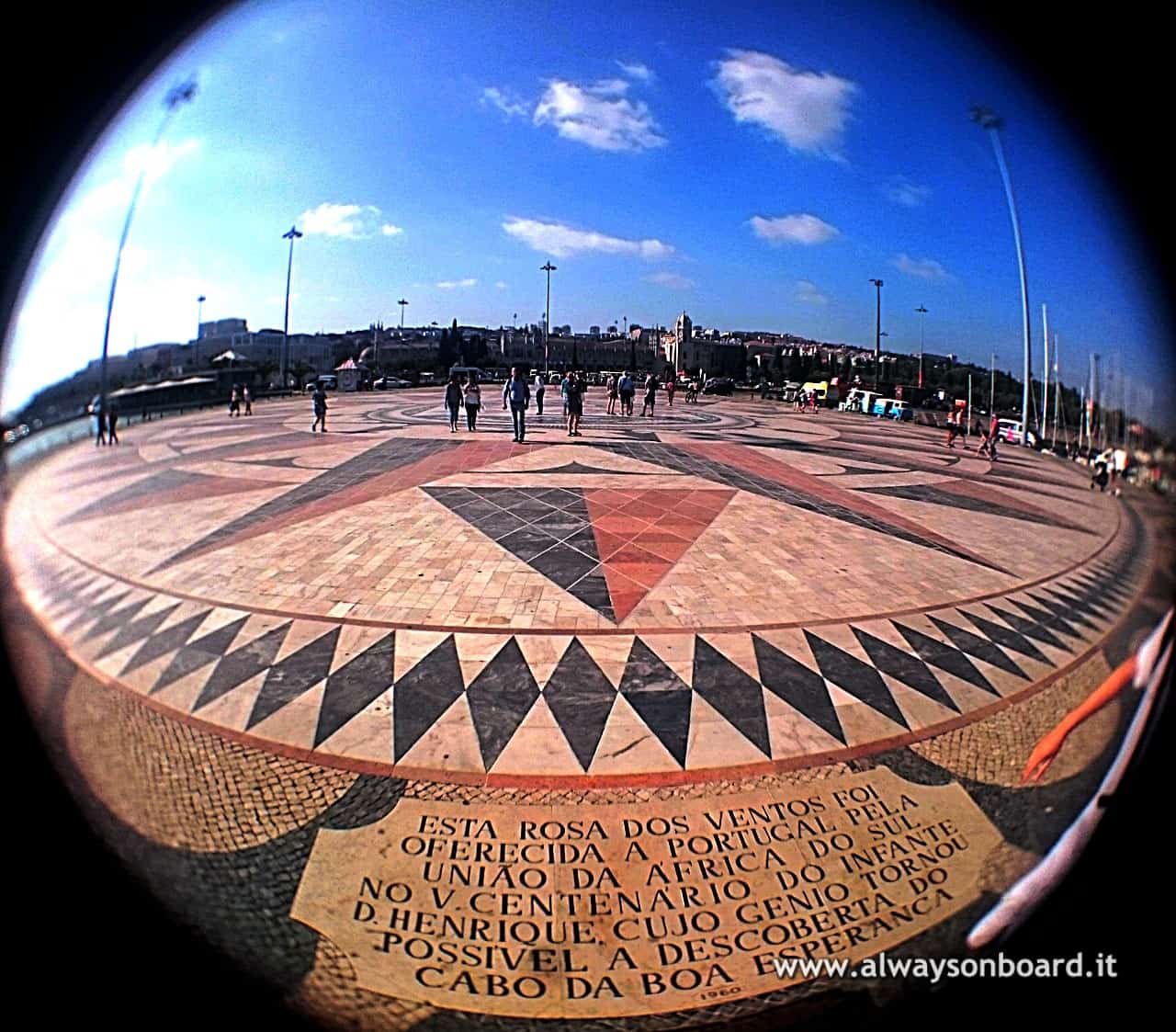
On the way back, still taking tram line number 15, if you still have free time, get off a couple of stops before Lisbon’s center, near the Cais do Sodrè station, and go visit the Ascensor da Bica; it’s similar to the elevadores visited yesterday, but the entrance is even more unique.
It seems like you’re entering a random building, but instead you’ll find a tram that will exit that building shortly after departure 😀
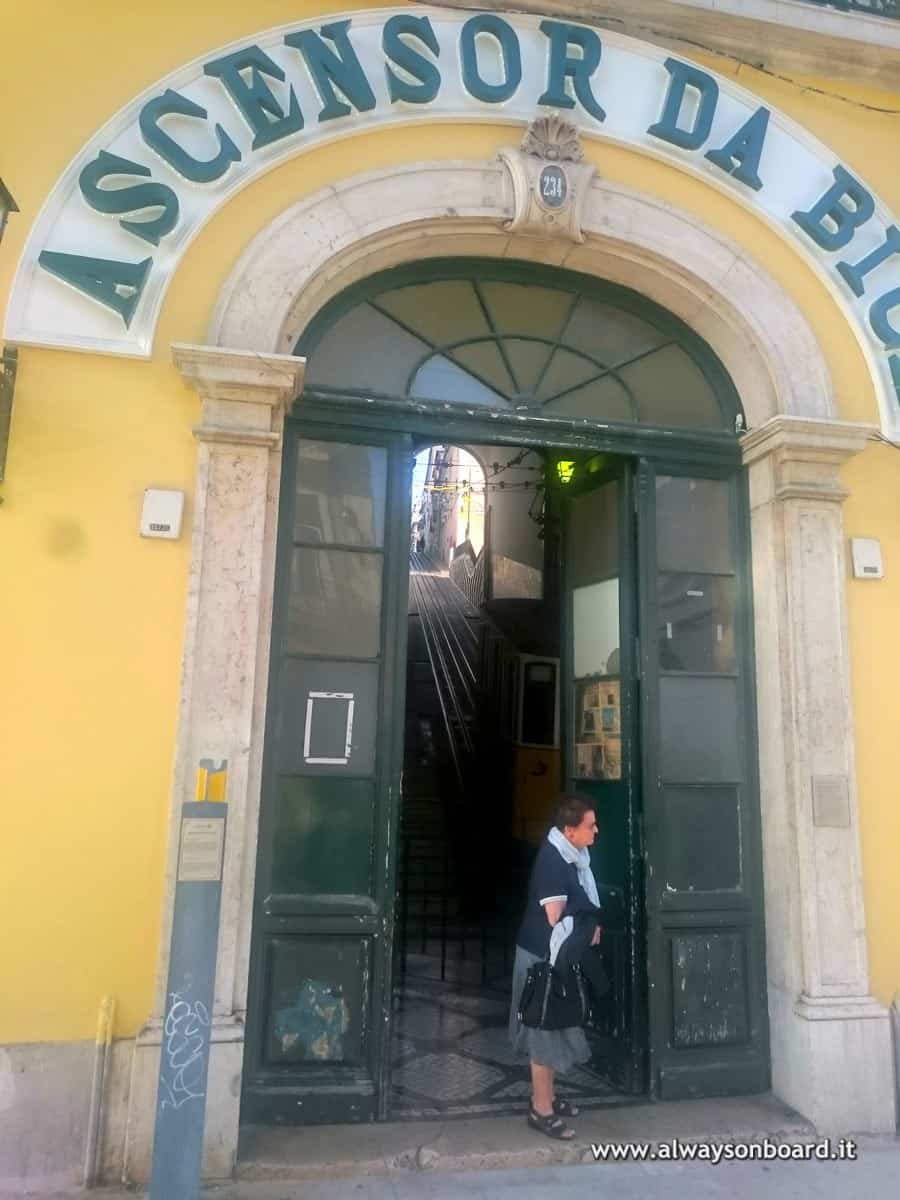
Again, the daily ticket or the Lisboa Card include it, otherwise a single ride on the elevadores costs about 4€ on board.
B – Visit São Jorge Castle – San Giorgio
If you’re not a museum rat, or if you have an extra day to spend in Lisbon, you could visit to São Jorge castle, which stands on one of the city’s highest points.

Entrance costs 15€.
The map of the castle’s interior is absolutely vital; grab one at the ticket office, especially to avoid missing some sides of São Jorge castle that aren’t easy to see otherwise.
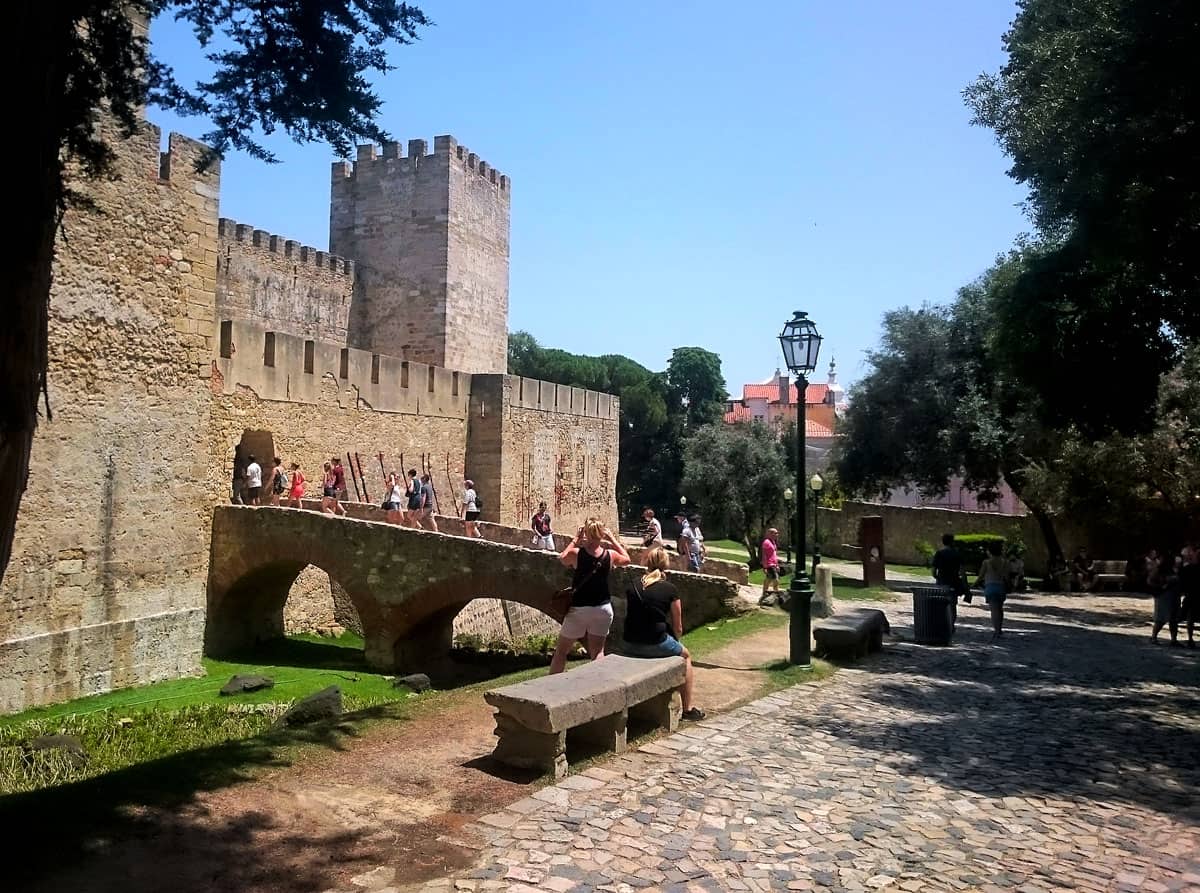
Up here, you’ll have the chance to spend the whole day if you want, because São Jorge castle is quite large and well-structured; plus, there are a couple of guided tours you can join.
The first one will show you the “camera obscura“. Twenty people enter at a time, and an assistant will show you Lisbon through the periscope installed on top of one of the towers, which reflects the image onto a concave surface, while telling you a bit about the city’s history and main buildings.
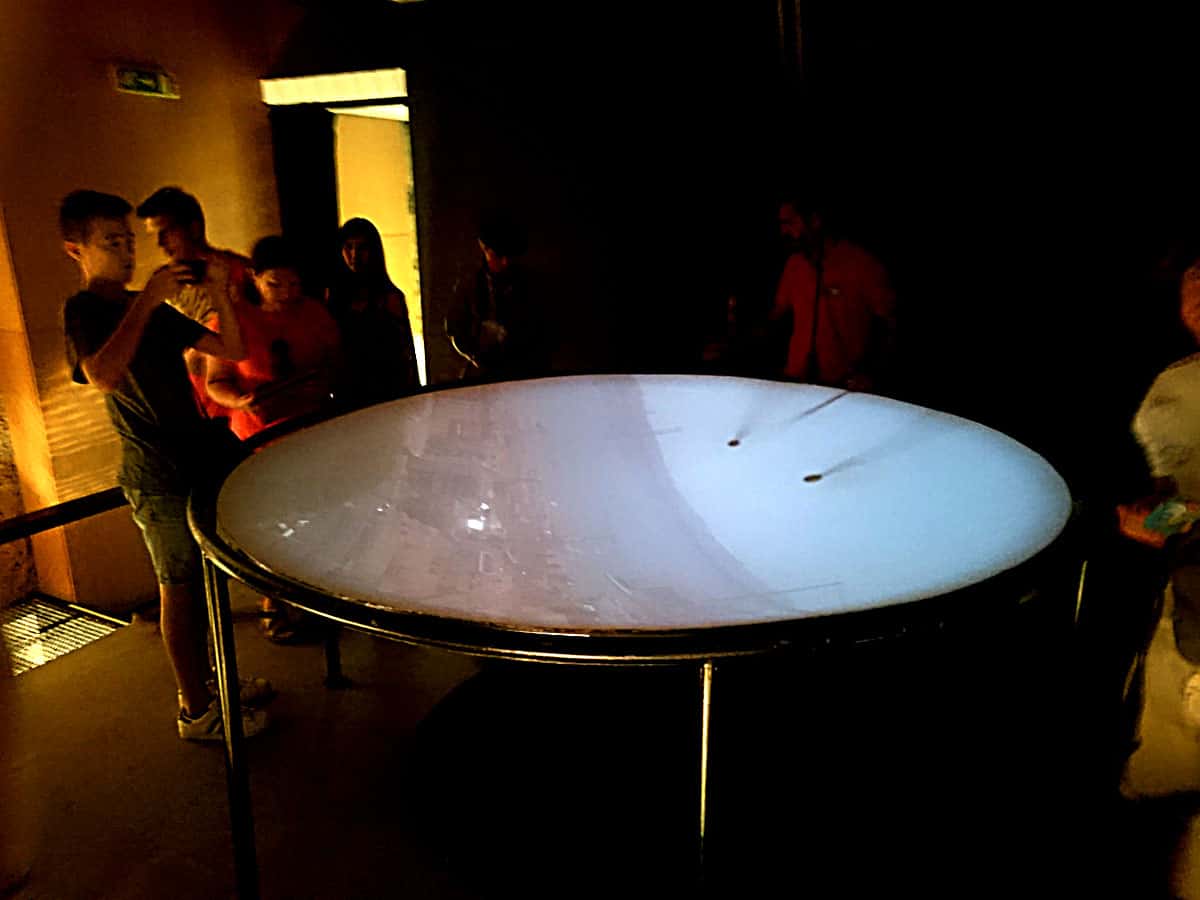
The periscope isn’t a historical instrument; it was installed in recent times purely for tourist purposes.
The second interesting visit is on the rear side of the castle, where there are archaeological excavations and a couple of buildings dating back to the Moorish occupation period; the assistant will show you the inside and explain how houses were built at that time.
C – Bonus Itinerary … a trip to Sintra or Cascais
Another option for the last day? Take a train to Sintra or Cascais!
Sintra is a small town among the hills offering you a beautiful view amidst royal palaces and the ruins of the ancient Moorish palace, while Cascais is the westernmost locality in this corner of Portugal, right on the ocean, which also has a small beach if you want a break from the buildings!
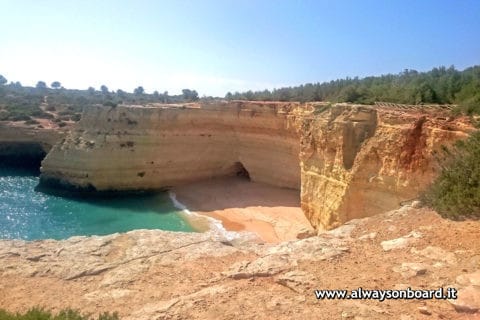
If you’re really missing the sea, then a few days on Portugal’s south coast visiting some unique beaches in Algarve is a must. Discover the coastal paths and where to stay in Algarve!
If you haven’t booked yet, check out where it’s best to stay in Lisbon and do a search in the box below, which compares all possible flights to Lisbon showing the cheapest or the fastest one.
Did you like this article? Don’t forget to share it or follow the Facebook page! 😉