Are you planning your trip, maybe a short one, for a simple weekend and you still don’t know what to visit in Bilbao?
In this guide, I’ll suggest a simple two-day tour showing what to visit in Bilbao to see all the most relevant spots in the city and its surroundings, and you’ll find out that 2 days are more than enough to visit Bilbao! 🙂
This itinerary in Bilbao is almost the same I did in June, in just a day and a half; in fact, on the first day, I arrived in the city at 4 PM. So the timings are already tested! 😉 .
If you decide to follow this itinerary, I also recommend reading my guide to public transport in Bilbao: this is both to learn how to get around and because for the journeys I’m suggesting, it’s convenient to buy the “Barik Creditrans” card, a rechargeable card valid for all public transport in the city, with which rides cost much less than single tickets! All the details here.
Finally… Before arriving at your destination, download the offline navigator MAPS.ME and the city’s offline maps onto your smartphone, on which you can also note down what to visit in Bilbao; they’ll be very useful!
What to visit in Bilbao – Day 1
What to visit in Bilbao on the first day? Let’s start from the center; we’ll leave the outer area towards the ocean for the second day!
Here’s a map with the proposed itinerary for the first day, so you can better understand where you are 🙂
Follow the itinerary in the listed order if your starting point is a hotel in Casco Viejo (like the original AliciaZzz B&B); if, instead, you’re in the new center area (for example staying at Pension San Mamès like I did), you can easily reverse the first three stops of the itinerary.
Read also: Where it’s best to stay in Bilbao
Casco Viejo
Casco Viejo, Bilbao’s old town, is the one located on the east side of the river and it’s smaller than the modern center, with its diameter of about 500 meters.
I recommend visiting it by walking around a bit randomly, so you can get lost in its more or less narrow streets and follow the inspiration of what you’ll see (or hear, like perhaps groups of musicians in random corners of the city).
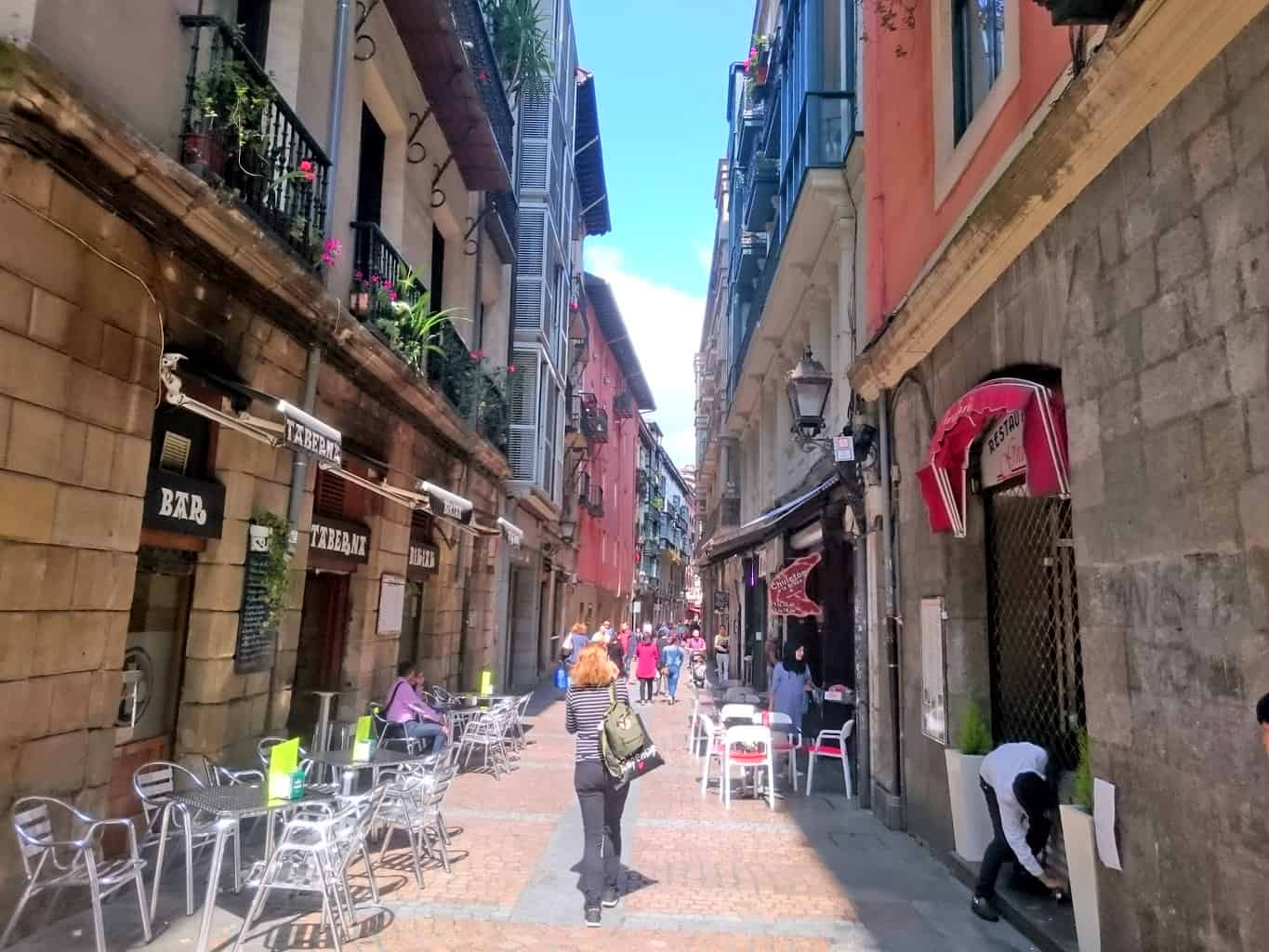
Exploring the entire old town won’t take more than 3 hours. If it’s lunchtime (or dinnertime), you’ll easily find places to eat, especially to try some “pintxos” which, to sum it up perhaps a bit too quickly, are the Basque equivalent of “tapas” in the rest of Spain.
The old center is also good for an aperitif or a post-dinner drink.
If you have spare time and you like visiting Museums and Monuments, you can try the Museo Vasco or the Cathedral (both marked on the map above)
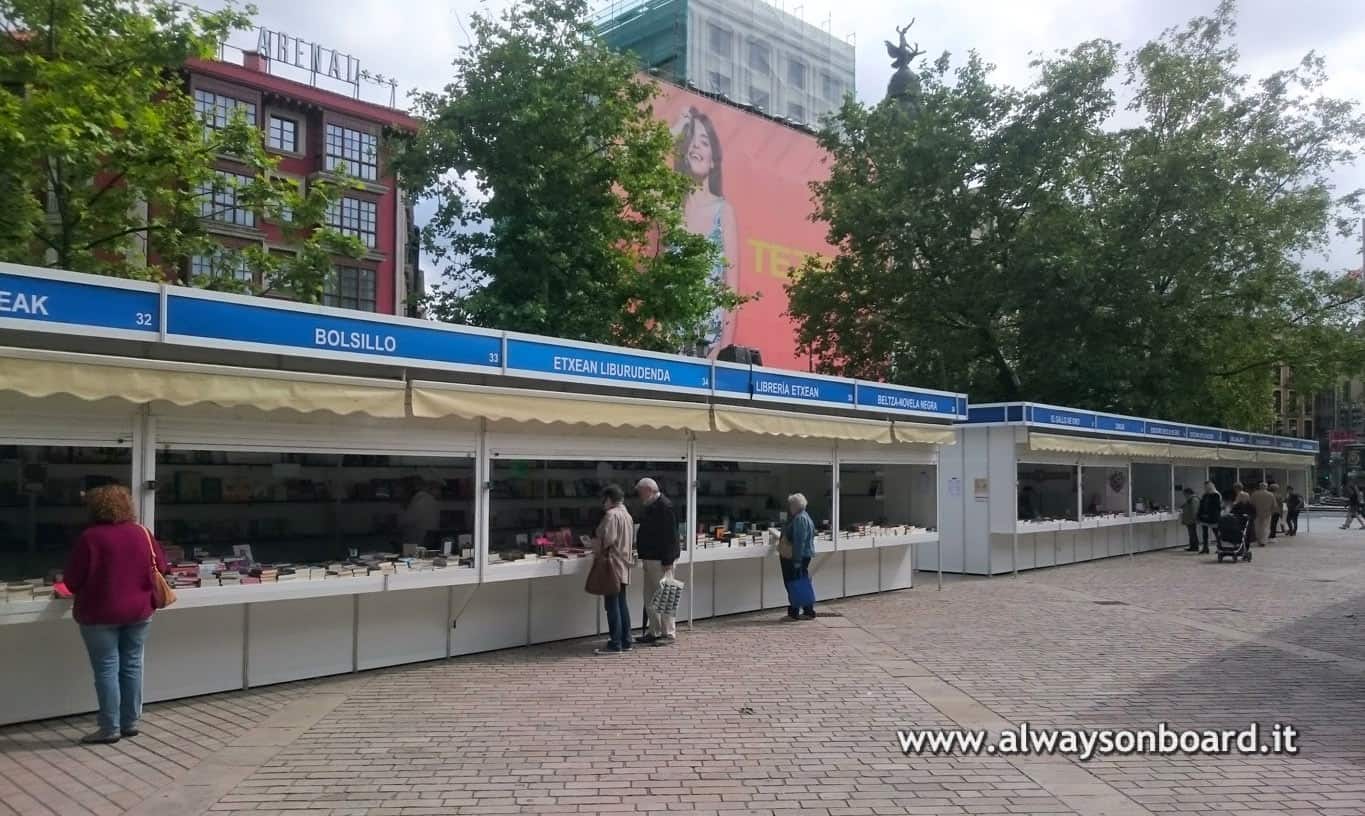
During your visit to Casco Viejo, don’t forget to stroll along the river, where near the gardens you might come across some outdoor book markets.
Mercado de La Ribera
If you’ve already visited other cities in Spain, this type of market won’t be new to you. Like in other city centers in Spain, here’s Bilbao’s covered market, with all its various stalls for fish, meat, vegetables, and local specialties.
The structure is a bit different from other cities; from the outside, it almost looks like a shopping mall and is spread over two floors.
As with all markets of this type, I recommend visiting it in the morning hours, as even though it’s open until 8 PM, some stalls close in the afternoon, especially the fish ones.
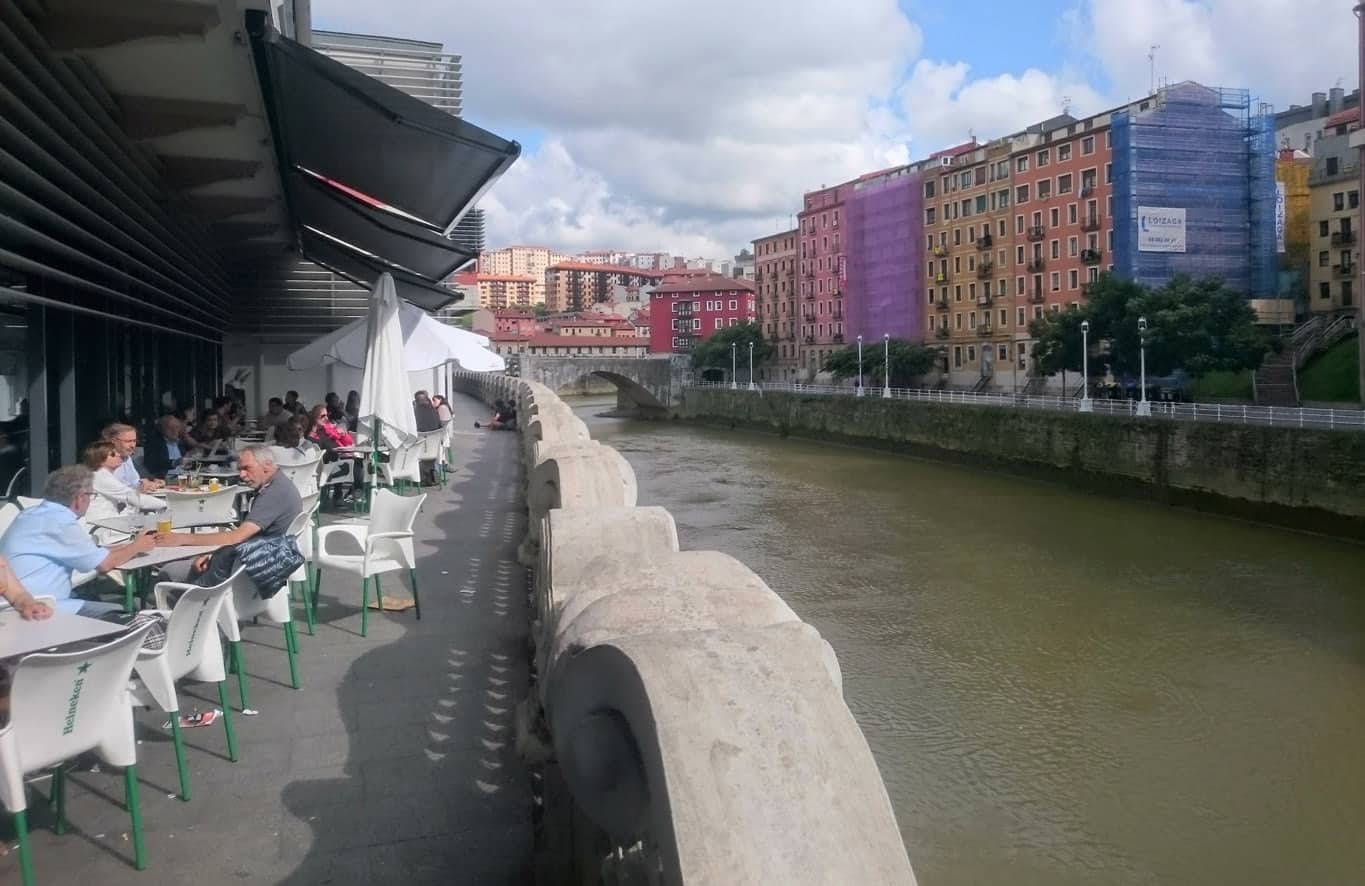
If you haven’t had dinner yet or if it’s aperitif time, on the ground floor you’ll find small bars and restaurants where you can eat something, with the option to sit on the outdoor terrace overlooking the river.
Gran Via
Gran Via is the main avenue in Bilbao’s new center area, which is west of the river.
So, starting from Casco Viejo, cross one of the two nearest bridges, and you’ll quickly reach Gran Via.
It crosses the entire modern center from west to east. The westernmost part of Gran Via is simply a large road (where you’ll also find some stops for the A3247 bus to the airport), nice, but without particular attractions.
More interesting is the easternmost side, close to the river: it’s a kind of “Rambla”, with various kinds of shops.
If you’re not a fan of shopping you can also skip this stop or save it for later.
San Mamès Stadium
If the day is almost over, continue visiting these areas the next day and maybe enjoy your evening in Casco Viejo.
If, instead, it’s early afternoon, take the metro from the station nearest to you (which you can find on the offline maps of MAPS.ME), such as Casco Viejo or Abando, and get off at the San Mamès stop.
Upon exiting the station, a short distance away, you’ll be able to see Bilbao’s large stadium.
Casilda Park and Guggenheim Center
Walking north, you’ll then reach Plaza Sagrado Corazòn, where Parco Casilda Iturrizar begins, a beautiful park where you can stop for a break near the fountains.
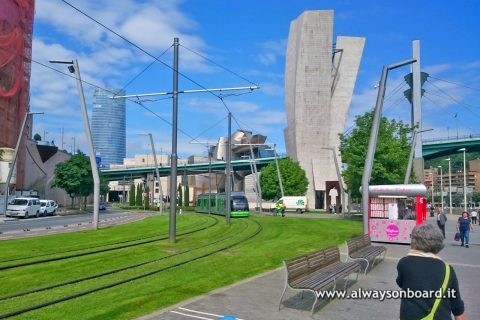
Exiting the park towards Euskadi Plaza, you’ll see the most modern part of the city. An imposing skyscraper will be in front of you, until, walking along its right side, you’ll arrive at a wooden pedestrian bridge over the river, from which you can see the famous Guggenheim center.
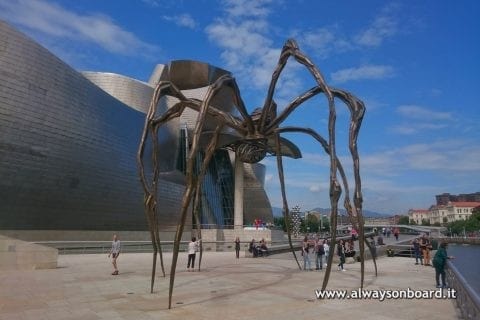
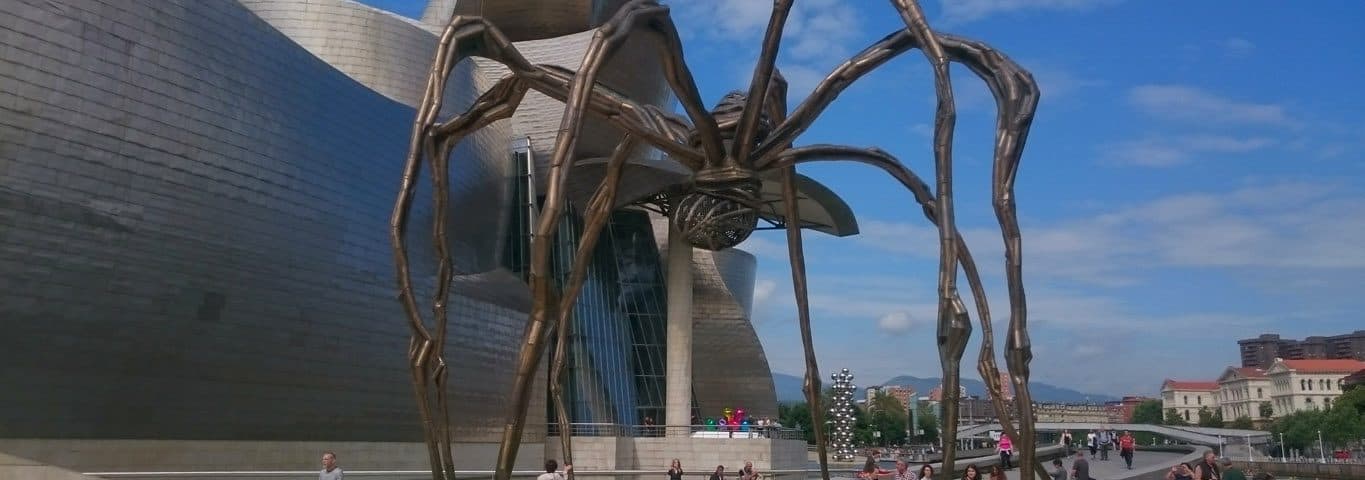
After a break to admire the view, come down from the wooden bridge without crossing it and head towards the Guggenheim center, home to the museum of the same name.
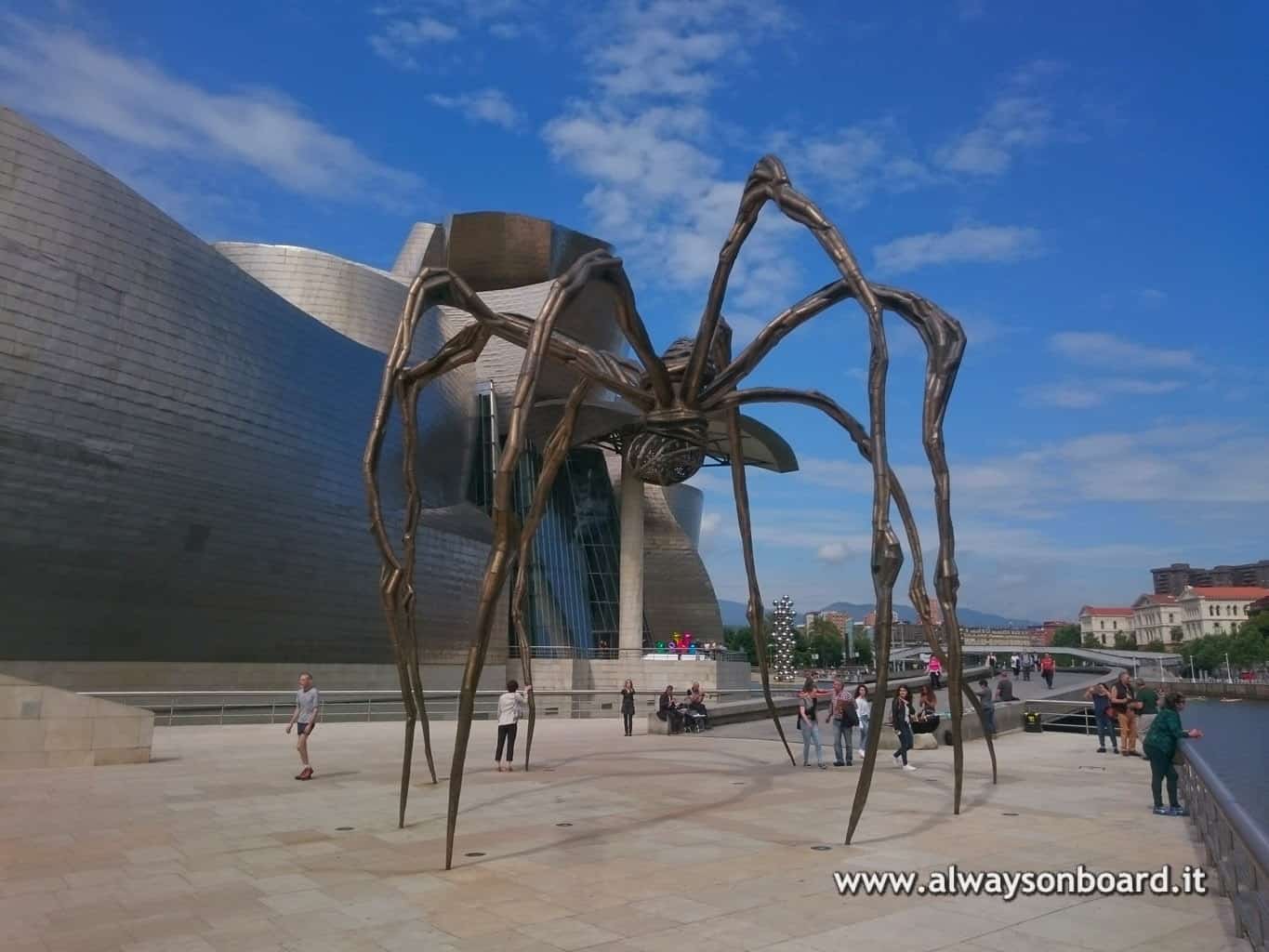
Keep in mind that if you plan to visit the inside of the museum, you’ll probably need an entire extra day! 😀
If, instead, you’re happy just visiting it from the outside and taking some unusual photos under the large spider in front of the Guggenheim museum, then continue further until you reach the next pedestrian bridge, Puente de Calatrava.
The name Calatrava certainly won’t be new if you’ve been in Venice; here in Bilbao, however, they’ve laid a carpet over the bridge’s inevitable glass section to prevent slips when it’s wet! 😆
Artxanda Funicular
After crossing the Calatrava bridge, a short distance away you’ll find the entrance to the Artxanda funicular. A funicular line with about 100 years of history, still in service, that takes you to the top of the hill, allowing you to enjoy a view that’s anything but ordinary!
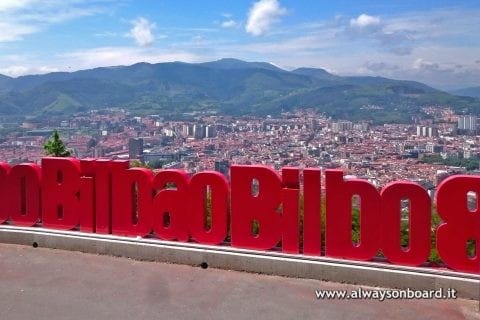
Once at the top, you’ll be in the middle of a very nice park, with artistic works among the trees and a low fence wall made of large “Bilbao” words, from which you can see the entire city!
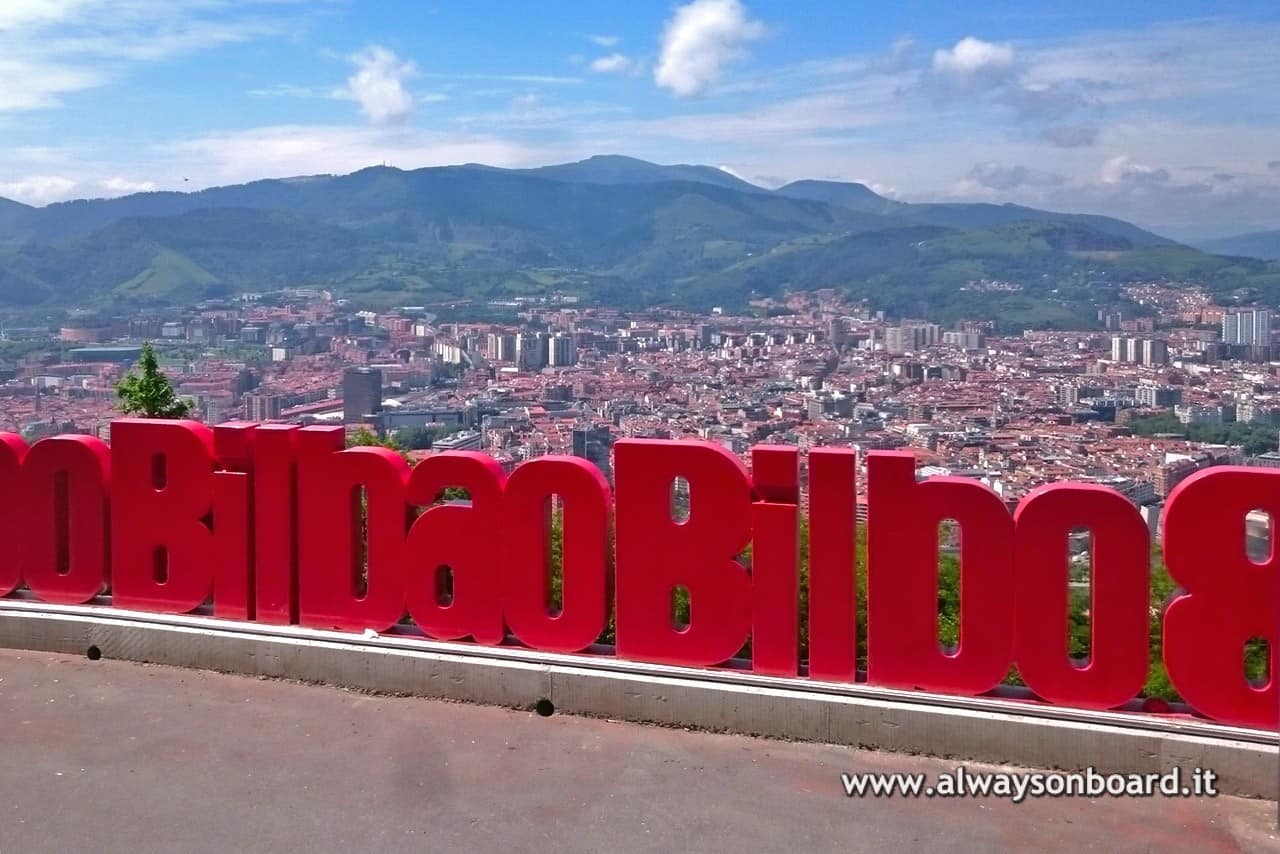
I recommend going up to the park with the Artxanda funicular when you have a few hours of daylight available to fully enjoy the views. If it’s gotten too late, postpone it to the next day!
To go up and down the funicular, the Barik card is particularly convenient; the round trip will cost you only 1.16 instead of 3.25€.
What to visit in Bilbao – Day 2
What to visit in Bilbao on the second day? Today’s trip will be about exploring outer areas of the city, all the way to the north coast, facing the ocean.
Let’s start again with the map to clarify where you are; zoom in a bit to understand better:
Beaches and headland on the ocean
From the metro stop closest to your hotel in central Bilbao, take line 1 and get off at the Bidezabal stop. From here, going down the main road, you’ll reach the beach and the ocean (following the upper blue route on the map).
The north of Spain is more cluody and less warm than the south; if you’re lucky to find a sunny day, consider also a short break on the sand! 🙂
To your right you’ll notice a headland, on top of which there’s a very nice bike and pedestrian path to see, well-equipped with small gardens and benches. On the sides, there are quite upscale villas and houses and an old mill converted into a restaurant.
To get there, exit the beach and start climbing the narrow path on the left flank, which will gradually become wider and more maintained.
Yes, there’s a bit of a climb, but the view from the top of the headland is really worth it!
If you’re great walkers, you can go all the way to the end of the headland, where there’s a small lighthouse, and from where you can also see the ocean on the other side.
If, instead, you’re tired, head back towards the metro, and instead of going back down to the beach and then up again, take a shortcut directly through the shorter road.
Puente Colgante
Leaving the city without seeing Puente Colgante would be unforgivable! 🙂
Get back on the metro in the return direction, but get off at the Areeta stop.
From here, head towards the river until you see the large suspension bridge right in front of you: Puente Colgante.
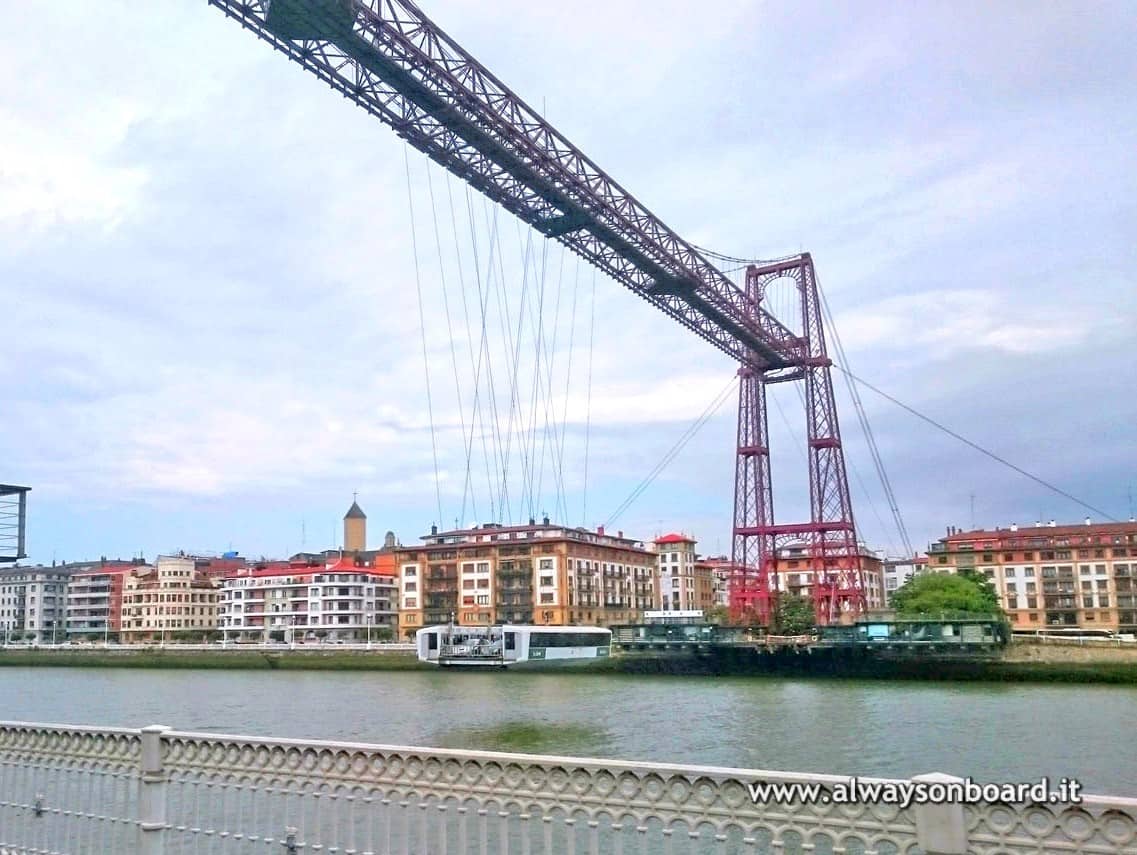
Puente Colgante was the first example in Europe of a hanging bridge (hence its name) in operation since 1893 and then taken as an example by other cities around the world in the following years. In 2006, it was declared a World Heritage Site by UNESCO.
The central arch was destroyed during World War II to slow down movements and was later rebuilt using the same original materials and techniques.
The advantage of a bridge built this way is that it can let even large boats pass without needing mobile parts that open up to make space, as happens with many other types of bridges.
It’s been in operation like this for over a century and boards people and cars, going from one side of the river to the other every 2-3 minutes.
The crossing tariff for pedestrians is 40 cents with the Barik card; buying the ticket on the spot costs from a minimum of 40 cents up to over 1 euro, depending on the time of day.
Before crossing the river, though, take a stroll along the river to its mouth, where there’s a pier with small gardens that’s worth a visit, and the statue representing men overthrowing the god of wind, symbolizing man’s victory in managing to settle in an area particularly blown by the wind.
Portugalete
After crossing Puente Colgante, you’ll find yourselves on the opposite side of the river, in the Portugalete district, which also deserves to be on the list of things to visit in Bilbao.
On this side of the river, I recommend a random walk where you can come across well-maintained historic buildings, such as the old station, now converted to an information point and public restroom.
A few meters away, you can also visit Torre de Salazar and Basilica de Santa Maria, behind which there’s a perfect viewpoint to admire Puente Colgante in motion, as in the video below!
At this point, take the metro from the “Portugalete” stop and head back to your hotel!
Now all that’s left is to choose the right area to stay in Bilbao with this guide and a cheap flight with the box below!