Sevilla is the largest city in the Andalusia region, capital of flamenco and rich in history since the time of the ancient Romans. In this guide, we’ll find out what to visit in Sevilla to build a 2-day or 3-day itinerary in this beautiful city.
Let’s start right away with some good news that you’ll surely appreciate when planning your trip. To visit Sevilla, you won’t need to use transport; you can reach everything on foot (or by bike if you feel like it) since most of the avenues are mainly pedestrian, and the major monuments and attractions to visit in Sevilla are not too far from each other.
For the same reason, in this complete itinerary for visiting Sevilla in 2-3 days that I’m about to share, you don’t even need to follow a specific order for visiting this or that attraction: you can simply take a break when you’re tired and pick up where you left off the next day! 🙂
Map of what to visit in Sevilla: complete itinerary
Let’s start, as always, with a complete map of what to visit in Sevilla, which may be your reference for the trip 🙂 Save this page on your smartphone to always have it with you while visiting Sevilla!
Orange pins and lines are monuments and attractions to visit in Sevilla, which I’ll show you shortly.
Green pins and lines are parks or avenues in Sevilla where you can go for a walk or rest a bit for a lunch or dinner break.
Finally, the yellow lines are the 3 main shopping avenues in Sevilla: for those who are shopping-addicted, these will be unmissable stops!
Read also: Best areas to stay in Sevilla
Cathedral and Giralda
The most famous monument to visit in Sevilla and the one that kicks off this itinerary is the Sevilla Cathedral.
The Sevilla Cathedral is one of the largest Gothic cathedrals in the world, partly built on the remains of the ancient mosque built during the Arab invasion, both to “save effort” and as a sign of submission to the previous culture driven out of the city.
Besides being impressive for its size and the lavishness found inside, it’s also remarkable to see how parts of the cathedral still have Arab-style ornaments and the orange tree garden within, almost unchanged from the time of the mosque, where it served as a purification antechamber, as oranges and their blossoms held this meaning for Arab culture.
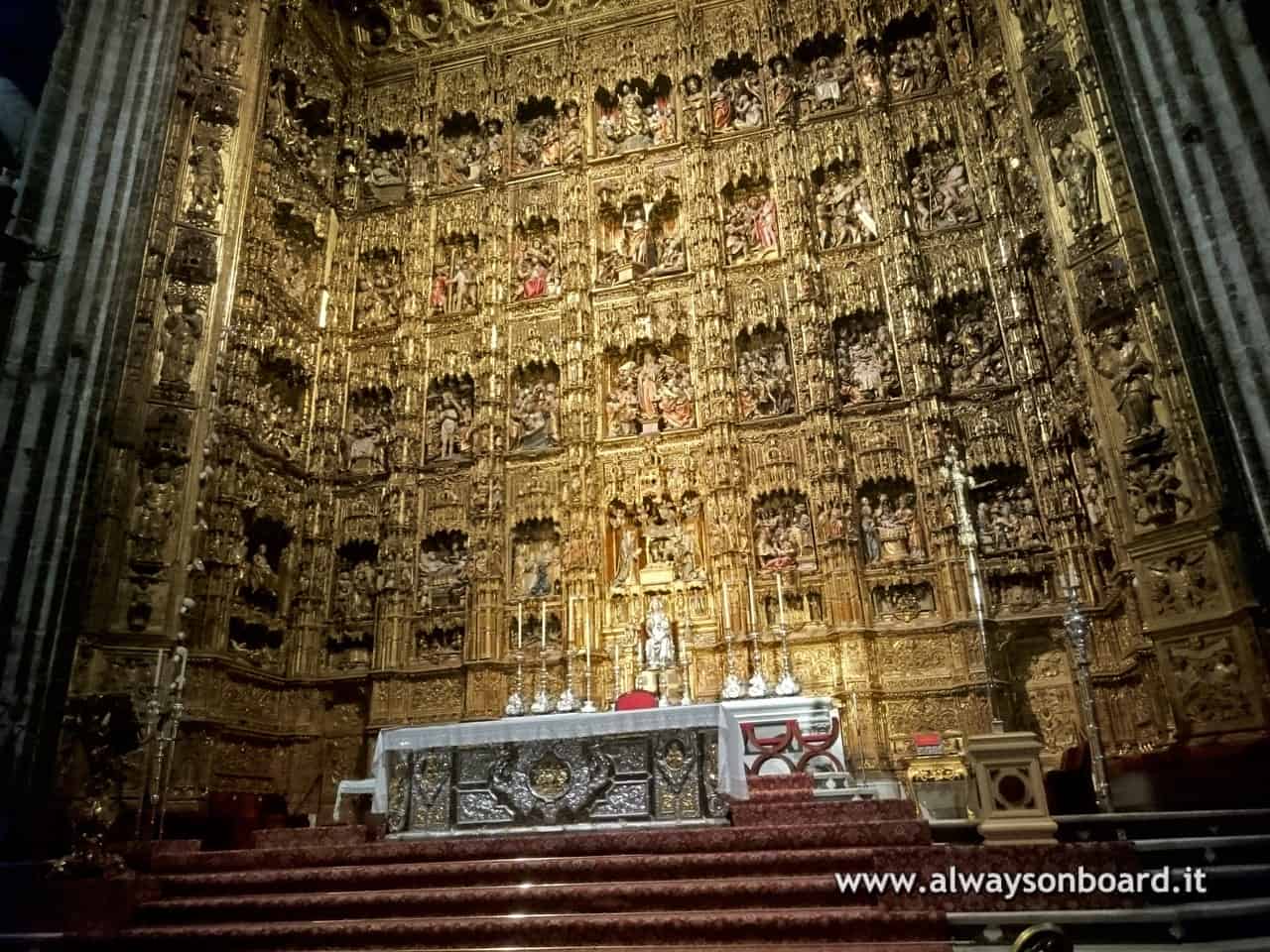
Entrance to the cathedral was 6€ just a few years ago, now cost 14€ or 13€ if bought online. When you’re inside the cathedral, don’t limit yourselves to a classic tour but also slip into the narrow corridors at the ends, which lead you to small, extremely decorated secondary chapels.
Visiting the Sevilla Cathedral takes 2-3 hours at a relaxed pace; if you want to start with something easier to visit in Sevilla, feel free to postpone it. 🙂 If you’re traveling in summer, visit the cathedral during the central hours of the day to escape the heat!
Next to the cathedral is the Giralda, which we could loosely describe as the cathedral’s “bell tower”. This tower, which was actually built in the Arab era, was unfortunately closed for renovation during my visit to Sevilla.
However, I was told about combined tickets that, if bought in advance, allow you to visit both the Cathedral and the Giralda at a reduced price and skip the line. So, take a look at the official cathedral website to see if they’re available. 🙂
If you want to stay right with a view of the cathedral for a top-tier experience, take a look at EME Catedral Hotel, a 5-star hotel with a rooftop pool and bar overlooking the city and the cathedral.
The Town Hall
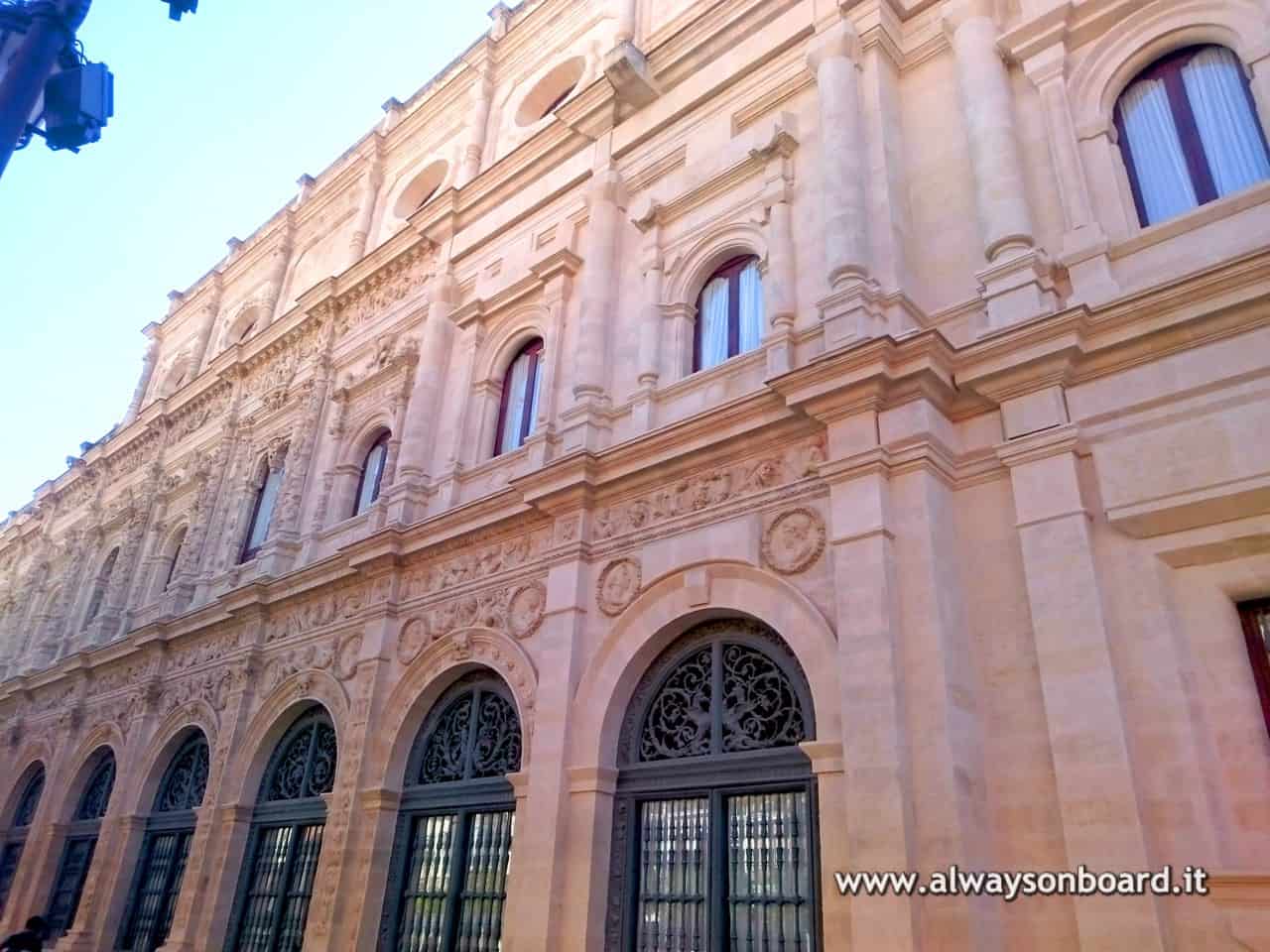
The Ayuntamiento de Sevilla, or more simply the town hall, is one of the largest historic buildings to visit in Sevilla. Actually, just a visit to the outside of the town hall is enough to appreciate its main feature: the incomplete decorations.
The construction of Sevilla town hall dates back to the time when this city was the most important “port” through which all merchant ships headed for inland Europe passed (although Sevilla isn’t on the sea, passage was via the Guadalquivir river that flows through the city), from which the city took a portion of each ship’s cargo as a passage tax, turning it into one of the richest cities of antiquity.
Over time, this role as a maritime frontier then passed to the city of Cadiz, leading to a sudden impoverishment of Sevilla, which, among other things, caused funding cuts for the decorations on the town hall’s facades, leaving it incomplete, as you can see below. The front side of the building is the most decorated, with details gradually diminishing and eventually disappearing completely as you move towards the rear facades.
Plaza Nueva
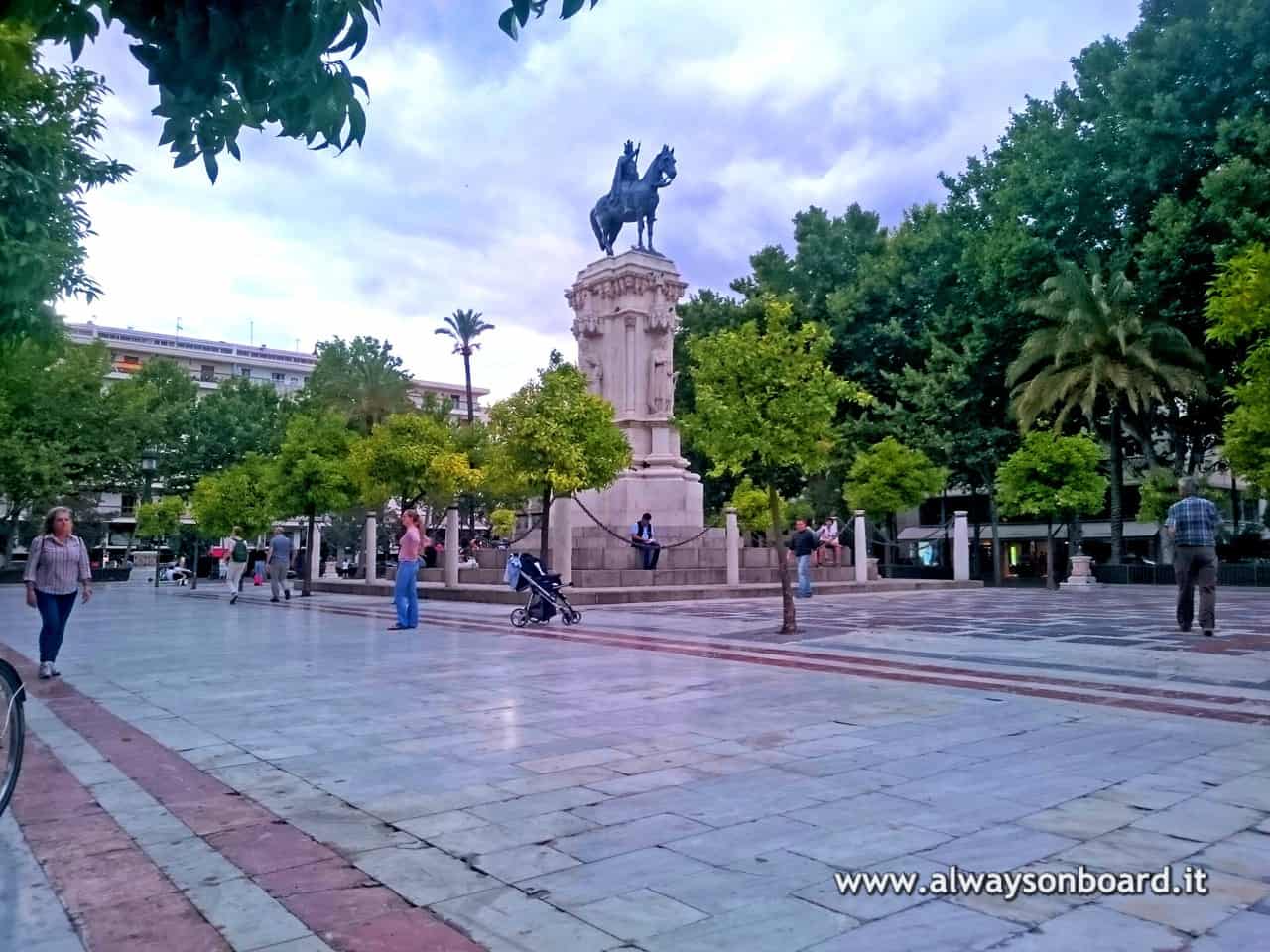
Right after seeing the Sevilla town hall, you can make a refreshing stop at the adjacent Plaza Nueva. A large, tree-lined square where, among other things, the central tram line that crosses the entire historic part of the city also starts, in case you’re not a big fan of walking. 🙂
General Archive of the Indies
The “Archivo General de Indias” is a museum that was originally more of a “repository” for documents and materials related to the conquest of the Americas and the various voyages made in that direction. Even today, various maps drawn at the time, instruments used by navigators, and some “loot” imported from the new continent are on display.
Access to the General Archive of the Indies is free and can be visited in about an hour. Keep in mind that it closes at 5 PM, which means they start asking you to leave around 4:30 PM, so go early.
Barrio Santa Cruz
After leaving the General Archive of the Indies, if it’s lunchtime or time for an aperitif, the best place to take a break is in the nearby Barrio Santa Cruz, a tree-lined avenue packed with little restaurants and tapas bars where you can try something typical or have a drink. The atmosphere in the Barrio Santa Cruz is at its best in the evening, during dinner time; don’t miss a walk here at sunset! 🙂
Alcazar of Sevilla
What to visit in Sevilla if not the Real Alcazar of Sevilla? This Arab fortress, among the largest in Spain, is a real treat for history and genre lovers, and it’ll take you a few hours to visit.
Be careful though, to avoid endless queues for entry, it’s advisable to get your ticket in advance, for example from the official website.
Behind the Alcazar, don’t forget to take a stroll in the Jardin de Murillo, a long and well-kept garden good for a relaxing break.
University of Sevilla – the former Tobacco Factory
A short walk from the Alcazar of Sevilla also stands the University of Sevilla, actually located in the structure that once had nothing to do with teaching, as it was originally a Tobacco Factory.
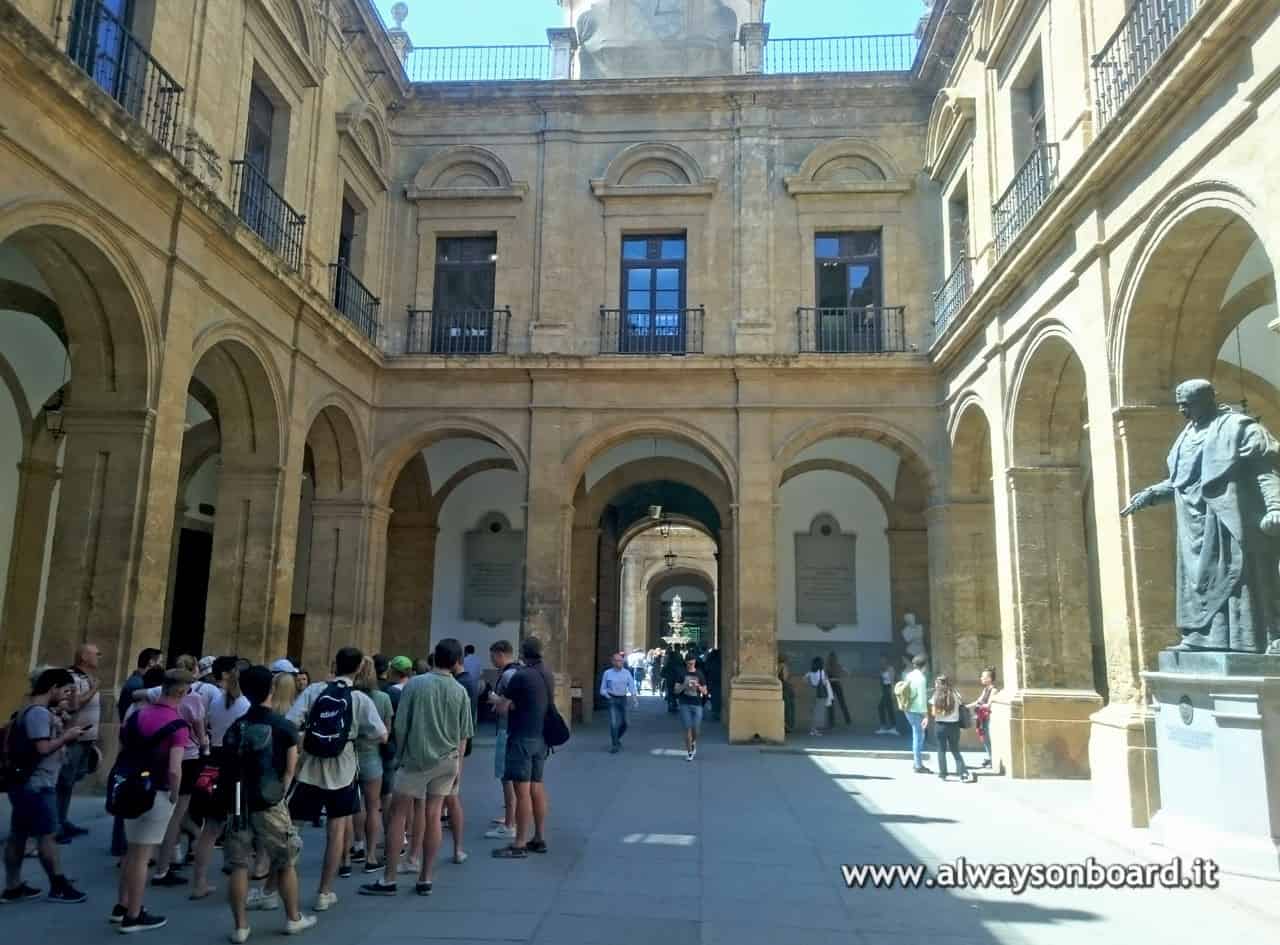
Definitely an attraction to visit in Sevilla, as access is free even if you’re not a student. Even better if you visit it with a Free Walking Tour, which I’ll tell you about later, as they can share some interesting details about it.
Plaza de España
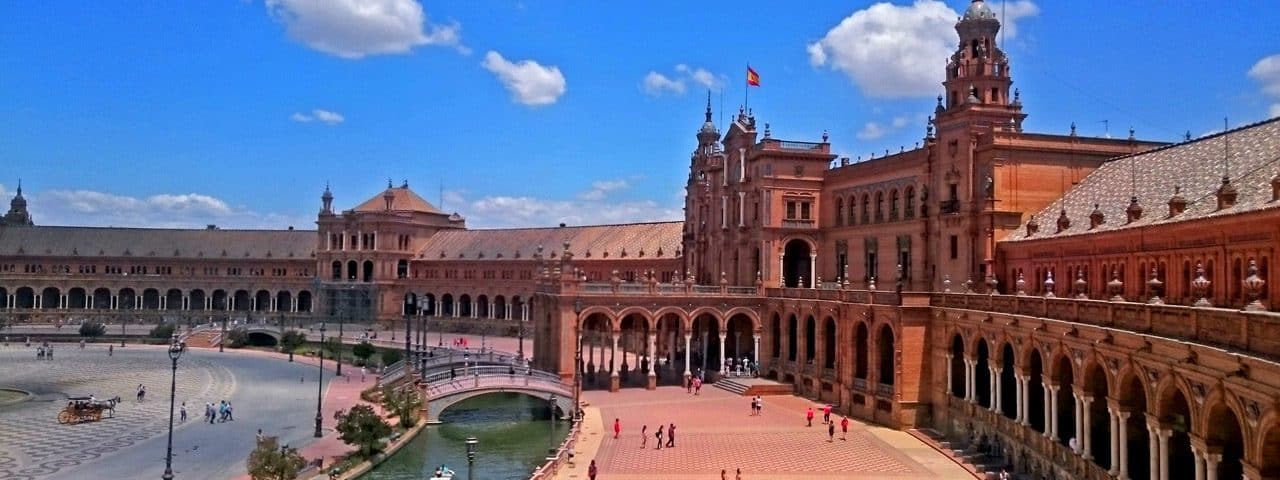
The quintessential monument to visit in Sevilla? Plaza de España!

This grand building, overlooking a square complete with a bridge and canal, was built in 1929 for that year’s Expo, celebrating all the Spanish regions as well as the overseas territories conquered by Spain through other separate buildings nearby, which you’ll discover while walking or that a guide will show you if you take a Free Walking Tour.
This large open-air monument, in fact, has a sort of alcove for every single Spanish “province”, with a map, a painting of a significant scene, and endless ornaments.
On the canal in front, there are also rowboats passing by (tourist ones, of course) if anyone fancies a boat ride. 😆
Moreover, at Plaza de España, at certain times (I couldn’t figure out if they’re regular or random), flamenco shows also take place near the central steps, worth a visit if you happen upon them!
Maria Luisa Park
Right in front of Plaza de España lies an immense park to visit in Sevilla, which can be your perfect escape from the city’s midday heat if you’re traveling in summer, or a place to rest your legs or have a packed lunch.
In the middle of the park, you’ll find fountains, small ponds with ducks and doves, monuments under which books are displayed for public fair exchange, benches, and many avenues for walking or cycling.
Torre del Oro
It’s the “small” tower overlooking the Guadalquivir river on the west side of the city is called in Spanish.
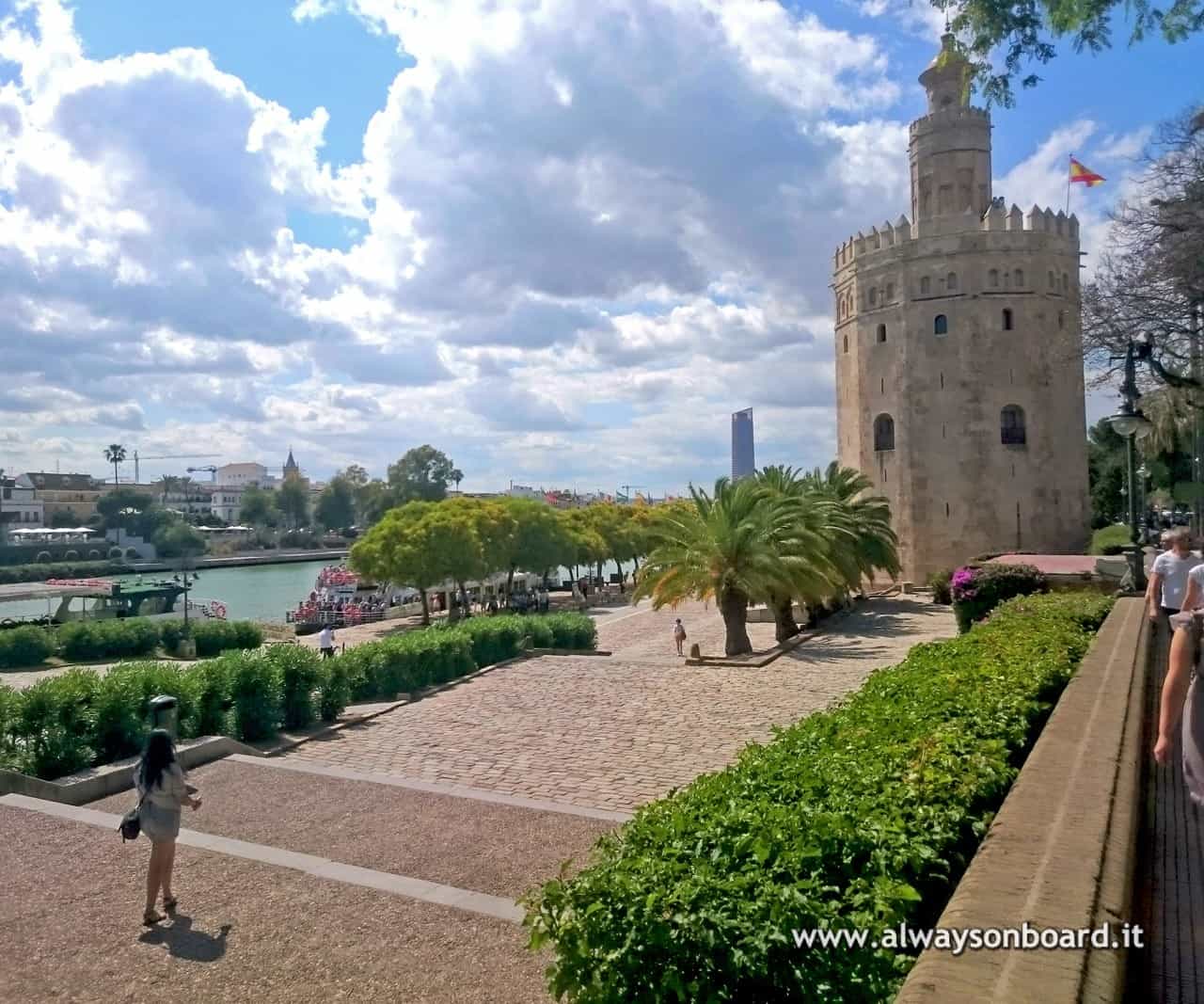
In my opinion, you can admire this tower from the outside by strolling around it or perhaps from the nearby bridge, which you can then cross to visit the Triana district, the next stop.
Triana District
On the opposite side of the Guadalquivir river, at the western end of Sevilla, lies the Triana district. A small district mainly active in the evening with a moderate nightlife along the two avenues marked in green on the map, but it can also be interesting to visit in Sevilla during the day if you have some spare time for an ice cream break or to admire some really well-kept buildings along the avenue overlooking the river.
Setas of Sevilla
Indeed, this modern structure in the heart of the city, although not very tall, allows you to admire the entire city from above by the walkway at its top. In fact, you’ll notice that only the Giralda (the cathedral’s bell tower) and a modern building in the distance that looks like a large lipstick due to its shape, are taller than you.
Setas of Sevilla was built by architect Jürgen Mayer using wood and concrete as the main materials, which is why Setas of Sevilla is a somewhat controversial work, precisely because of wood’s poor durability.
The price to enter the Setas of Sevilla had a massive increase in just a few years when it was 3€, to current 16€. If it was worth the visit with the old price, I can’t feel to recommend it that much for the huge current ticket fee. Just admire it for free from the outside, it won’t disappoint!
If you want to stay right near the Setas of Sevilla, take a look at Sevilla Palace, a three-star hotel with classic furnishings.
Museum of Fine Arts
If you’re a fan of the genre or still have some spare time, you can make a stop at the Museum of Fine Arts, not far from the Setas of Sevilla.
Alameda de Hercules
This large square in the northernmost part of central Sevilla is a popular evening meeting spot for those who want to dine or spend an evening with company, enjoying bars and drinks. It definitely deserves a mention in the itinerary of things to visit in Sevilla, even better if after sunset.
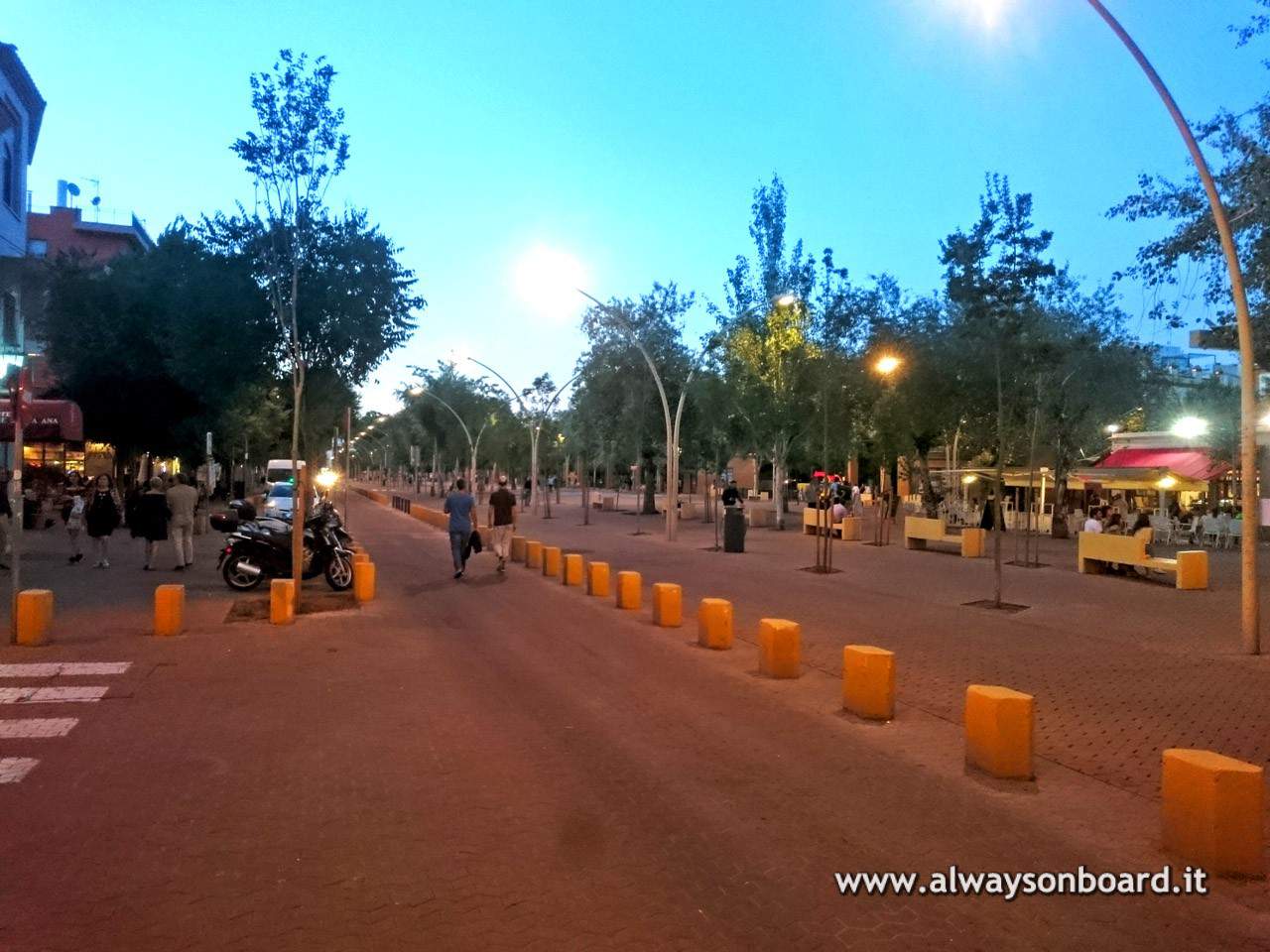
The area around Alameda de Hercules is also an excellent area to stay in Sevilla. If you haven’t yet decided which hotel to book, first take a look at the guide for choosing the right accommodation in Sevilla or the Sacristia de Santa Ana hotel, located in an eighteenth-century manor.
Casa de Pilatos
If you still have some spare time during your Sevilla itinerary, Casa de Pilatos is another historic palace with a mixed style of Italian Renaissance and Mudejar, which you could probably visit in an hour. There’s an entrance fee.
Flamenco Museum
Could we not talk about Flamenco in a guide on what to visit in Sevilla? No! And indeed, I’m pointing out the Flamenco Museum, although I personally recommend you attend at least one real flamenco show during your trip to Sevilla.
Where to see Flamenco in Sevilla?
In Sevilla, you can mainly find two different types of Flamenco shows.
- Professional ones, usually held in well-kept venues, small theaters, or classy restaurants where you can also dine, for which you normally pay 30 to 50€ per show.
To find and book them in advance, even with free cancellation, take a look at this list of flamenco shows and also this other one. - Then, the “authentic” or amateur flamenco shows, which usually take place in modest bars, sometimes hidden in Sevilla’s narrow streets, with free entry or for a few euros, featuring perhaps non-professional artists but with an authentic atmosphere that, in my opinion, you must see at least once!
You won’t have much trouble finding them; day by day, you’ll find posters in the main avenues or near restaurants stating where and when the next flamenco show will be held… or alternatively, you can ask at some bars or restaurants.
Bonus: an easy trip to Ronda!
Do you have one more day or do you want to try something out of town? Try this daily trip to Ronda and Setenil without worrying about the boring parts!
How to visit Sevilla? With a free walking tour!
Despite this wonderful guide on what to visit in Sevilla, do you want to see everything with a local guide who can tell you (in English or Spanish) some details you’d never discover otherwise?
Then I recommend you visit Sevilla with a Free Walking Tour! These tours, offered by local associations, provide you with expert city guides who take you on a walk through Sevilla, showing and telling you about all these monuments and parks I’ve listed, in 2-3 hours depending on the tour.
It’s all free and based on the generosity of visitors who leave a tip, well-deserved I’d say, at the end of the tour!
If you like the idea, you just need to find out the meeting point and time for one of Sevilla’s Free Walking Tours, or if you’re already out walking and notice some young people waiting with colorful umbrellas in one of the main squares… that’s them!
My advice is to first take a Free Walking Tour and then go back on your own to visit again what you liked most or want to explore further (or to enter the paid monuments where a ticket is needed, since the walking tour, for obvious reasons, shows them to you from the outside).
I’ll leave you some links for Free Walking Tours:
- www.heartofsevilla.com : the one I joined, absolutely recommended, the meeting point was under the Setas of Sevilla
- www.freewalkingtoursevilla.com
- www.panchotours.com
Where to go shopping in Sevilla
Where to go shopping in Sevilla or where to stroll if you’re in the mood for shops? In the heart of Sevilla’s historic center, there are three parallel avenues, Calle Velazquez, Calle Sierpes, and Calle Cuna, marked in yellow on the map, which represent the commercial heart of Sevilla.
Anyway, even if you’re not interested in shopping in Sevilla, I still recommend passing through them, as these avenues are also nice from an architectural point of view.
Finally… accommodation and flights!
Now that you know what to visit in Sevilla, all that’s left is to find great accommodation in the city and a cheap flight!
Regarding accommodation, the best areas to sleep in Sevilla are right in the historic center. Take a look at the guide on where to stay in Sevilla and the map it contains to discover the best hotels in a few minutes… I’ll even suggest some with breathtaking views! 🙂
As for the flight, do a search in the box below, which compares all possible flights to Sevilla showing the cheapest and fastest ones! My advice is to always also look for flights departing from an airport a bit further from home; you might discover less expensive and non-stop flights!
Found this guide useful? Then share it with friends and follow the Facebook page! 🙂 It costs nothing and helps the site grow!