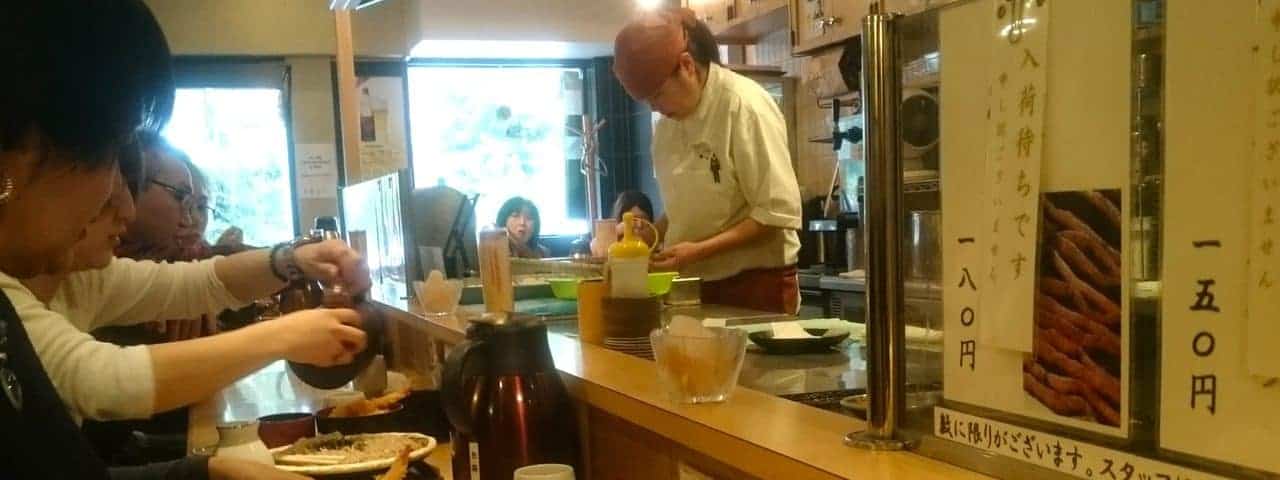
If you’re about to go to Japan, whether for a trip or a move, there are some habits, rules, and customs you absolutely need to know before you even leave to avoid embarrassing situations or simply not to feel lost when you discover them firsthand! 🙂
1 – Nose blowing in Japan
In Japan, blowing your nose in public is considered rude; yep, I know this shocks you, but that’s not all.
On the contrary, in Japan, the act of sniffing is common and accepted, definitely preferable to blowing your nose in a public place.
So, if that sound bothers you, prepare yourself psychologically for your trip to the land of the rising sun, you might hear it frequently!
But try not to get irritated, it’s part of their customs, and always remember that you’re the guest 😉
2 – Eating on the street in Japan
More not-so-happy news for those who love to eat and try street food: in Japanese cities, eating on the street is considered a bad sign, let alone eating while walking!
Perhaps out of respect for others, to avoid dirtying someone in case of bumps (which actually almost never happen, at least among Japanese people, since they’re brilliant at avoiding each other by a millimeter even when the crowd is insane!).
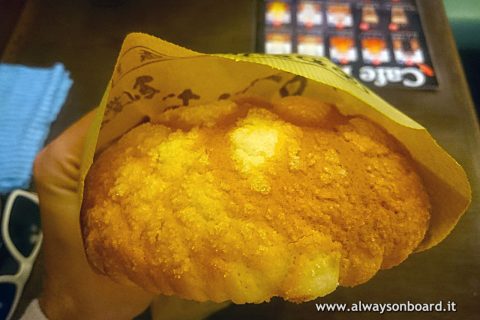
This sometimes unfortunately is a problem because in Japan, as in every part of the world, there’s no shortage of opportunities to try street food (which is, by the way, very good) like tempura, fish seared on a griddle, seafood skewers, sweets (in Japan you’ll find an amazing variety of sweets!) and many other things.
But there’s a lack of opportunities to enjoy it! 😆
Generally, the correct way would be to buy the food and eat it inside the establishment if it has seating (but the places are usually one meter by two and packed), or to take it away. But maybe it’s hot and it’ll get cold!
You’ll find yourself in little streets where you’re surrounded by inviting food shops or stands and just as many signs saying it’s not allowed to eat on the street, leaving you wondering what to do.
My advice is always the same: don’t be a show-off and try to observe what the Japanese do 😉
If possible, never eat while moving, at least find a place to sit for a moment (which isn’t always easy… see point 11!)
3 – No talking on the phone on the metro
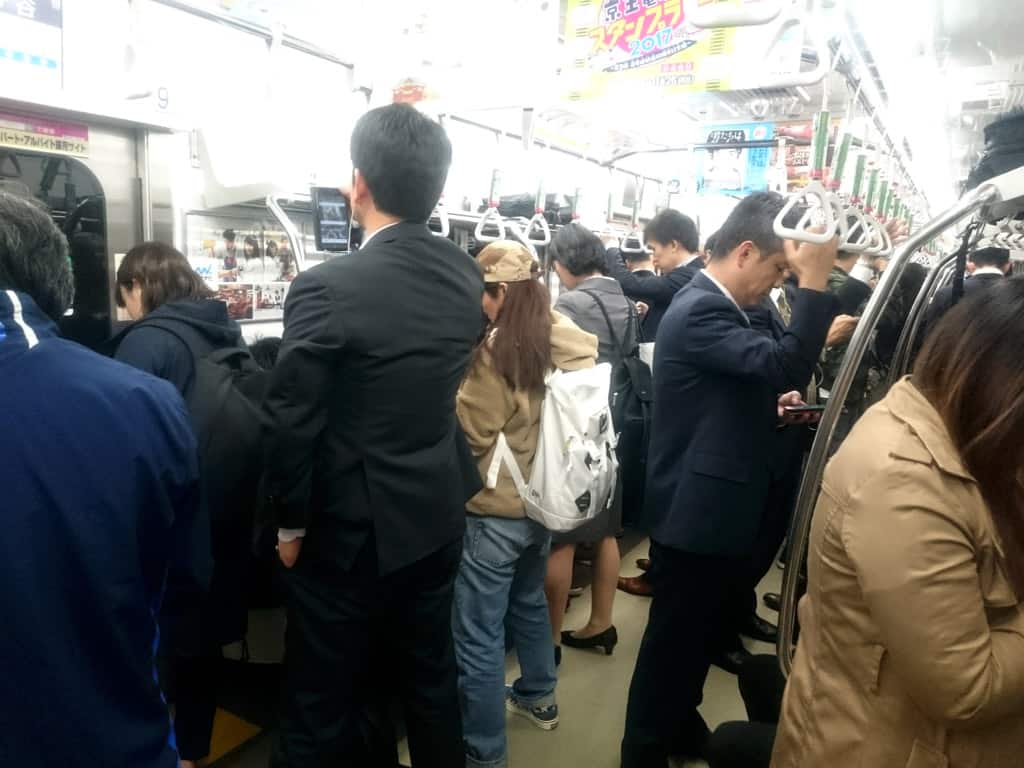
On the subway or generally on public transport, talking on your cell phone is considered rude, because of the disturbance it might cause to other travelers.
You may like: Where it’s best to stay in Tokyo
For the same reason, the ringer should also be silenced.
Those who absolutely must make a call and can’t avoid it normally cover their mouth and speak at a volume that’s barely noticeable (and I wonder how the person on the other end could understand… 😆 )
While talking on the cell phone is bad manners, using your smartphone in other ways is not forbidden at all; you’ll soon discover this when on the metro you find yourself (maybe) being the only one not looking down at it.
At that point, in the silence of the metro, with zero social interactions (except those online) and some people even manage to sleep for a few minutes, waking up at their stop with the precision of a clock, you’ll understand why a cell phone conversation would indeed be disruptive.
4 – Queues … these unknowns
The Japanese are a precise people, from whom we really have a lot to learn. Order is a constant in everything they do and in everything you’ll see, including queues.
You’ll find them forming a perfect queue at the checkouts, in front of the entrances to observatories to see Tokyo from the sky, but also outside an overbooked restaurant, in a perfectly orderly snake-like queue. And above all, in front of the doors of public transport.
In subways and train stations, always observe what the locals do to avoid causing obstruction.
You’ll notice that for each door of the vehicle, two lines of people form waiting to enter, one on the left side and one on the right side of the door, leaving the center space free for those who will get off when the vehicle arrives.
In some stations, there are even markings on the ground to get into the right position, in others not… but again, it’ll be enough to observe what others do and pay a little attention to respect Japanese harmony and not cause obstruction 🙂
5 – No smoking on the street in Japan
If you’re a smoker, be particularly careful, you could even face fines: no smoking on the street.
Yep, in Japan, open space is considered a bit like enclosed spaces: no smoking except in the designated smoking areas.
And you’ll find smoking areas pretty much everywhere, outdoors, sometimes so simple they make you smile: they might be rectangular areas formed by two simple glass walls, a metal grate, or a low fake hedge.
They are open and visible structures, the smoke obviously disperses into the environment, but I suppose their use helps to keep the environment clean and to limit the presence of cigarette butts only to these areas.
Yes, because in Japan (and certainly in Tokyo where I’ve seen it myself), you won’t find a piece of paper on the ground. Contributing to this, besides the common sense of the inhabitants, are the workers who even in the subway underpasses clean the water drainage cracks at the edges of the stairs, you’ll be impressed.
6 – Food and sound
Now let’s move on to something particularly fun! 😀 (or annoying depending on your sensitivity).
Let’s talk about Ramen: a typical Japanese dish, with Chinese origins, which I might talk about in another post.
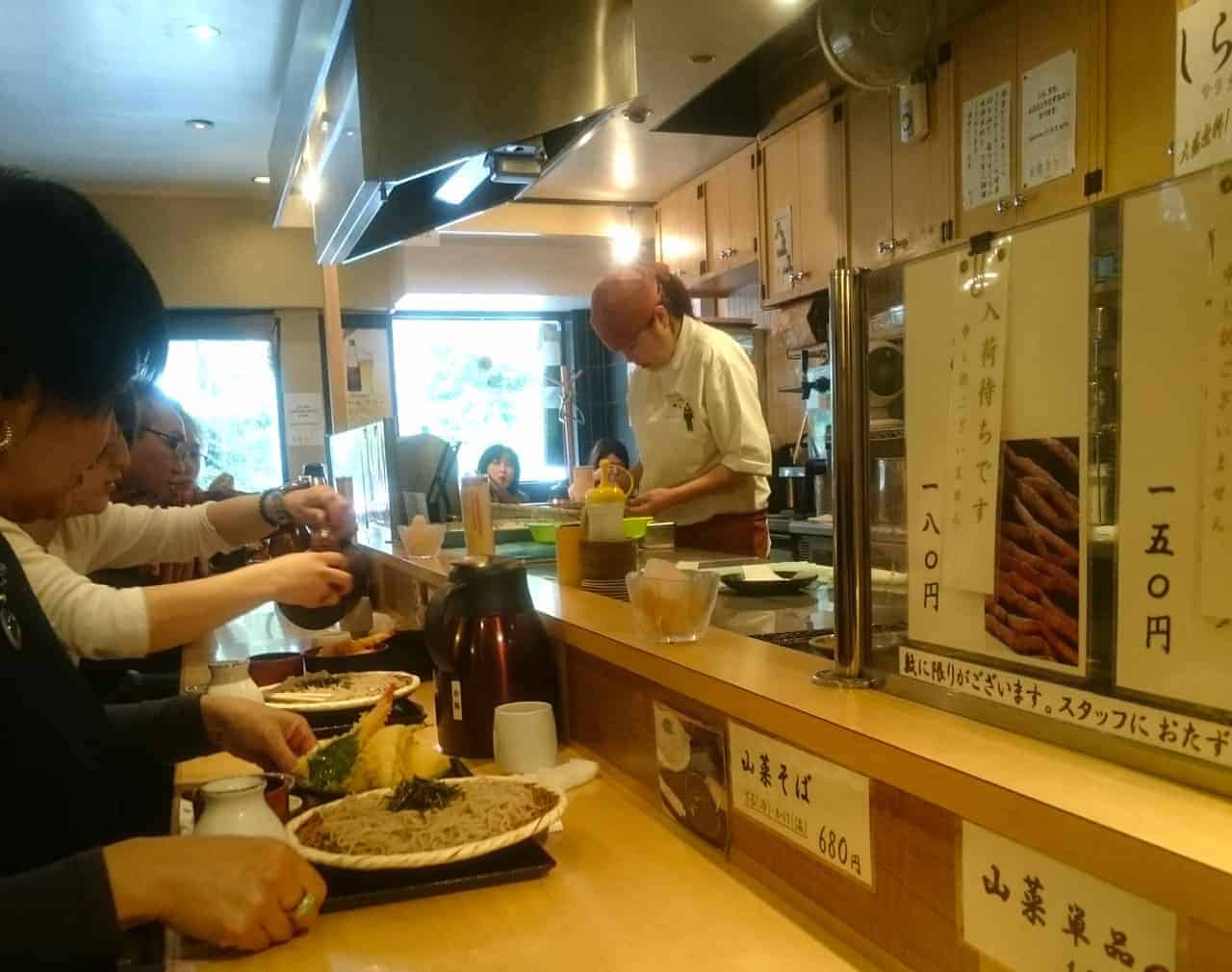
Let’s focus now on the noodles in ramen (i.e., a sort of spaghetti, if we want to simplify): well, custom says that to eat these noodles you have to be noisy, making a slurping sound as you suck them up 😀
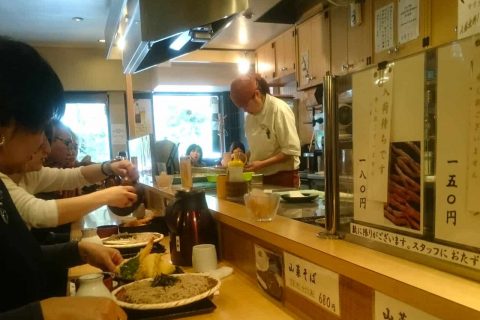
It’s said that eating them silently can be considered a sign of poor appreciation towards the cook (who, by the way, due to the layout of most classic ramen restaurants, is right there behind the counter); I don’t know if it’s true, but you’ll certainly often hear Japanese people showing their appreciation! 😀
7 – Using chopsticks
Chopsticks can be difficult to learn to use if you’re not used to them.
In this post, I won’t talk about how to use them, but I’ll tell you what you SHOULDN’T do with chopsticks to respect Japanese customs and traditions.
- Never stick chopsticks into food and leave them standing (e.g., in rice), nor use them to pick up food and pass it to another person who then takes it with their chopsticks: both are gestures only done at funerals; so avoid them.
- It’s not recommended to use chopsticks to “cut” food; rather, it’s better to put it in your mouth, bite off a piece, and put the rest back down. But it’s not mandatory; if you’re having trouble, do it anyway, no one will look at you badly considering you’re a foreigner.
- To take food from a shared dish, it’s good to do it with the back of the chopsticks, so as not to touch it with the tips you’ve already put in your mouth, bring the piece to your plate, then turn the chopsticks around and continue normally.
- If they give you a chopstick rest, at the end of the meal, rest the chopsticks on it (honestly, this has never happened to me though!)
8 – Masks? No fear!
Many Japanese people wear face masks, more or less regularly, and many Europeans are equally surprised or curious about this.
No fear, there’s no epidemic going on. In Japan, a mask is almost an accessory like many others we’re used to wearing, worn for various reasons, including two main ones:
- Respect: if a person has a cough, cold, or other minor health condition, they wear a mask to avoid transmitting and infecting others.
- Privacy: some also wear it for privacy, not to be disturbed or recognized. For example, girls working in very busy bars or maid cafés might not want to be disturbed on their way out by someone who recognizes them and wants to talk. A mask and off they go!
9 – Now an easy one: keep left!
In Japan, you drive on the left. But you mustn’t forget this also when walking.
Especially on escalators and in subways, where there’s often an indication of which side to walk on, most of the time it’s on the left, like for road traffic, with some exceptions on the right side in corridors where it might facilitate crossing in the flow of pedestrians.
And there can be a lot of pedestrians in the subways, especially during rush hour!
10 – Noise
In Japan, be careful not to be too noisy, especially if you’re in a group; by the average standards of the land of the rising sun, western way of conversing could easily be considered too loud!
At least until a certain time in the evening: if everyone was precise and orderly before, after a few drinks they start to let loose, and you might hear laughter or commotion in the streets 🙂
11 – … damn it, the benches!
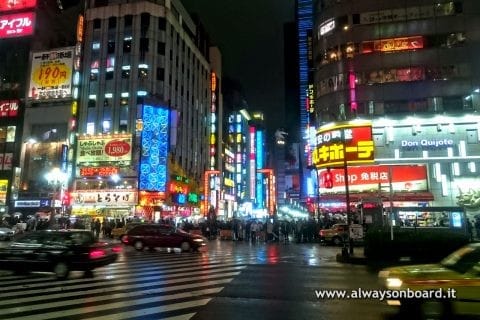
This is a simple observation concerning Tokyo: there isn’t a single bench or a concrete edge to sit on for a moment, not even by mistake! 😆
In 10 days in Japan’s capital, I walked so much that a bench here and there wouldn’t have been unwelcome, but the only place I managed to sit was the metro!
Have you been to any other city in Japan and seen something different or a few more benches? Write it in the comments! 🙂
Finally, always remember to get travel insurance before leaving for Japan.
Did you find this article useful? Then share it with friends or follow the official Facebook page as a sign of appreciation! Arigatou! 🙂