If you are on the island of Tenerife, one of the must-do excursions is to the Teide Natural Park and its trails.
A single post would not be enough to describe the countless beauties to see on Teide upland, so in this article I will show you some examples of the landscapes you’ll encounter on the plateau, some of the many trails you can try, the experience of stargazing and crossing the clouds during the ascent or descent! 🙂
Last but not least also a review of what to bring when climbing Teide and when it’s best to go!
The Teide is a volcano whose peak reaches 3718 meters, surrounded by a vast plateau that stretches at about 2000-2200m in height and is believed to be the caldera (crater) of an even older volcano that gave rise to the island of Tenerife.
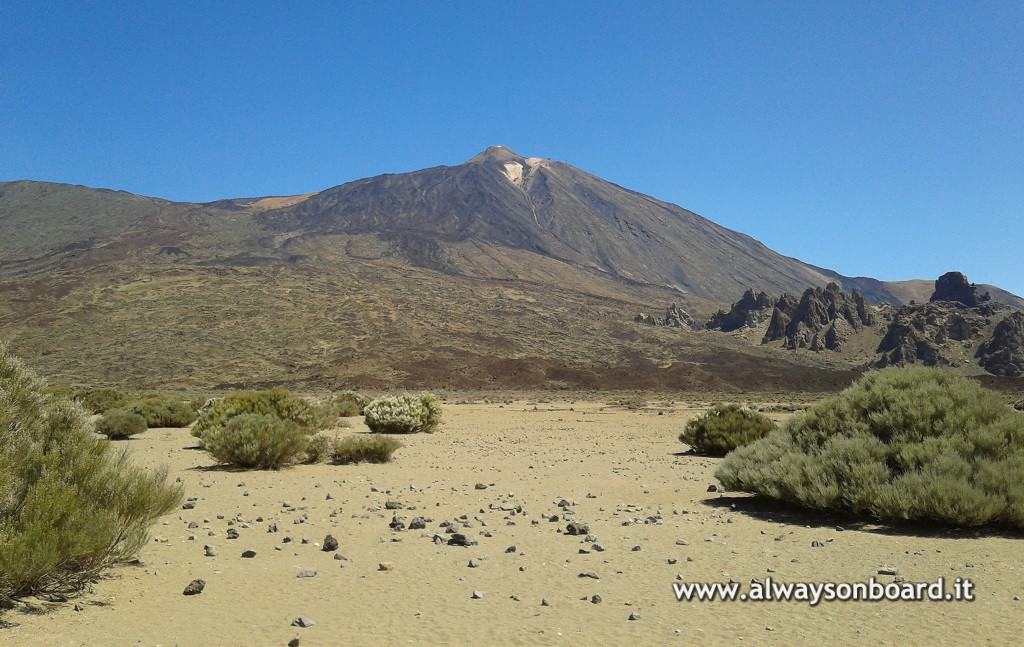
Teide also acts as a sort of “traffic light” for clouds and weather disturbances that move around the Canary Islands; in fact, while staying in Tenerife, it is common to see clouds approaching the volcano, getting “stuck”, gradually moving, or regenerating on the opposite side… and so on 🙂
What is even more surprising is that when clouds approach Tenerife, it is often enough to move 10 km or wait half an hour to see the sun again. Or you may be driving under blazing sun, suddenly hit a downpour for a couple of kilometers, and then return to the sun.
In short, when you read that Tenerife features microclimates within a few kilometers, it’s absolutely true. And not only because of clouds, but also due to the radically changing landscapes and flora every 10–20 km.
Map of spots to visit on Teide
When driving on the roads of the plateau, you cannot stop just anywhere along the road but only in designated areas with small parking lots. This map includes some parking areas and viewpoints (miradores) where I recommend stopping to admire the many beauties of the volcano or to try a stretch of trail.
Bright volcanic landscapes
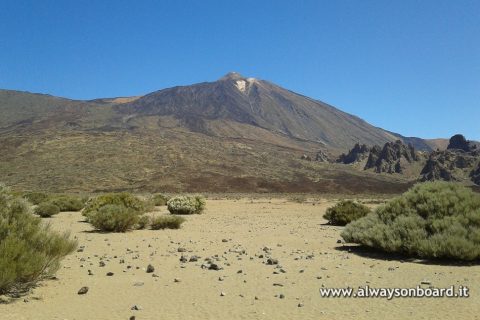
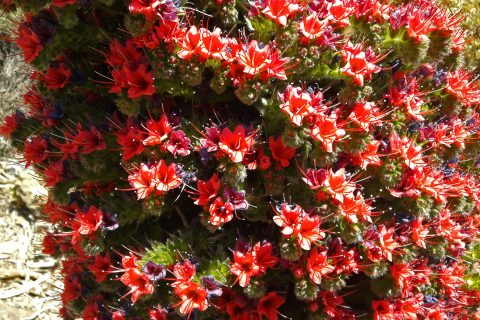
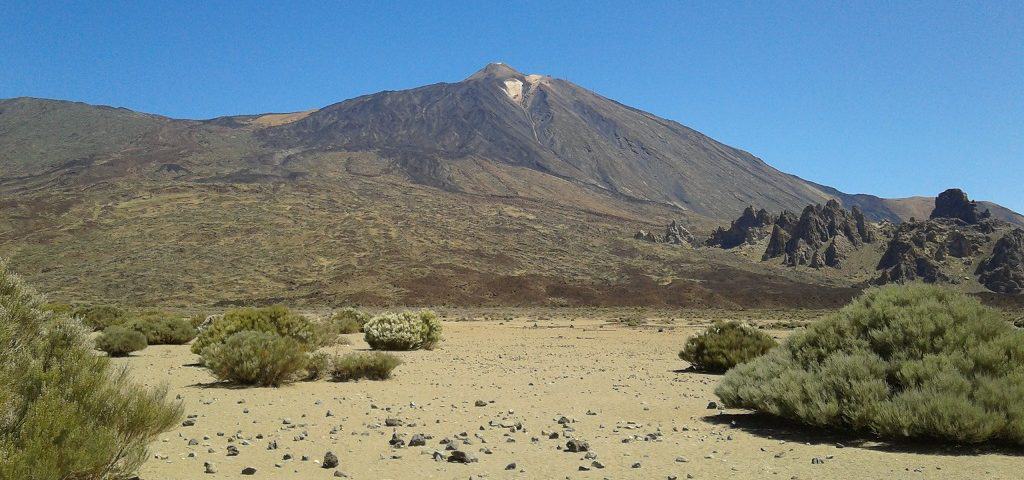
The first kind of landscape you can expect on the Teide plateau, as already seen in the previous pic, is made of light-colored rock or pebbles (ranging from yellow to red to various shades of brown), which has also allowed vegetation to grow. At the end of spring or in summer you may also notice the presence of the Tajinaste, a plant you may have never seen before.
Some of these landscapes can be seen from the rest areas marked with yellow dots on the map above. If you are coming from the south of the island, you will encounter them in the order I am about to present.
Llano de Ucanca
Along a road that might somehow remind you of Route 66, you will find a parking area on the left side from which a trail also starts in a nearly flat stretch of land. You can either take a short walk or a longer hike; depending on the wind direction, it might be one of the less windy trails.

Mirador La Ruleta – Roque de Garcìa
The Mirador La Ruleta, in front of the Parador Las Cañadas del Teide, is one of the most visited and photographed on the plateau.
For those who don’t feel like walking much, you can take a short stroll around the rocks of the mirador, from where you can enjoy two complete views of the plateau. Or, at the end of the parking area to the right, there is a short trail for a walk that brings you back to the starting point.
Some activities you may like, before going on with the article:

For those seeking longer hikes, there is Sendero de Roque de Garcìa, which somewhat resembles American national parks, but be careful as strong winds often come from the west (you will already notice them from one side of the mirador).

If you want to experience something unique in this area, I recommend staying at least one night at the Parador de Las Cañadas del Teide. From here, besides the daytime view, you will also enjoy a clear view of the stars at night, with no glow from nearby cities!
Read also: Where to stay in Tenerife – guide for everyone’s tastes
Sendero de Montaña Blanca
This one is for those who want to walk a bit: a very interesting trail because it features stretches with such light colors that it almost looks like a sand desert.
You can park at one of the two points pinned on the map above (the closest parking area is usually full, and you’ll have to go to the more far one at Tabonal Negro in blue on the map above), and then you have a 4km trail with various alternative branches, which will show you colors ranging from yellow to white to red. A thousand photos would be needed here:

At the end of those 4 km or so, the challenging trail to the summit of Teide begins (which I’ll talk about below), or alternatively, you can return the way you came.
Minas de San Jose
This area is good both for those who don’t want to walk much and for those who want to explore longer trails. Just a few steps from the parking lot you can venture into parks of light pebbles, I’ll go straight to the photo worth more than words:

Lava fields

In the southwest area of the park and along the TF-38 road that connects the Teide National Park to Guìa de Isora, the landscape changes completely. At times, you’ll be driving along a road flanked by a vast expanse of black lava:
Descending along the TF-38, you will instead find other stretches with lots of vegetation including various pines, which create an even more surreal atmosphere, and the carpet of needles falling from the trees creates light patches in contrast with the ground, making it look almost like a painting or an AI-generated image, but I assure you, it’s an unedited photo. 😀

These areas characterized by dark soil are marked on the map above with brown pins. You’ll find at least a couple at Mirador de Samara and at Sendero de Chinyero.
Climbing to the true summit of the Teide volcano
So far we’ve talked about trails and views on the Teide plateau. But what if you want to see the absolute summit, at 3800 meters?
First of all, bring winter clothing. Unlike the plateau, it’s COLD up there.
Also be prepared to open your wallet because there are two ways to reach the summit:
- Climb (or descend) by cable car, at a cost of €23 one way or €41 round trip;
- If you’re tireless, descend (or climb!) via the alternative trail—which you might be forced to do if the cable car closes due to wind or weather while you’re at the top. Keep in mind the trail is not short. It descends on the east side and then reconnects with the Sendero de Montaña blanca.
So, besides choosing a day with decent weather, if you want to go up by cable car also make sure to book on the official website to avoid finding it fully booked at the last minute.
How to reach Mount Teide without a car
If you don’t have a rental car or don’t feel like driving, there are a few alternatives to reach the Teide plateau.
The first is the bus, which makes a few stops along the scenic road, though you’ll have to stick to the schedule and limited stops, and the cost is still €11 per person. Here you’ll find updated details on the bus schedules to Teide.
The second, more flexible option is to go with an organized tour. Starting from €40–50 you can be taken by a guide (or follow them while riding a quad), who will explain zones and anecdotes that might be worth knowing.
By clicking here you’ll find all available tours with free cancellation, there are really many options—choose based on the stops you like best and the schedules, including the quad tour.
Going to Teide to see the stars
The Canary Islands, thanks to minimal light pollution from cities and artificial lighting, are among the most popular places to stargaze. There are also observatories on almost every island, and Tenerife is no exception.
If you like the idea of going to the Teide plateau in the dark to see the stars, you can do so on your own by choosing a clear night (and without relentless winds), perhaps stopping in some Mirador parking lot, or you can join a group, a tour, or take a daytime visit to the observatory. Some examples:
- You can book a visit to the Teide observatory (details here), during daylight hours;
- this tour takes you to stargaze at sunset;
- this one takes you at night, with the option of dinner included;
What to bring for climbing Teide?
It must be said that during the colder months like January and February, on the Teide plateau you might even find some snow. In certain cases, the four roads to the plateau might be closed due to bad conditions, preventing your visit. If that’s your travel period, check the situation in advance.
On warmer months, to go to the plateau you’ll need to bring a mix of clothing. Depending on sun exposure and the presence or absence of wind (which can vary from one kilometer to the next), you may need just a t-shirt or layers like a hoodie, scarf, and jacket. So throw everything you have in the trunk 😉
When it’s sunny—especially in summer—in addition to lots of water, you’ll need sunscreen even on the edges of your ears (or a bucket hat).
If you go on trails, consider shorts instead of long pants, but have layers for your upper body to put on or take off depending on the weather you’ll encounter around each bend.
When to go to the Teide plateau?
The ideal time to go is on a day when at sea level there is low wind. Perhaps one of those windless days when it’s too hot on the beach would be perfect to climb the volcano, since up there there’s always a bit of breeze.
On the contrary, if it’s already very windy at the beach, going up to the plateau would literally mean being blown away. To better plan your days, take a look at the forecast using an app like Windfinder.
Then, if possible, choose a sunny day, because the colors of these landscapes seen under a cloudy sky don’t compare at all to seeing them in full sun! And don’t worry—during the ascent you’ll still come across a little cloud here and there… why? I’ll explain now!
Passing through the clouds or seeing them beneath you!
Depending on the day and the weather, you might easily encounter a cloud during the ascent or descent, meaning you’ll literally end up passing through it.
You’ll notice because from full sunlight you’ll find yourself driving through what seems like a sudden patch of fog, but if you step out of the car, you’ll feel it’s much more humid. You’re inside a cloud (and when going up Teide, bring a sweatshirt, jacket, or pack various clothing combinations in the trunk because the sensation can differ by 10–15 degrees between sun, clouds, wind, or shelter).
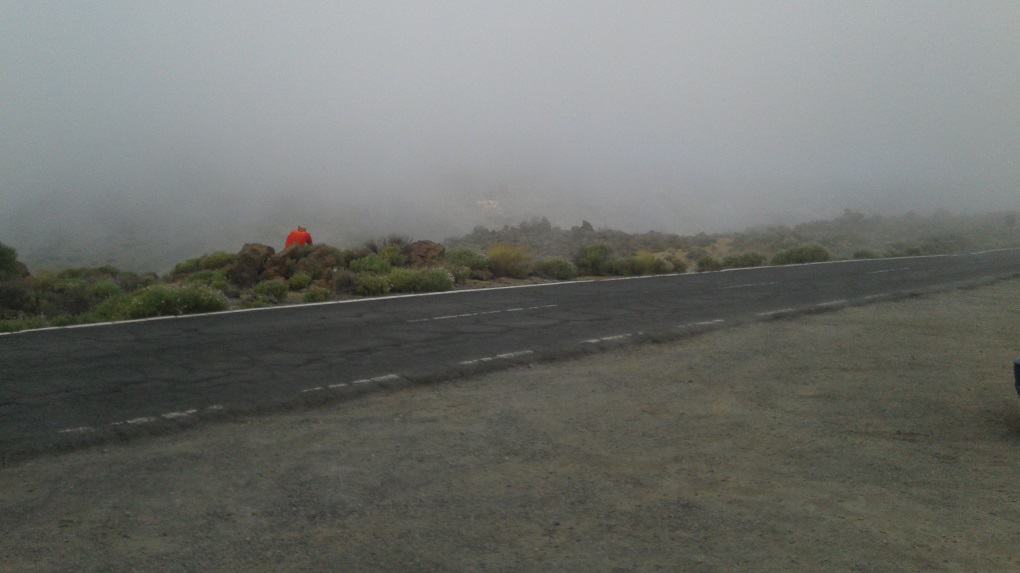
Another view you might come across (again depending on weather and the day) is when stopping at a scenic viewpoint and discovering that you’re already at a higher altitude than the clouds, which you’ll see flowing beneath you like in this timelapse:
And even while walking along trails, a small cloud just a few meters wide might come to greet you:
After all these visits, if you haven’t packed a lunch (which I recommend), you can eat in the Portillo Alto area, where there are a few restaurants—the only ones you’ll find up here besides the previously mentioned Parador.
If you stop here and see them on the menu, don’t miss the gigantic desserts called “lagunero“!
Finally, if you’re traveling around the time of Corpus Domini, descend from the plateau toward La Orotava, both to enjoy the view of the vegetation—which is completely different from that on the southern side—and to admire the spectacle prepared every year in all the squares of La Orotava, with streets covered in flower petals!
But that’s a whole different story! 🙂
Did you enjoy this article? Share it and read the other guides on the beauties of Tenerife or follow the Facebook page!