What to visit in Rhodes during a holiday of at least 7 days? On such a large island, you certainly won’t run out of options: in this guide we’ll look at a series of things to see and attractions to visit in Rhodes, how to reach each one (even without a car), some suggestions and an estimate of the time needed to visit them.
Map of attractions to visit in Rhodes
Let’s start with the map of all the places mentioned later in this guide, which you can refer to for your Rhodes itinerary—both while reading to understand the distances and during your trip to reach the spots.
Green pins are scenic or natural places to visit in Rhodes, while red ones mark cities and acropolises or historical ruins. In some cases, parking areas are also indicated (free in blue or paid in red).
Beaches are not mentioned in this itinerary and you’ll find them separately in the guide to the best beaches in Rhodes. Let’s get started!
Medieval City of Rhodes
What to visit: one of the largest medieval cities in Europe with intact walls
Time: at least one day
Cost: free
The Medieval City of Rhodes is probably the largest and most complete attraction to include in your Rhodes itinerary.
Located at the northernmost tip of the island, the ancient medieval city has a diameter of about one kilometer and is enclosed by almost entirely intact walls, a large perimetral park at the foot of the walls, and numerous entrance gates, all beatiful.
Inside the medieval city, you definitely won’t be disappointed. On the contrary, the internal buildings are almost all still intact, well preserved, and many even inhabited. You’ll find great variety: from churches to synagogues to museums and old palaces—most notably the Palace of the Grand Master. You’ll also find archaeological areas with small gardens or sections of wall with views of the port and the sea.
The city is also full of life both day and night, populated by both locals and tourists.
In the central/northern part of the medieval city, you’ll find the most touristy areas, especially around Hippocrates Square; it must be said that some of these streets are overly packed with souvenir shops.
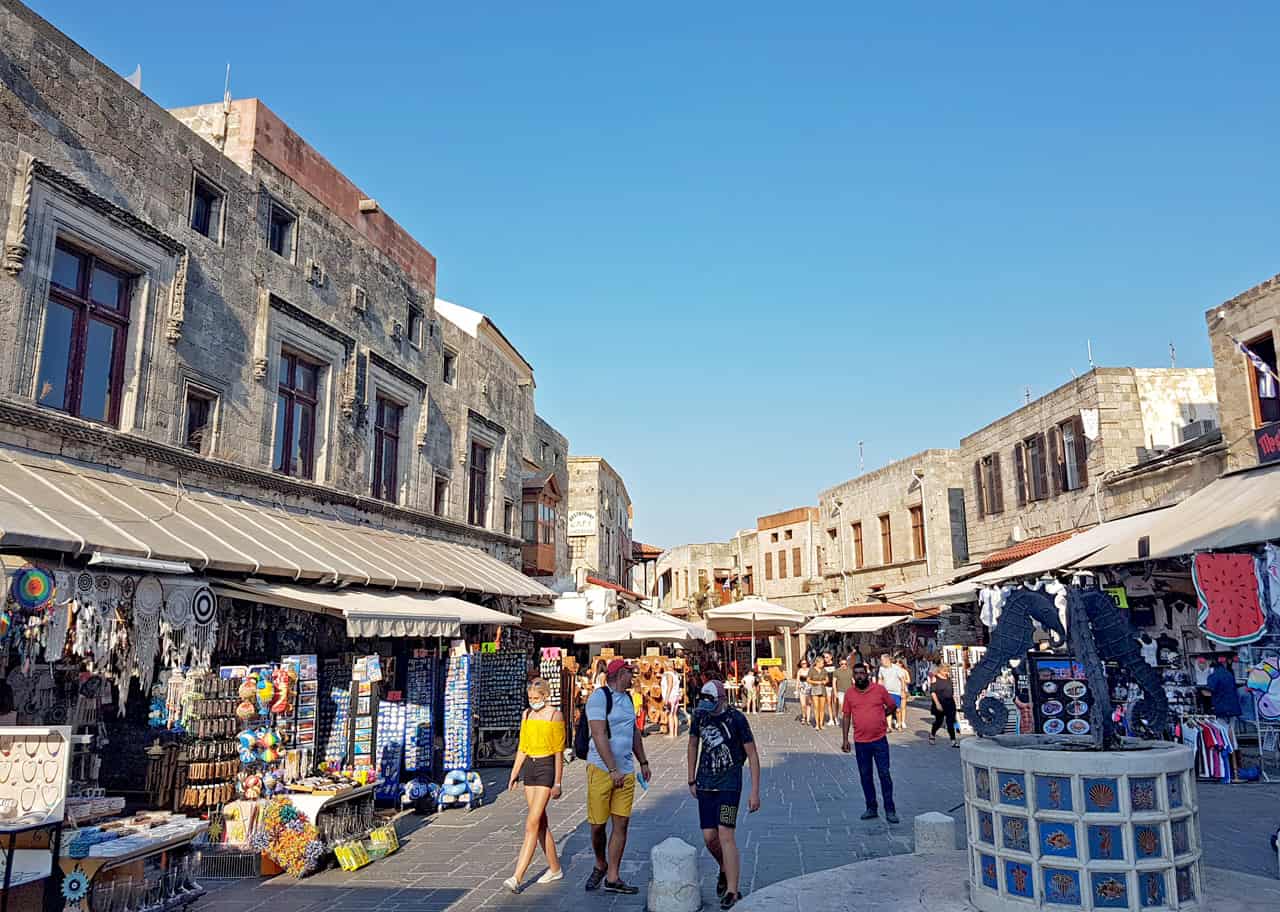
In the southern areas near the walls, you’ll instead find a completely different reality: complete silence, many cats, and houses still inhabited by families—often with the door open.
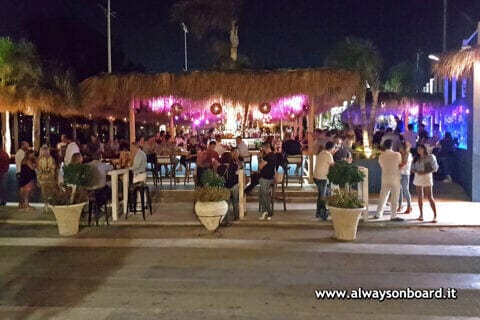
These are the areas I recommend you to get lost in and visit several times. Go during the day to discover different corners and views with every walk, as well as narrow dark tunnels that lead you in and out of the walls. Go at night to randomly discover alternative bars with a more unique atmosphere compared to the touristy and crowded ones found in the main squares.
You might like: Guide to nightlife in Rhodes
It’s hard to describe the medieval city of Rhodes in words. It’s perhaps the first stop to put on your list of things to visit in Rhodes, and you could easily spend entire days there without having seen it all, given how large and varied it is inside. They say a picture is worth a thousand words, but even a single photo would struggle to capture what to expect—so I’ll try with more than one:

The Colossus of Rhodes and Mandraki Port
What to visit: seafront of the port, place of legend and nightlife
Time: as long as you like
Cost: free
Exiting the medieval city to the north, you’ll find yourself at “Mandraki Port”, the most noteworthy in the modern city, which you can’t miss on your Rhodes itinerary.
Mandraki Port is another area to visit in Rhodes at least once, as in addition to being surrounded by numerous historic buildings, it is also the place where, according to legend, the Colossus of Rhodes once stood—a giant human-shaped statue over 30 meters high, with one leg on each side of the port, said to have been destroyed many years ago.
Studies have shown that the Colossus is, however, just a legend, as a statue of such dimensions would have been too heavy to be supported by the port structure.
Nevertheless, at the exact points where the Colossus’s legs would have stood, there are now two columns with deers on top, symbols of the island.
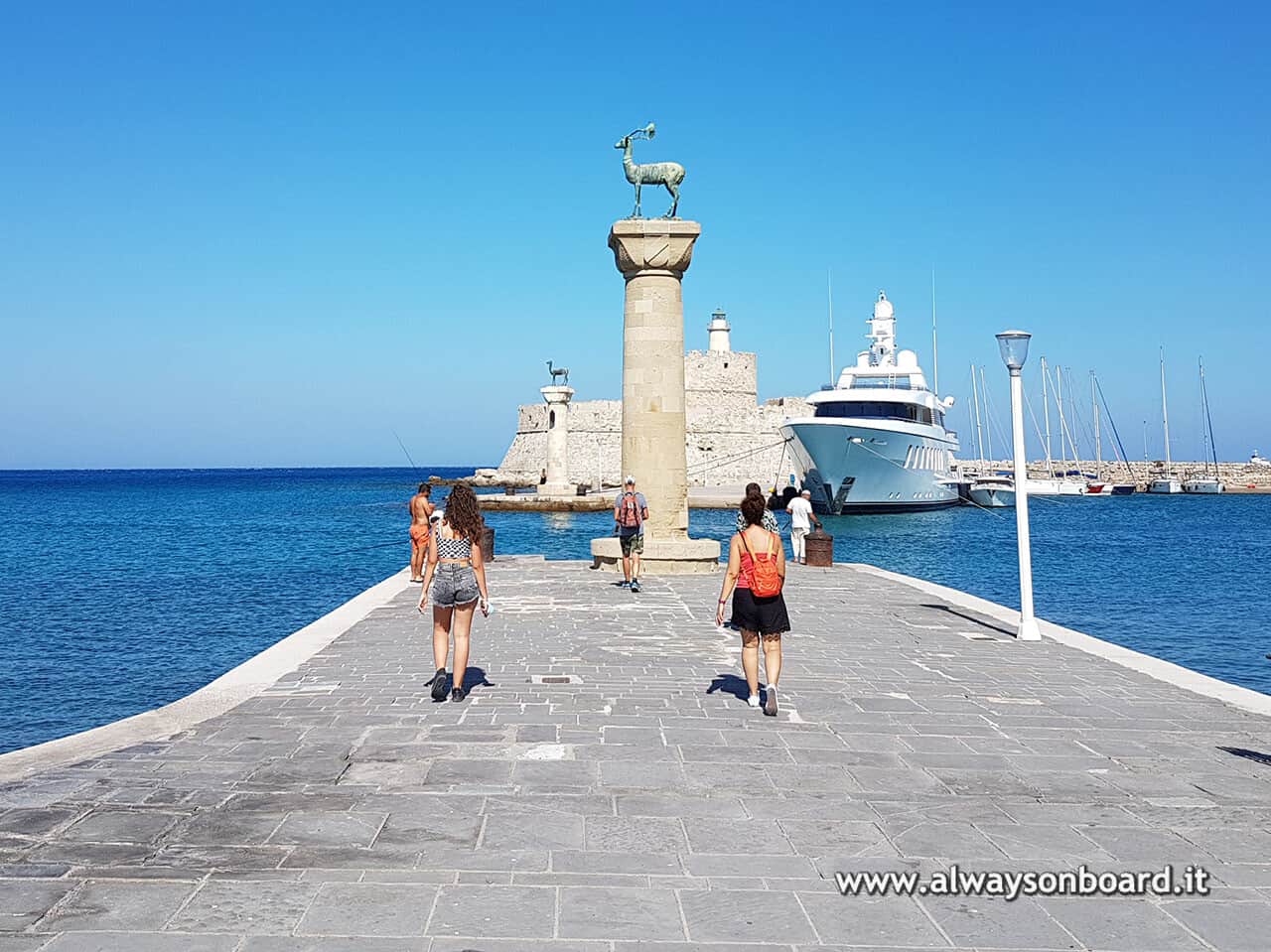
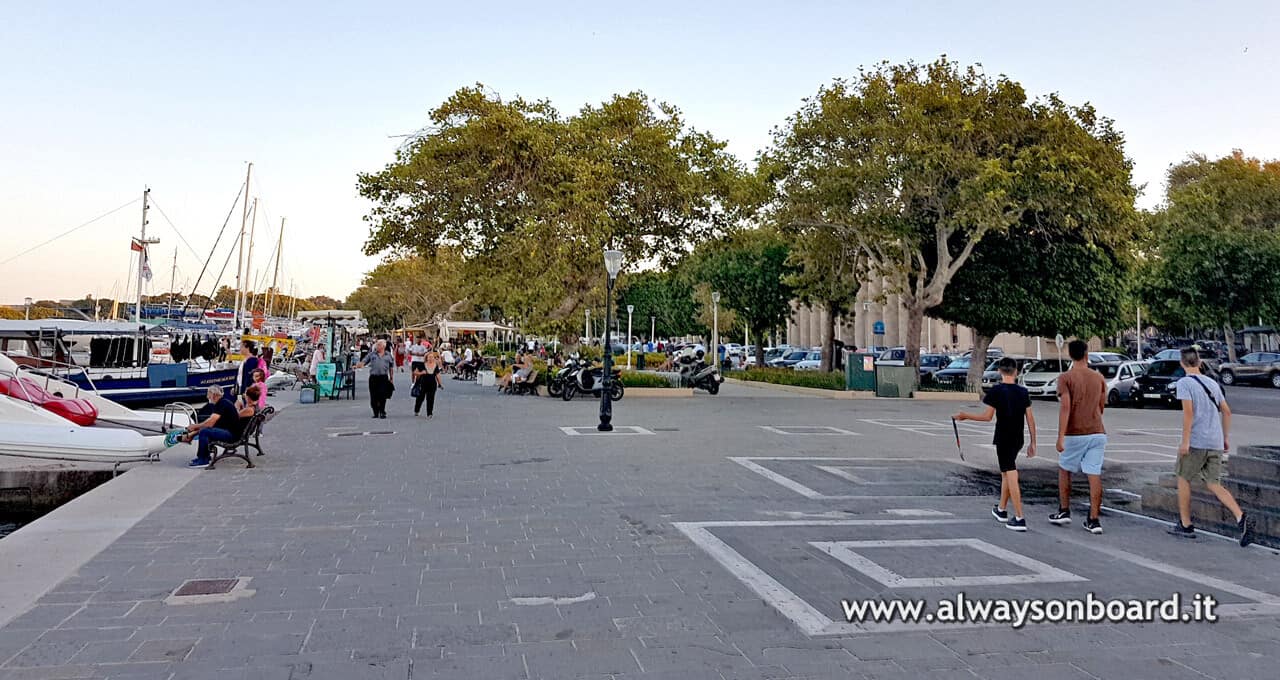
In addition to the story of the Colossus, the port area also features a seafront where you can stroll and find boat tour stands at all times of day and night, some bars on the opposite side of the road, and, walking a few more minutes north, some nightclubs and beach bars (which I talk about in more detail here), across from Elli Beach. In this same area, you’ll also find one of the few free parking areas in the city, in case you arrive by car: it’s also marked on the map above.
Acropolis of Rhodes
What to visit: Ancient stadium and Greek theater
Time: 1 hour or slightly more
Cost: free
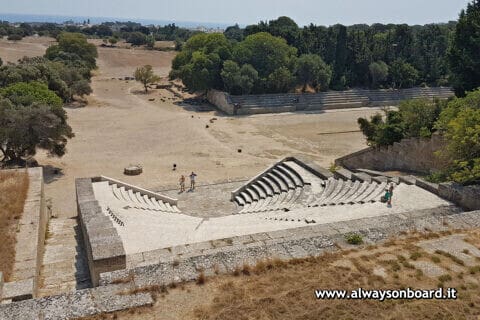
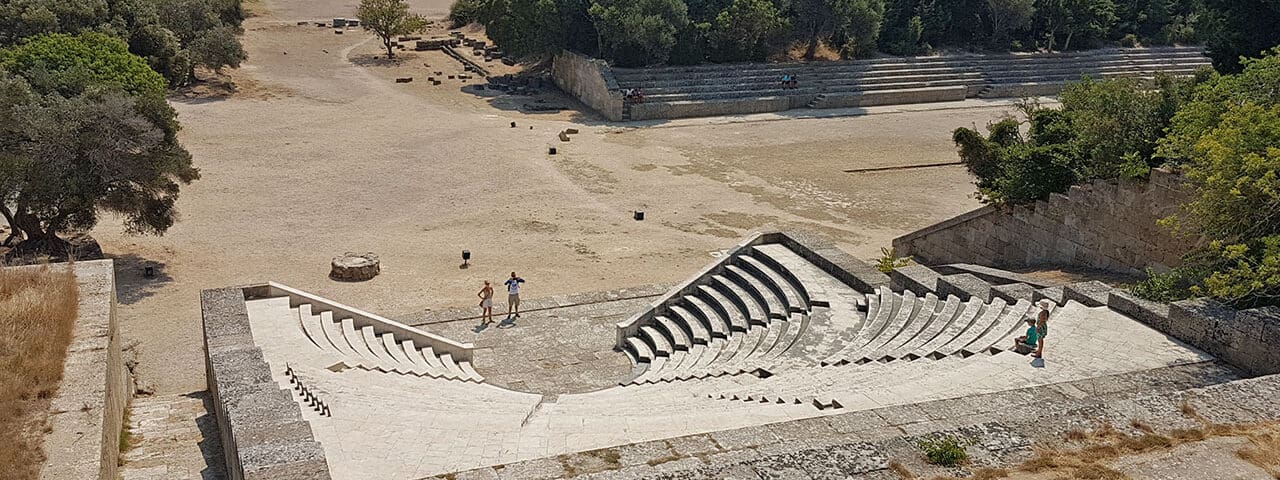
Right behind the city of Rhodes, on the top of Mount Smith, there is an open-air archaeological area where the remains of the ancient Acropolis of Rhodes can be freely visited.
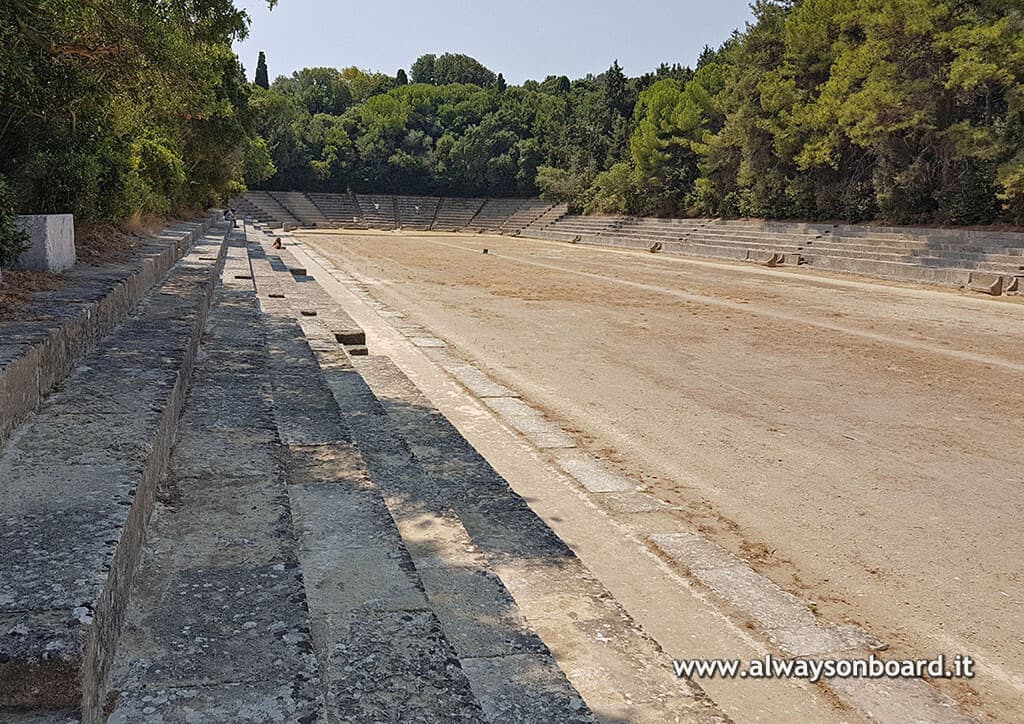
The most interesting part is certainly the ancient stadium, still well preserved and of considerable size.
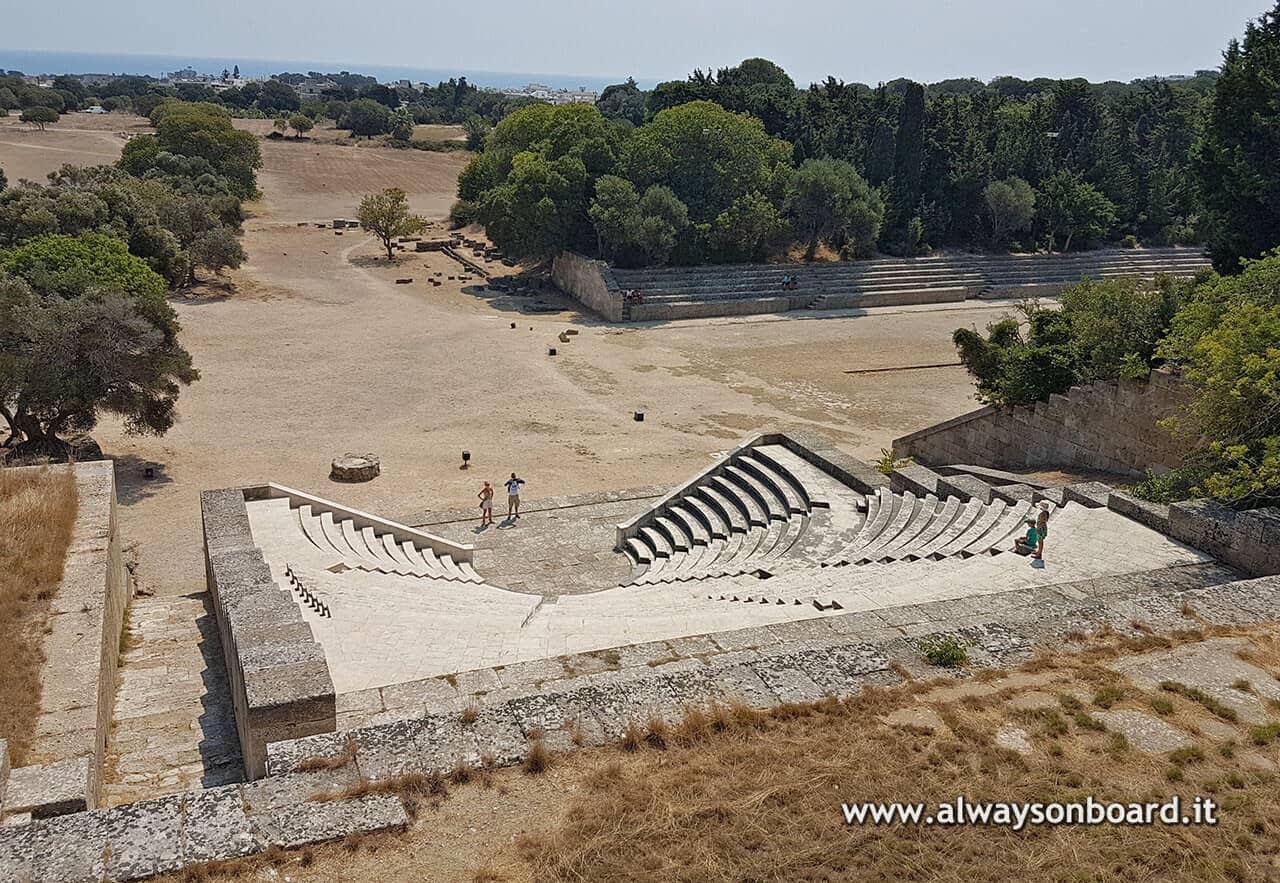
Next to the stadium there is a small theater, which seems to have been renovated given the quality of the materials.
Finally, in the area around these gardens where the Acropolis of Rhodes once stood, walking a bit you’ll also notice the isolated remains of some columns.
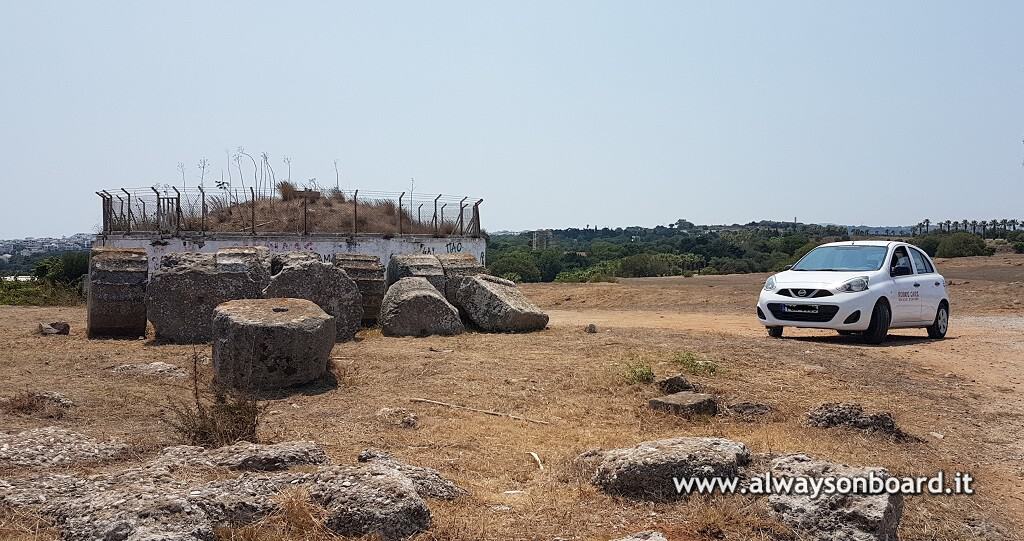
You might be tempted to scan google maps to discover other temples or archaeological zones around the island to include in your Rhodes itinerary. However, I must warn you that not all of them are interesting to visit: for example, the Temple of Athena and Zeus, less than 1 km from the Acropolis, is what you see below. I’m not sure if it’s temporarily like this due to restoration or if it has always been like this, but it consists simply of 12 column drums lying on the ground.
How to reach the Acropolis of Rhodes
To reach the Acropolis of Rhodes, just drive to one of the 3 parking areas surrounding the acropolis, which are marked on the map at the beginning of the guide. From there, simply walk along the surrounding gardens and you’ll soon reach the ruins effortlessly.
Camirus
What to visit: the island’s main archaeological site
Time: 3 hours
Cost: €3
If the Acropolis of Rhodes felt a bit bare to you, then you should include the archaeological site of Camirus (Kamiros) in your itinerary, in the heart of the island, not far from the western coast.
In this site set on the terraces of a hill, you’ll find something more: remains of temples, sanctuaries, and residential areas.
On this page you’ll find some photos and interesting details, including a map of the Camirus archaeological site.
Lindos
What to visit: the most “Greek” village of the island and the Acropolis of Lindos
Time: from half a day to several days
Cost: village free, €12 for access to the acropolis
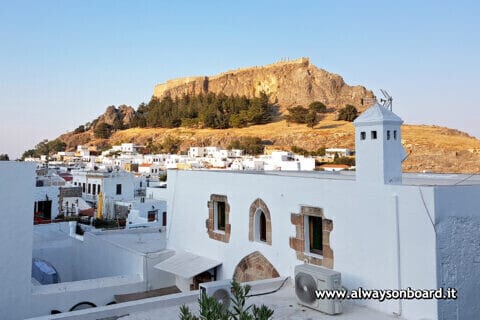
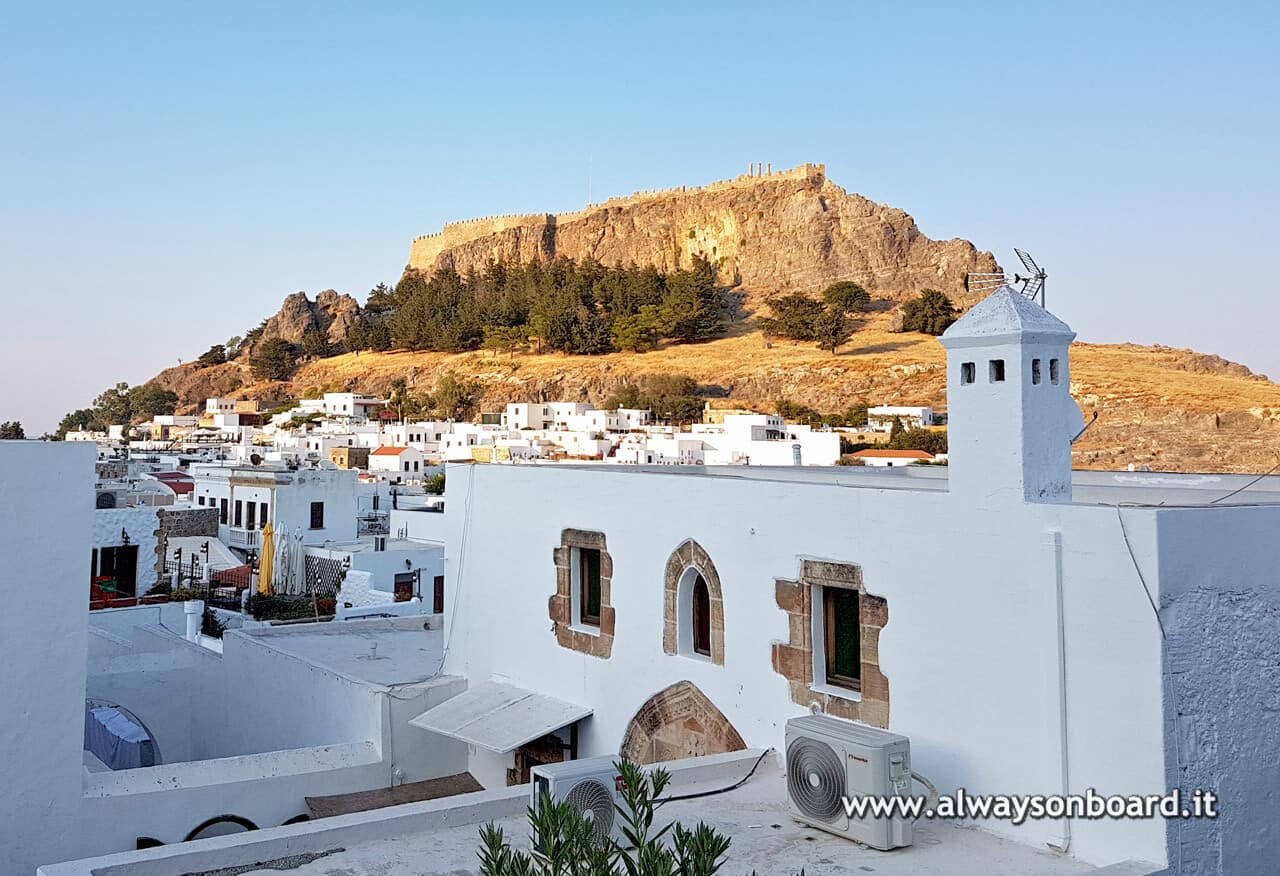
Lindos is the most picturesque town on the island, made up of the classic whitewashed, well-kept houses that are part of the common image of a Greek island.
What to visit in Lindos
Lindos is a small village with a diameter of about 400 meters and due to its narrow alleys it is only accessible on foot (but surrounded by various parking lots, some free, at its edges, which are marked on the map above).
It’s a small town, but you won’t get bored quickly: with its slopes, alleyways, and characteristic corners, you’ll need to explore it multiple times before you can say you’ve seen it all.
Although it’s the island’s most “VIP” village, I recommend staying here for a few nights, so you can enjoy it slowly in the evening when the atmosphere is at its best; if you’re traveling during the hotter months of the year, visiting Lindos in the evening becomes a must, since during the day it turns into a true oven. But I talk more about all this in the guide on where to stay in Rhodes.
Back to the point, why Lindos? For its well-kept houses, the white maze of alleys, the plants, the views over the bays below, and the acropolis that stands guard from the top of the hill. The outer walls of the acropolis are lit at night, creating a more special atmosphere and view.
Around Lindos there are also two bays, beautiful to look at “from above” since the village is elevated above the sea. The beaches however, are very popular and crowded during peak months. I recommend visiting them in the evening for a romantic walk (or dinner at one of the beachside restaurants), and heading to other beaches on the island during the day.
If you’re staying in the north of Rhodes and don’t have a car to reach Lindos, you might take advantage of one of these two affordable guided tours:
- boat tour that takes you to Lindos and two other beaches on the east coast,
- bus tour that lets you visit Lindos and the Seven Springs park.
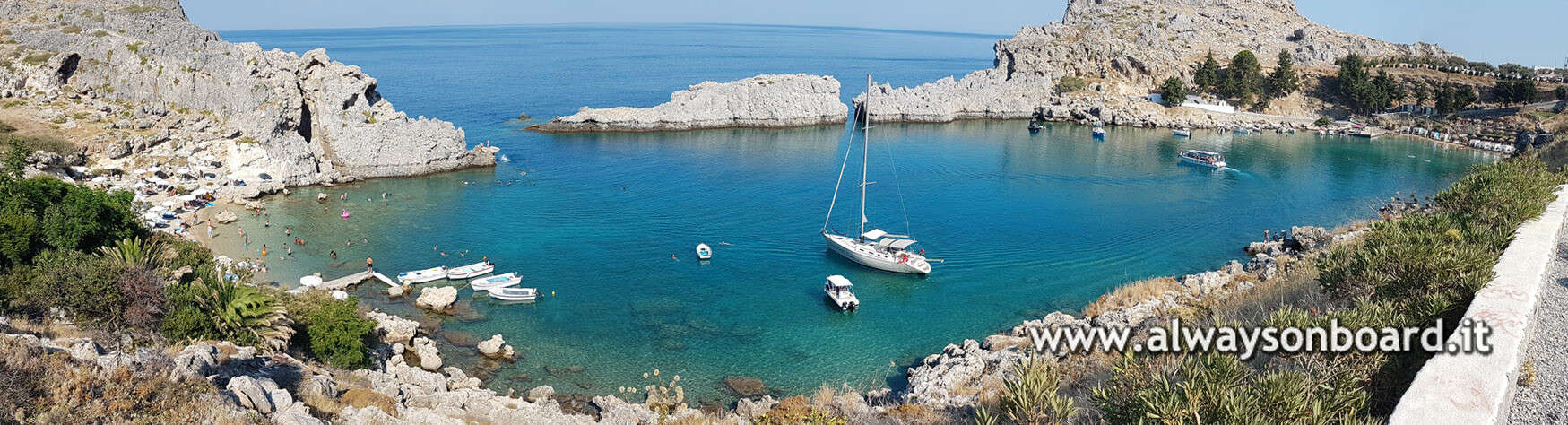
In addition to the above, for those more interested in history, it is also possible to visit the interior of the Acropolis of Lindos.
Acropolis of Lindos: prices and hours
The Acropolis of Lindos is open from 8 am to 6 pm and the entrance ticket can also be purchased online, with the option of free cancellation.
It’s a bit of a shame that it closes at 6 pm in summer, because this place would probably offer the best view at sunset. As for the historical content inside the Acropolis, there’s not much: there are a few columns still standing and not much more. In my humble opinion, the ticket price is excessive for what it offers inside; the Acropolis gives its best when observed from the outside thanks to its well-maintained walls that are illuminated at night.
How to reach the Acropolis of Lindos
To climb up to the Acropolis of Lindos, there is a small road not accessible by motor vehicles, which starts from the northernmost edge of the village.
To go up you have two options: walk up or ride one of the donkeys you’ll find there specifically for this purpose. I can only recommend that you go up on foot so as not to support this kind of animal abuse.
Although it’s not a suitable climb for those with mobility issues, it’s not an impossible one either: the hill on which the Acropolis stands is about 110 meters above sea level.
Embonas
What to visit: an almost “untouched” village
Time: half a day
Cost: free
If you liked Lindos but at times found it too overrun by mass tourism, you should give Embonas a chance.
Embonas is the highest-altitude village in Rhodes, nestled in the middle of the island near its highest peak.
Here life flows more simply and peacefully, to the point that the elderly still wear traditional costumes. In summer months, small folkloric festivals take place in Embonas, and it is a “known” place for its wine and meat.
If you decide to add Embonas to your Rhodes itinerary, allow some time: due to its location, you will need a good amount of time to reach it by car.
Mount Tsampika
What to visit: wide trail leading to the top of the mountain with a monastery and sea view
Time: 3–4 hours max without rushing
Cost: free
Mount Tsampika (or Tsambika) is a great place to visit in Rhodes for those who enjoy moderately easy mountain walks.
This mountain is located along the east coast of the island of Rhodes, behind the beach with the same name. At the top of the mountain, where the trail ends and you can enjoy a view of the entire coast, there is also a very small monastery, freely accessible.
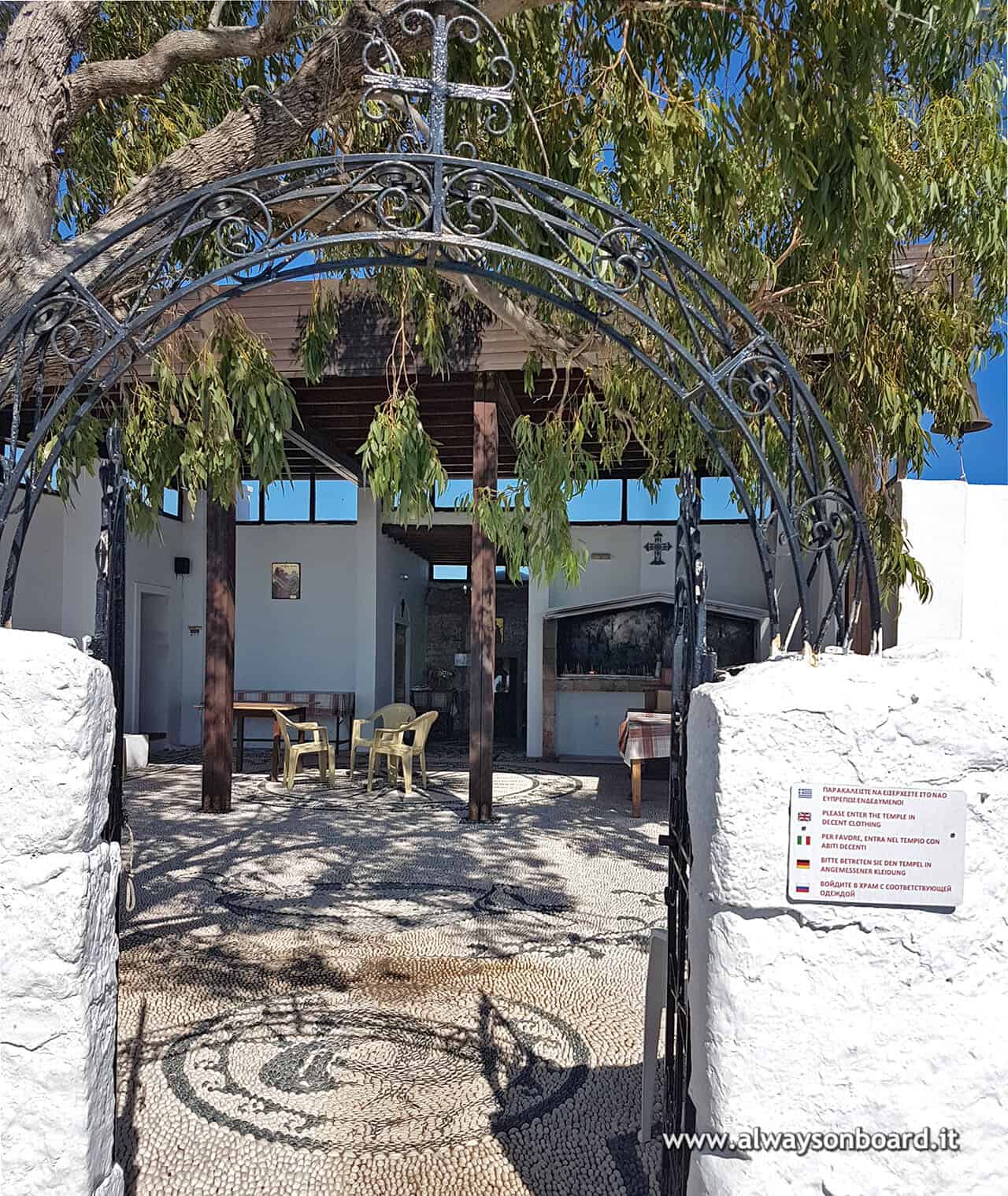
According to tradition, this place and monastery were visited by women who had difficulty conceiving, who climbed up here to ask for “grace,” and, if they then managed to have children, they had to name them Tsampiko or Tsampika depending on the gender. These names are indeed found almost exclusively on the island of Rhodes.
By setting your GPS to the point indicated on the map, you can drive up the road to a certain elevation, where you will find a couple of parking areas. From there you can start the climb on foot, consisting of 298 steps (numbered every 10, so you’ll always know how many are left :D).
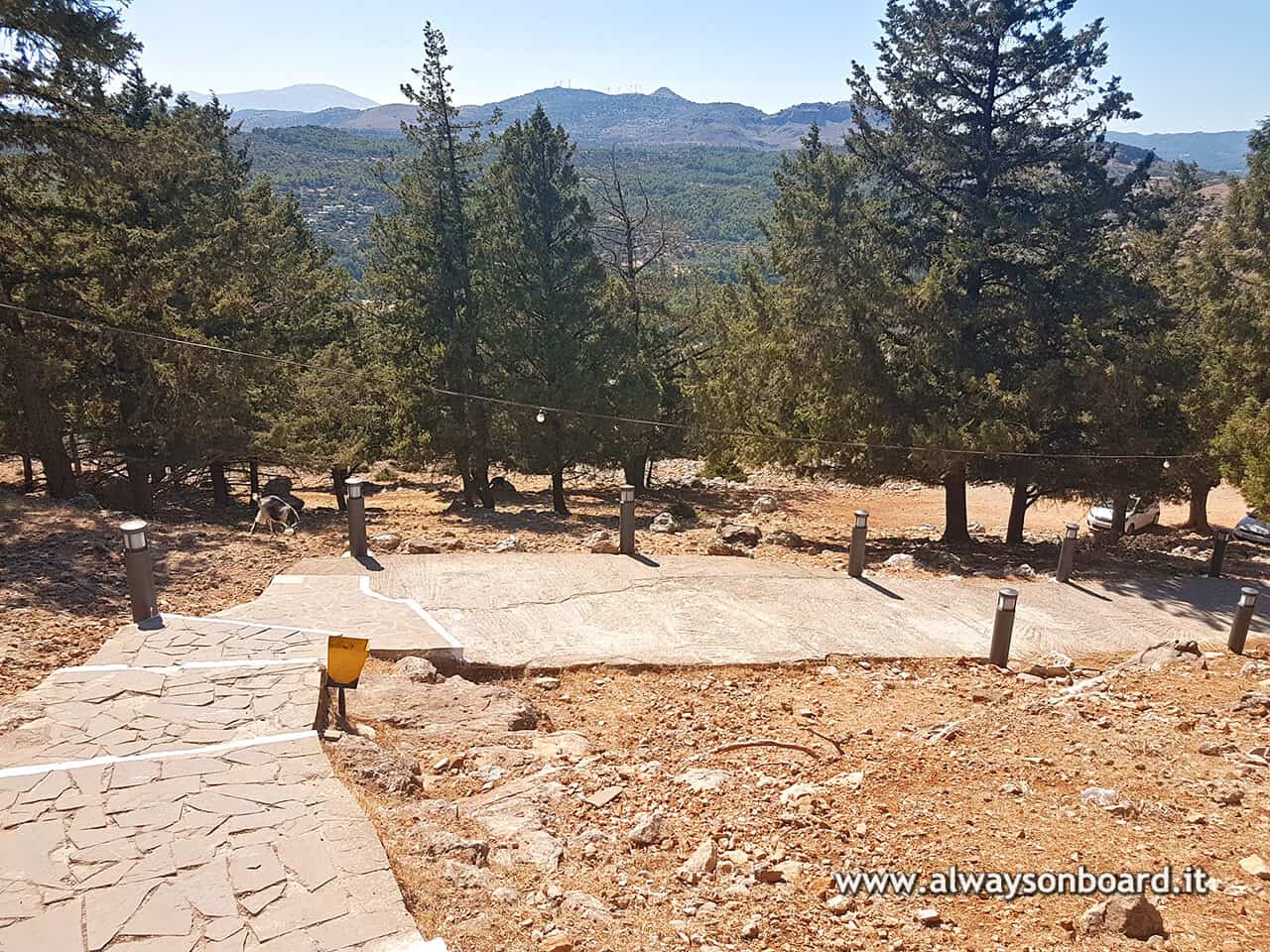
Once you’ve climbed the steps, you can enjoy the view of the beach below and the coast, perhaps with a snack in hand.
Valley of the Butterflies
What to visit: small valley full of vegetation and populated by many butterflies
Time: 4 hours
Cost: €5
Another attraction to visit in Rhodes if you like nature (or want to take a cool break) is the Valley of the Butterflies (“Petaloudes”). The Valley of the Butterflies is one of the few places to visit in Rhodes that requires an entrance fee.
It’s made up of a pair of sloped trails that run through a valley for a couple of kilometers, populated at times by a large number of butterflies. More precisely, despite the name “Valley of the Butterflies”, these are not colorful butterflies but moths with a fairly camouflaged appearance: in the photo below you’ll see a large number (and if you can’t spot them immediately… try again! 😆 )
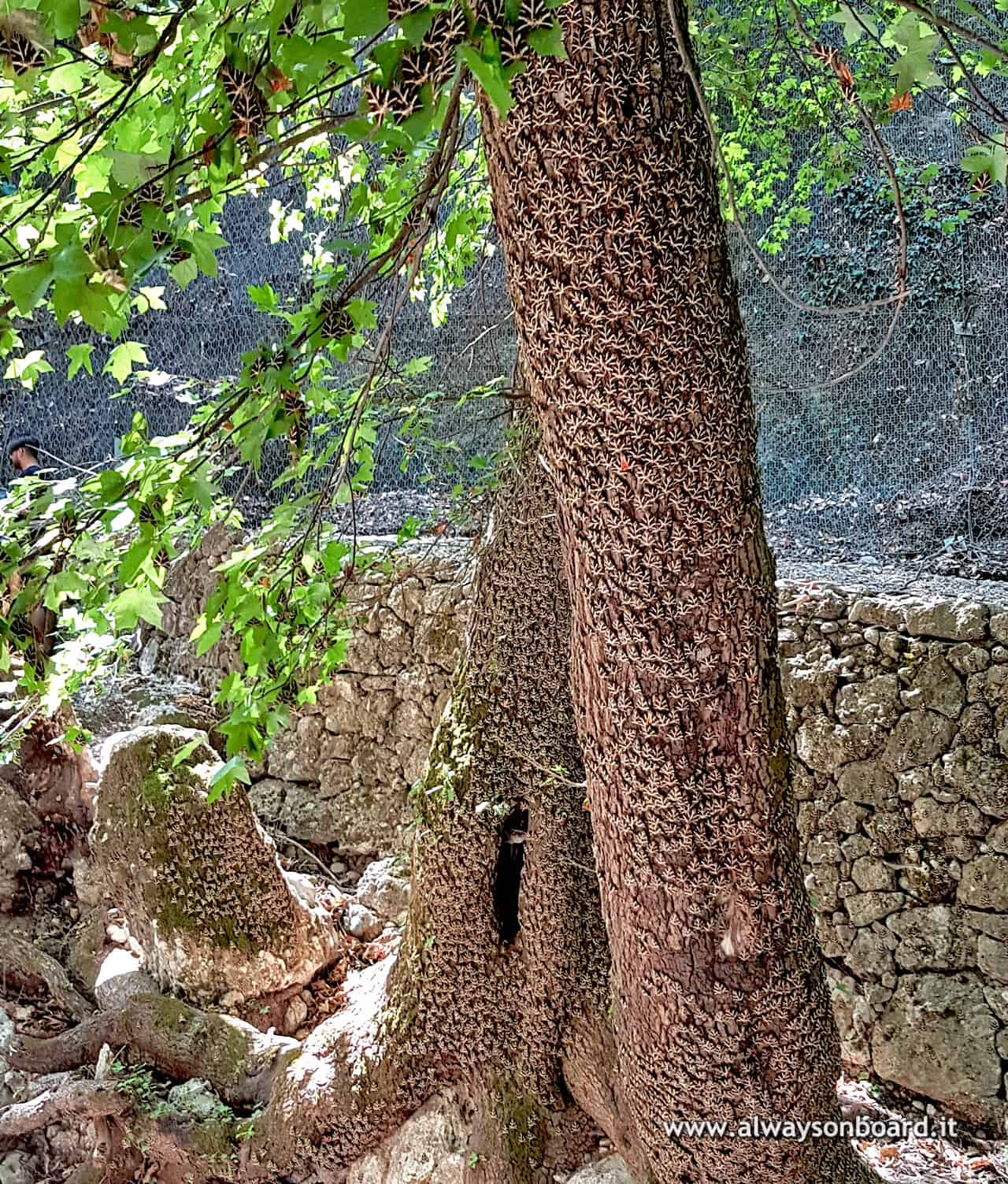
The trail is about a kilometer long or a bit more and is divided into two parts as it is cut by the road. Don’t expect to find a swarm of butterflies as soon as you pass the entrance gate; it might actually take a while before you even see one. The best time of year to spot them is between June and September.
The spots with the highest concentration of butterflies, like in the photo above, are basically 2 or 3, located about halfway through the trails. So don’t lose patience too early.
The trails are well marked and fenced off, so there’s no risk of getting lost or hurt. The only thing to keep in mind is that the trail is cut in half by the road (there are 3 entrances and 3 parking lots that I’ll describe next), so when reaching the end of the trail, you might mistakenly think the trail is over. In reality, near the entrance gates, there’s a tunnel that passes under the road and takes you to the lower section.
The lower section of the Valley of the Butterflies, where the most visible stream also flows, is an area where bathhouses/facilities were built during the Italian domination of the island, later abandoned at the end of that era.
How to get to the Valley of the Butterflies in Rhodes
There’s only one road to get to the Valley of the Butterflies, so it’s impossible to go the wrong way. What you do need to pay attention to is the presence of 3 parking lots and 3 entrances to Petaloudes: one at the top, one in the middle, and one at the bottom — all marked on the map above.
If there are still spaces, I recommend parking at the central lot to be closer to the entrances.
If instead you prefer to reach the Valley of the Butterflies with an organized tour, without worrying about parking, and with the opportunity to also visit the island of Chalki, try this tour! 🙂
Eucalyptus Street
What to visit: an avenue lined with large eucalyptus trees
Time: 20 minutes
Cost: free
After visiting the Valley of the Butterflies, you could also add to your Rhodes itinerary — even just as a quick detour without leaving your car — the eucalyptus-lined avenue “Eucalyptus Street”.
The eucalyptus avenue is simply the road that leads to the Kolymbia village, and its scenic appeal lies in many tall eucalyptus trees. A quick stop that will take up very little time: and if you want to take a break, the Kolymbia village offers a beach and various services.
Monolithos
What to visit: ruins of the Venetian castle of Monolithos
Time: 2 hours at most
Cost: free
The castle of Monolithos is located in the “deep” southwest of the island and is one of the places to visit in Rhodes if you like panoramic viewpoints. It is indeed surrounded by green hills and ridges, and it takes a bit of time to get there by car.
The castle of Monolithos was built more than 500 years ago by the Venetian knights and is located right on top of a large 100-meter rock, serving as a lookout and defense point for the western part of the island.
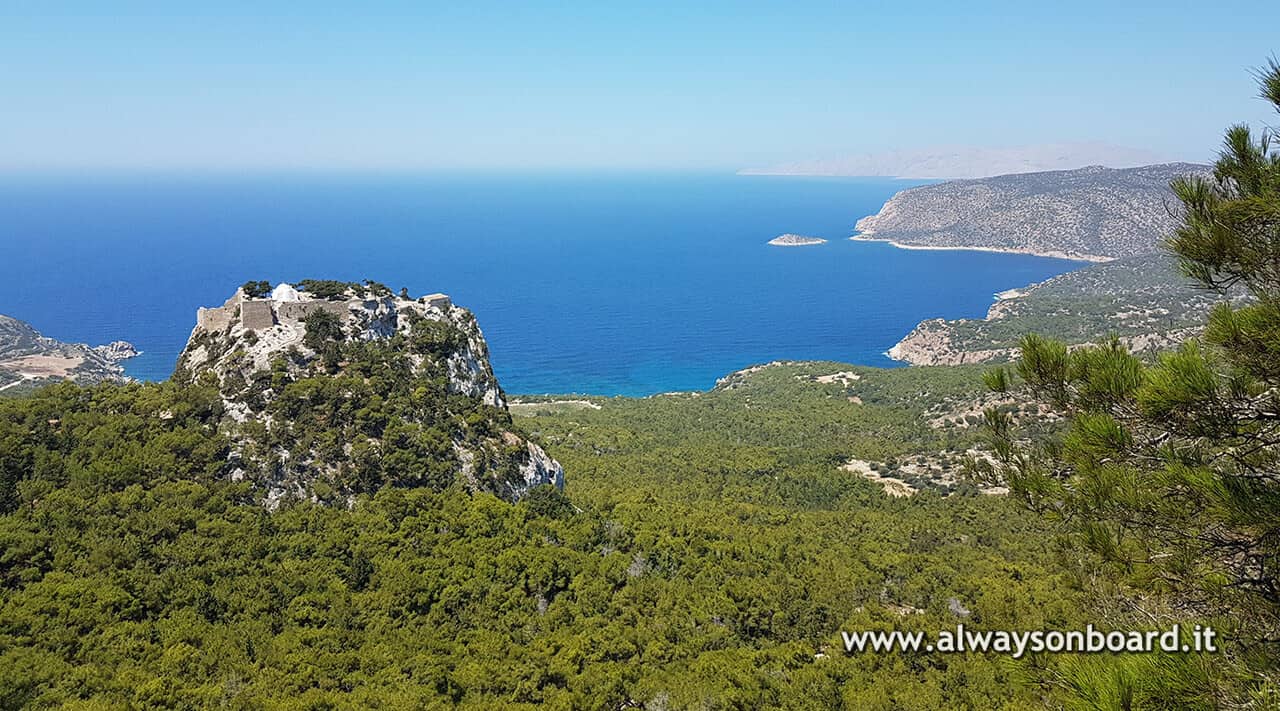
Although only ruins of the castle remain (some wall fragments and a small central chapel), the view of the coast is truly wide and satisfying.
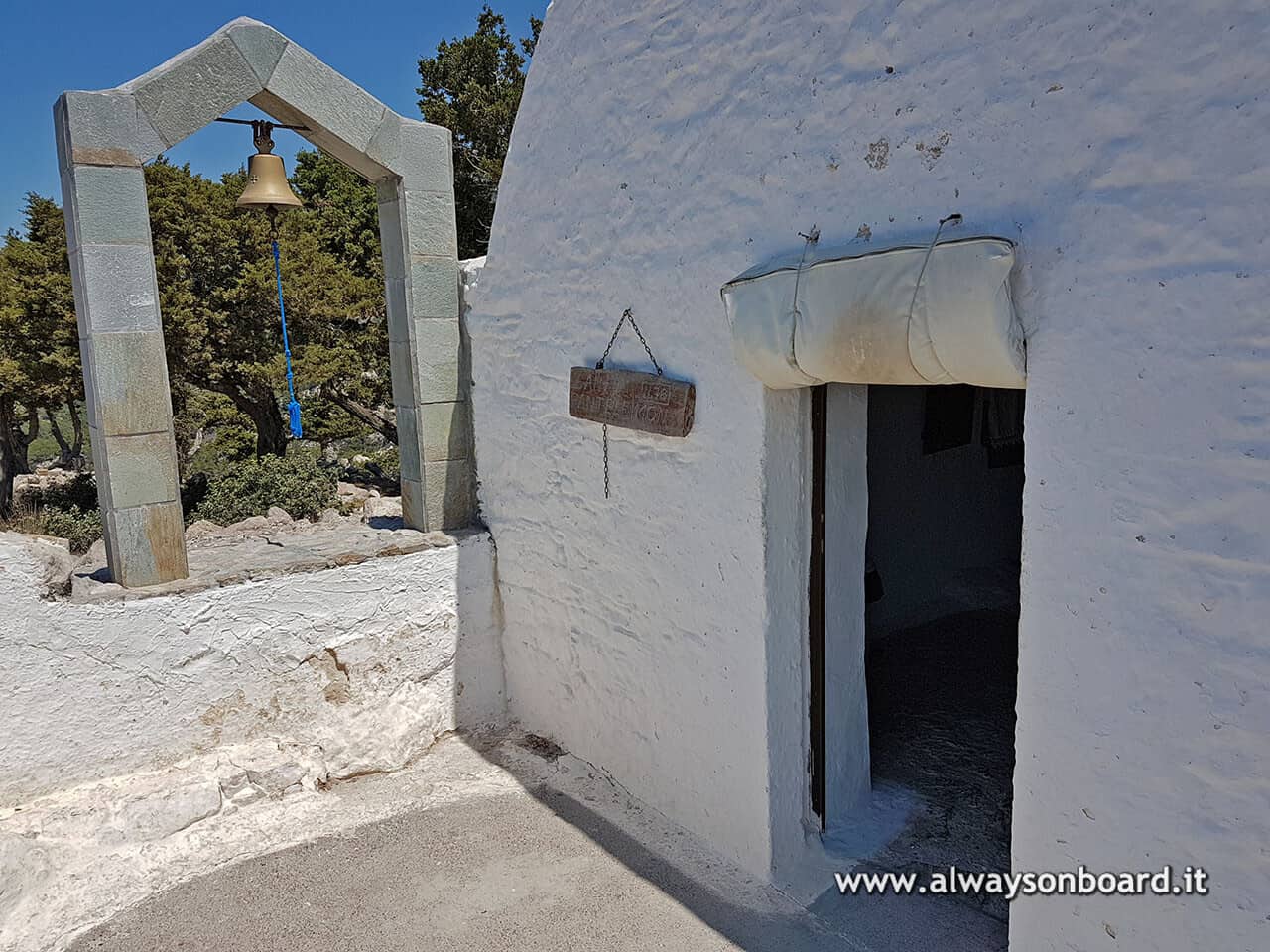
The visit to the castle is fairly quick, just enough time to enjoy the view, take some photos at truly scenic spots, and, if you like, have a snack in the shade of the few trees growing amidst the ruins. If you have children, be careful because some parts of the castle are right on the edge of a cliff.
How to get to the castle of Monolithos
To get to the castle of Monolithos, just drive to the point indicated on the map above where you can park your car. From there, you’ll find the wide path that takes you up to the castle in about ten minutes.
If you don’t have a car and are up for a bit of trekking, you can consider visiting Monolithos with this guided tour.
Prassonisi
What to visit: a windy beach where two seas meet
Time: 1 hour or more as desired
Cost: free
After leaving Monolithos, you could add to the list of things to visit in Rhodes a stop at the strip of sand that represents the southernmost tip of the island of Rhodes: Prassonisi.
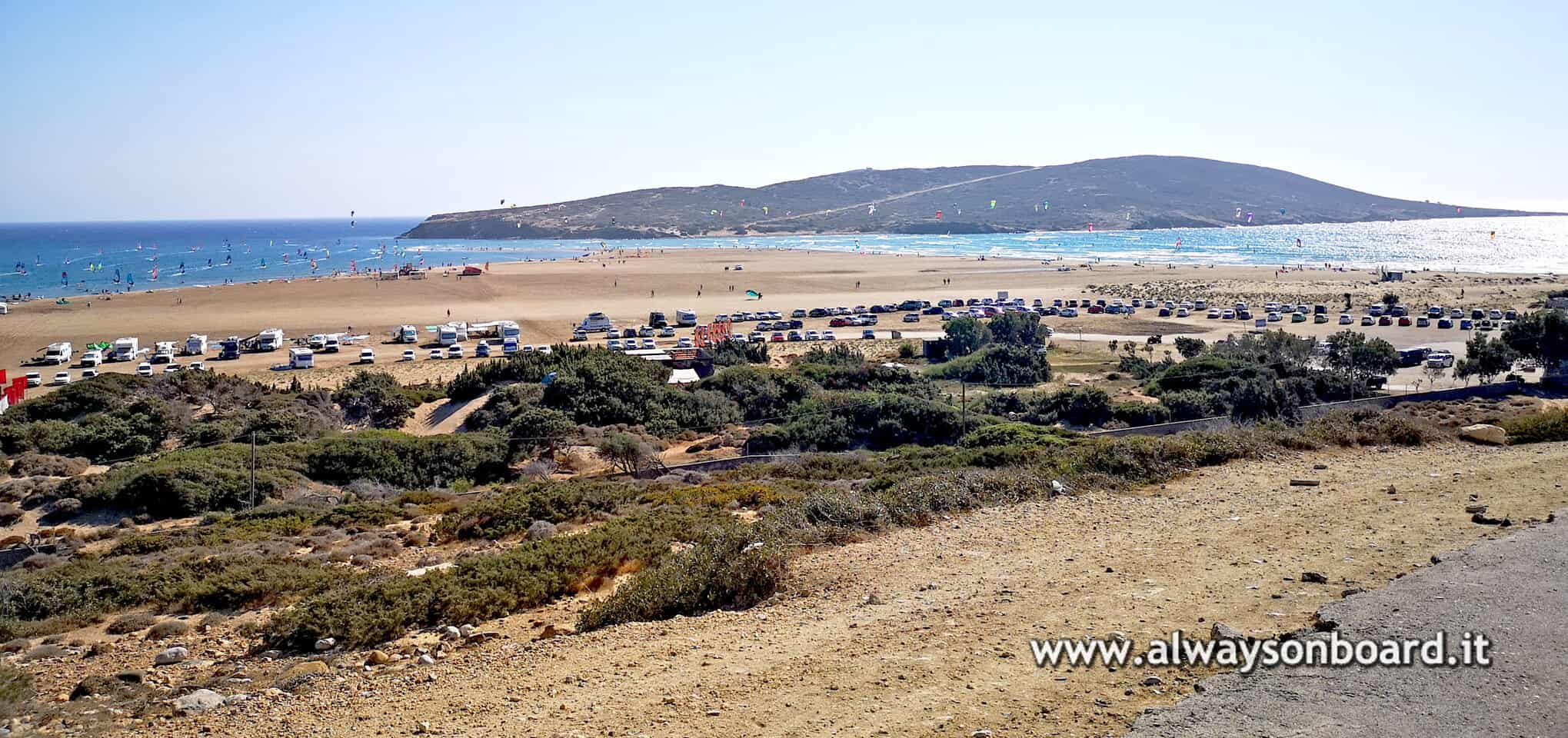
Prassonisi is a unique beach: very wide and wind-swept. This beach is less of a swimming spot and more of a postcard scene where you can watch people surfing or doing water sports, and it’s also the point where the Aegean Sea (to the west) and the Mediterranean Sea (to the east) meet and touch.
We talk about this beach in more detail here.
The island of Symi
How about a boat ride to visit another tiny Greek island? Check out Symi, an island close to Rhodes with a picturesque village right near the port that can be explored on foot, as well as several beautiful beaches for those wanting to venture further 🙂
You can reach it with simple and affordable boat tours like this one or this one!
Filerimos Cross
What to visit: the cross of Filerimos
Time: 1 hour
Cost: free
At the top of the Filerimos hill, we find the Filerimos Cross, a 16-meter tall Christian cross made of concrete that stands at the end of a wide path, from which you can see a good portion of the island’s western coast.
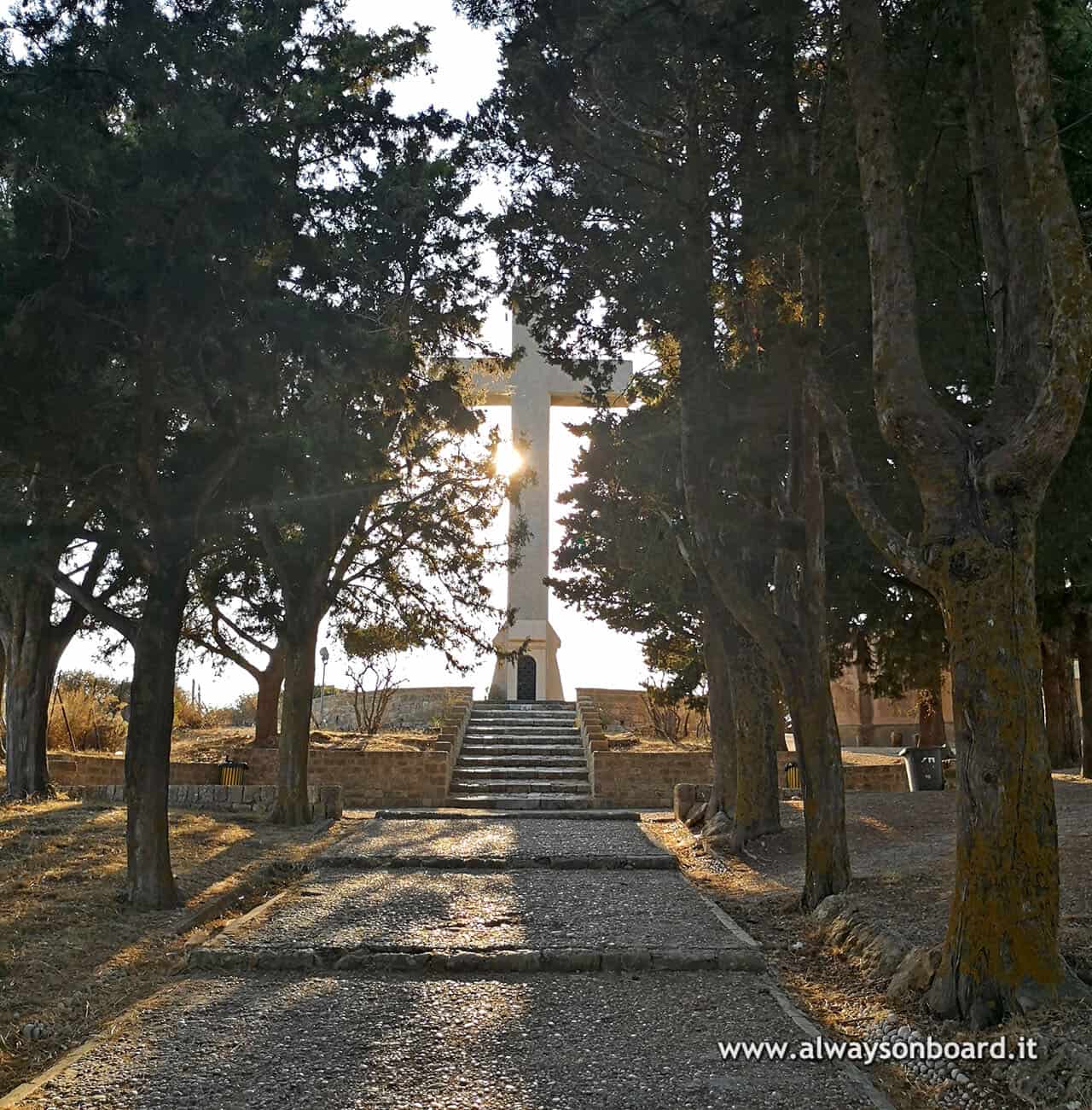
Among the things to visit in Rhodes, I recommend adding the Filerimos Cross for more than one reason. Once you reach the parking area by car, you’ll be faced with a fork: on one side, the easy path of a few minutes to reach the Filerimos Cross, along which you’ll also find small structures depicting the stations of the Cross. On the other side, a monastery which can be visited for 6 euros. Connecting the two attractions, you’ll find at least fifteen peacocks, both adults and young, roaming freely in the park, along the path and around the bar located near the parking area!
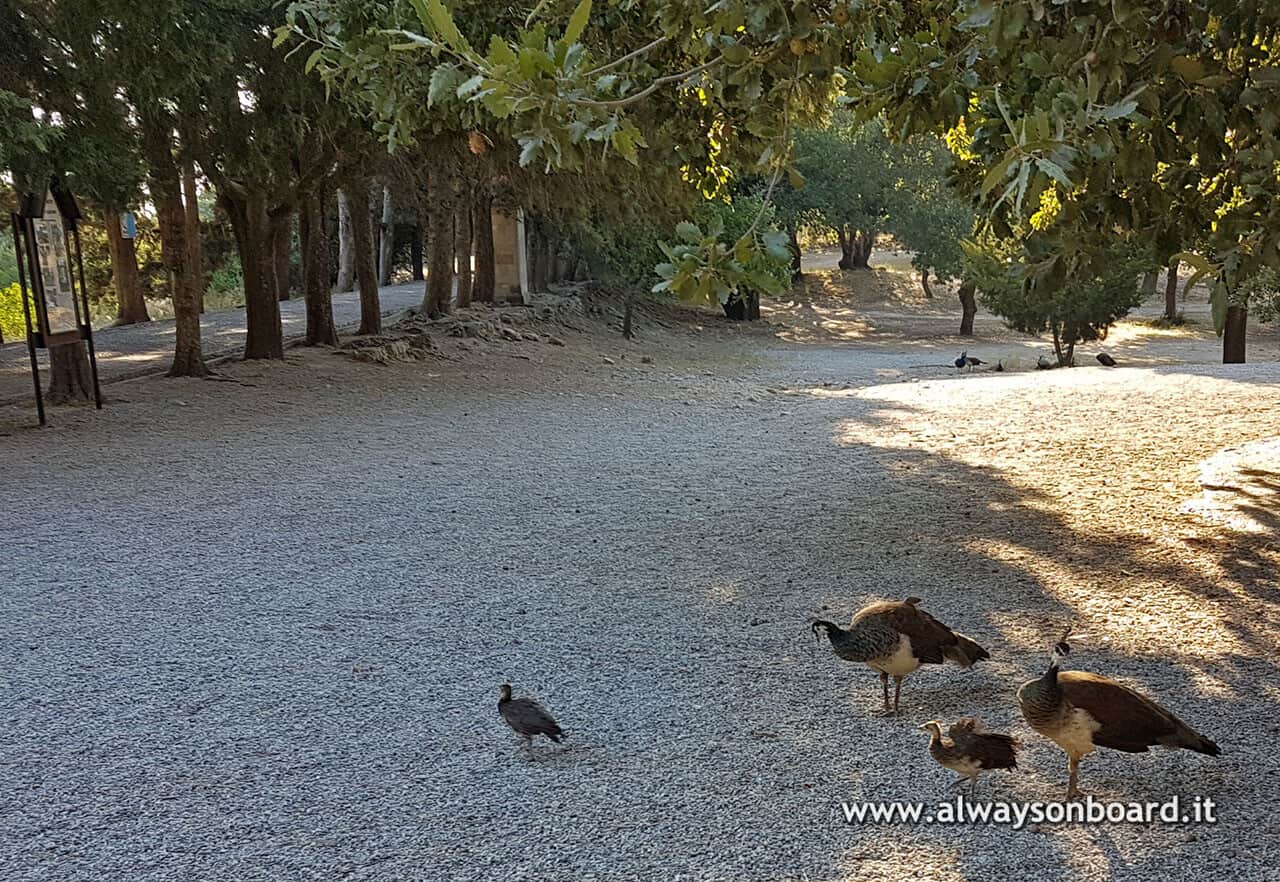
This area of Filerimos is also very popular for weddings, and it’s easy to see why.
How to get to the Filerimos Cross
Just set your navigator to the point on the map above. You’ll drive up to the top of the Filerimos hill along a simple road. Once at the parking area, a few steps separate you from the cross.
Seven Springs/Epta Piges
What to visit: trail through the hills with some water springs and a tunnel
Time: 3 hours
Cost: free
Seven Springs” and “Epta Piges”, are two different ways of referring to the same place.
A short distance from the village of Kolymbia heading inland, it’s a wooded park with a small waterfall, a trail along which you should spot seven water springs, and a “tunnel” where water from one of these springs is channeled like a stream and which the braver, unafraid of the dark, can even walk through.
Here you’ll find some photos to get an idea. If you decide to include the seven springs in your Rhodes itinerary, you’ll also find a restaurant there for a possible lunch stop.
If you don’t have a car, you can visit them with this bus tour that takes you to the seven springs and the town of Lindos.
Thermae of Kallithea
What to visit: old spa buildings and a small beach
Time: 1 hour
Cost: €3 for entry + at least €5 for beach chair
The Kallithea thermal baths are a dual-purpose attraction. This is a coastal area in the northeast of the island, where, once the entry ticket is paid, you can visit two small buildings now abandoned but which during the Italian domination of the island were used as a thermal center.
After the visit, if you feel like it, you could stay inside the area and enjoy a relaxing break at the beach, where you can get a sunbed by purchasing a drink at the bar starting from €5. The beach, while charming due to its rows of umbrellas separated by small hedges and the distinctive loungers, is however very small and usually crowded. In my opinion, there are better (and free) options on the island.
Crossing into Turkey…?
Would you like to cross into Turkey for very little money? With this boat tour you can visit the nearby Turkish city of Marmaris… but before you go, turn off mobile data to avoid massive charges on your phone bill! 😉
Finally… a bit of action!
Before leaving the island, you need a final burst of energy! One of the best activities to do in Rhodes is a kayak tour on the beautiful and calm eastern coast: I talk about all this in detail in the article on kayak excursions in Rhodes.
Now that you know all the places to visit in Rhodes… it’s time to discover the other 50% of the island: the beautiful beaches! And in the evening? Let’s find out the nightlife in Rhodes.
Rhodes is an island about 100km long, requiring at least 2 hours to cross it north to south via the fastest road. For this reason, choosing where to stay is crucial—ideally split into two parts if you have at least ten days available. If you haven’t already, have a look at where it’s best to stay in Rhodes to avoid mistakes!
Was this guide helpful? Share it with friends or follow the official Facebook page to help the site grow! 🙂